A guide to where you can see the solar eclipse in the US
A solar eclipse will be visible in western Europe, Canada and parts of the northern U.S. on Wednesday, but weather may throw clouds and rain in the way for some.
When and where you can see it
A solar eclipse is when the moon passes between the Earth and sun.
When that happens, the moon casts a shadow on the Earth and you’ll see the sun at least partially, if not fully, blocked by the moon in the sky.

Weather in your inbox
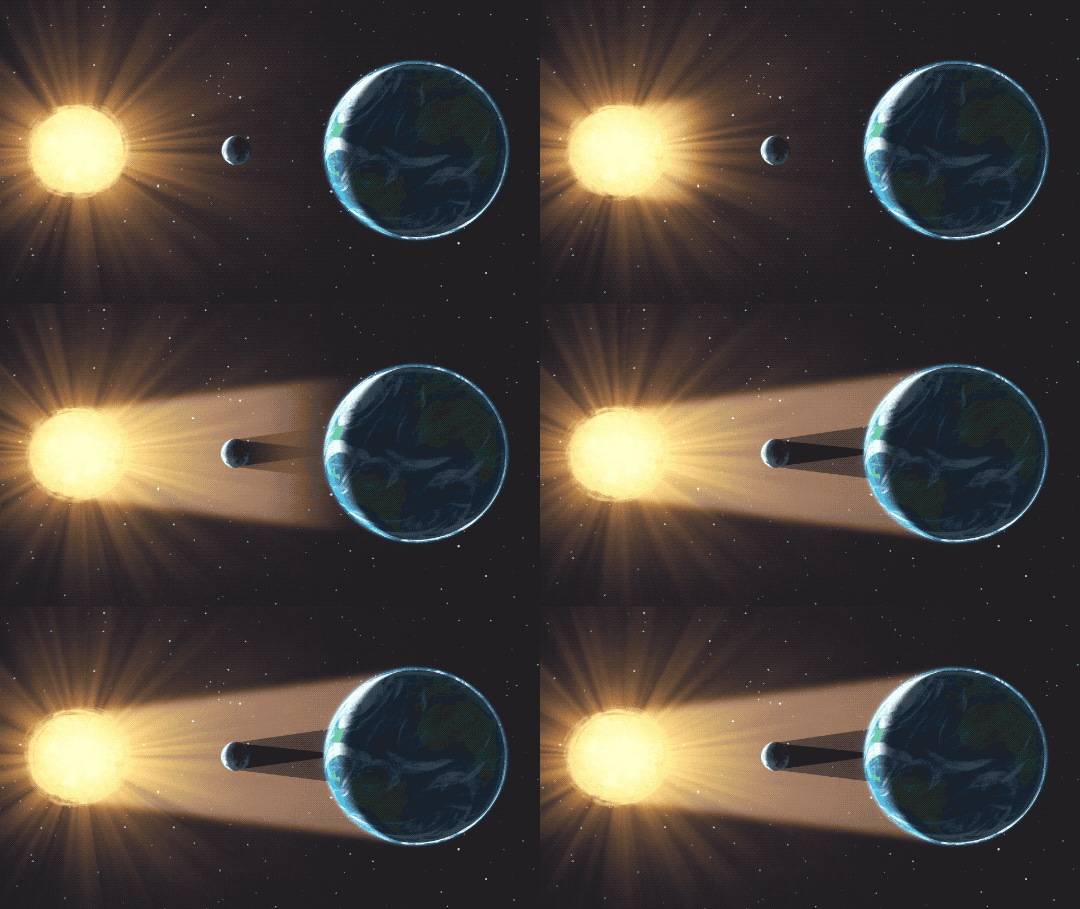
When the Sun, Moon and Earth are aligned in this way, a solar eclipse is seen on Earth.
(NASA Goddard Space Flight Center)
Wednesday’s solar eclipse will happen in the morning in Alaska and northern Canada, early afternoon in the northern U.S. and eastern Canada, and evening in western Europe, including the U.K. and Iceland, as well as northwest Africa.
(MORE: The best places in the U.S. to see the eclipse)
Particularly exciting is this will be a sunset eclipse in parts of western Europe and northwest Africa.
Get More of Our News on Google
Set The Weather Company as a ‘Preferred Source’ to get quicker access to the news you value.

A swath from extreme northern Russia to eastern Greenland, western Iceland, and northern Spain will see a total eclipse. You can see that area depicted in NASA’s map below as a red stripe.
That’s the period of at most about 2 minutes during which the moon completely covers the sun. It’s also the only time on Earth you can see the sun’s outermost part of its atmosphere, known as the corona.
The rest of the area inside the yellow arcs in the map below will see at most only a part of the sun covered by the moon, a partial eclipse, including Canada and parts of the northern and eastern U.S.
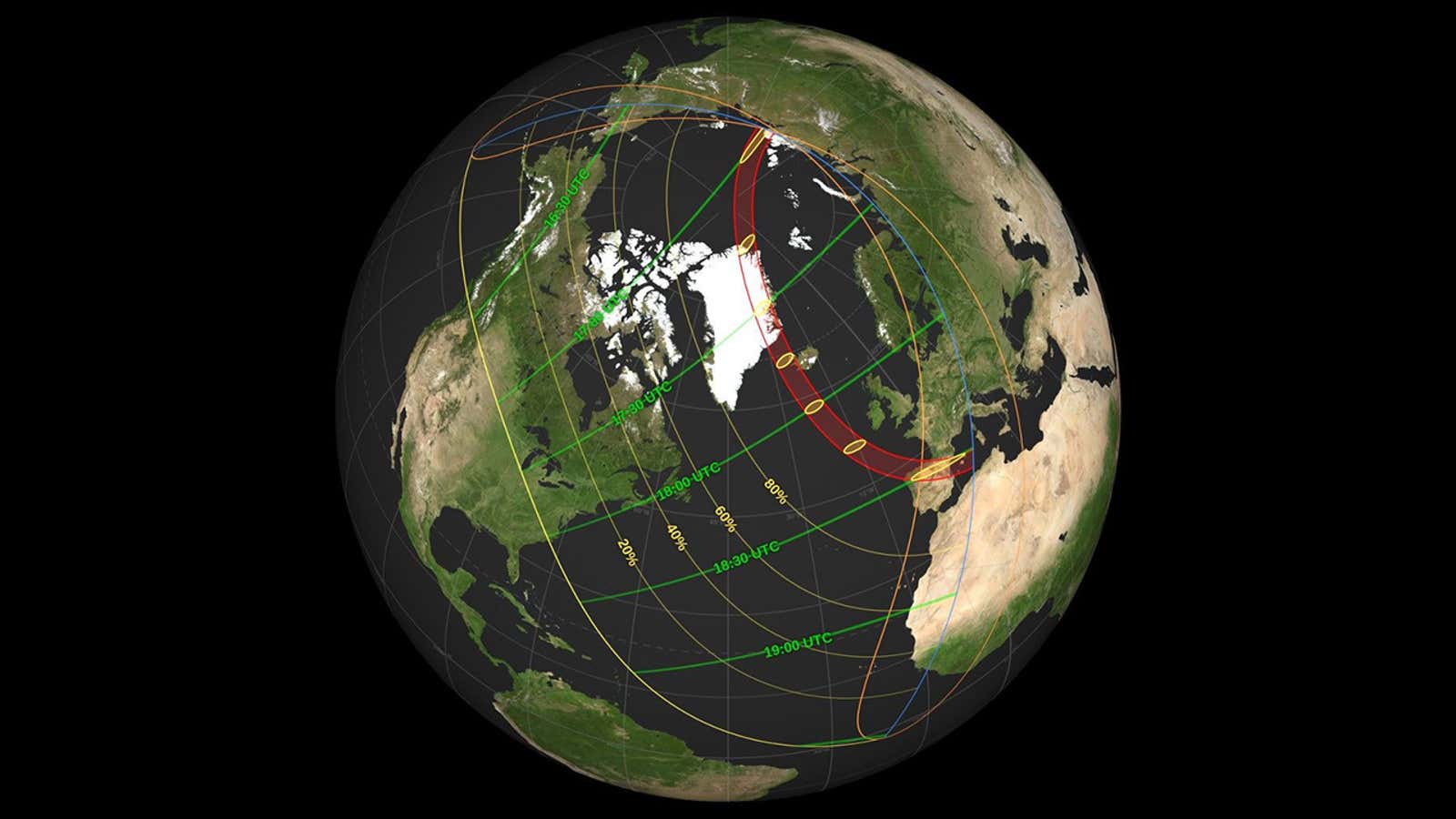
This map shows where the Aug. 12, 2026 solar eclipse will be visible. The red swath that stretches across eastern Greenland, western Iceland into northern Spain shows where a total eclipse can be seen. The yellow lines show peak percentages of the sun covered by the moon.
(NASA Scientific Visualization Studio)
Will clouds block your view?
One good thing about summer is you typically don’t have strong, large scale low-pressure systems spreading widespread rain and clouds that you see any other time of year.
But you can get showers and thunderstorms, or even just a blanket of clouds, that could arrive during the eclipse.
Since we’re still several days away from the eclipse, it’s not possible to pinpoint exactly where areas of showers and storms, or even thicker clouds, will be yet.
But here’s a general overview of both Europe, Canada and the U.S.
Canada and U.S.
- Best viewing weather for partial eclipse: Parts of New England, far northeast Montana (assuming little wildfire smoke), Upper Midwest and northern Alaska
- Cloudier view: Parts of the mid-Atlantic, interior Northeast, southern Great Lakes, eastern Canada, the Canadian Rockies and southern Alaska
(MORE: Which US cities will see the eclipse)
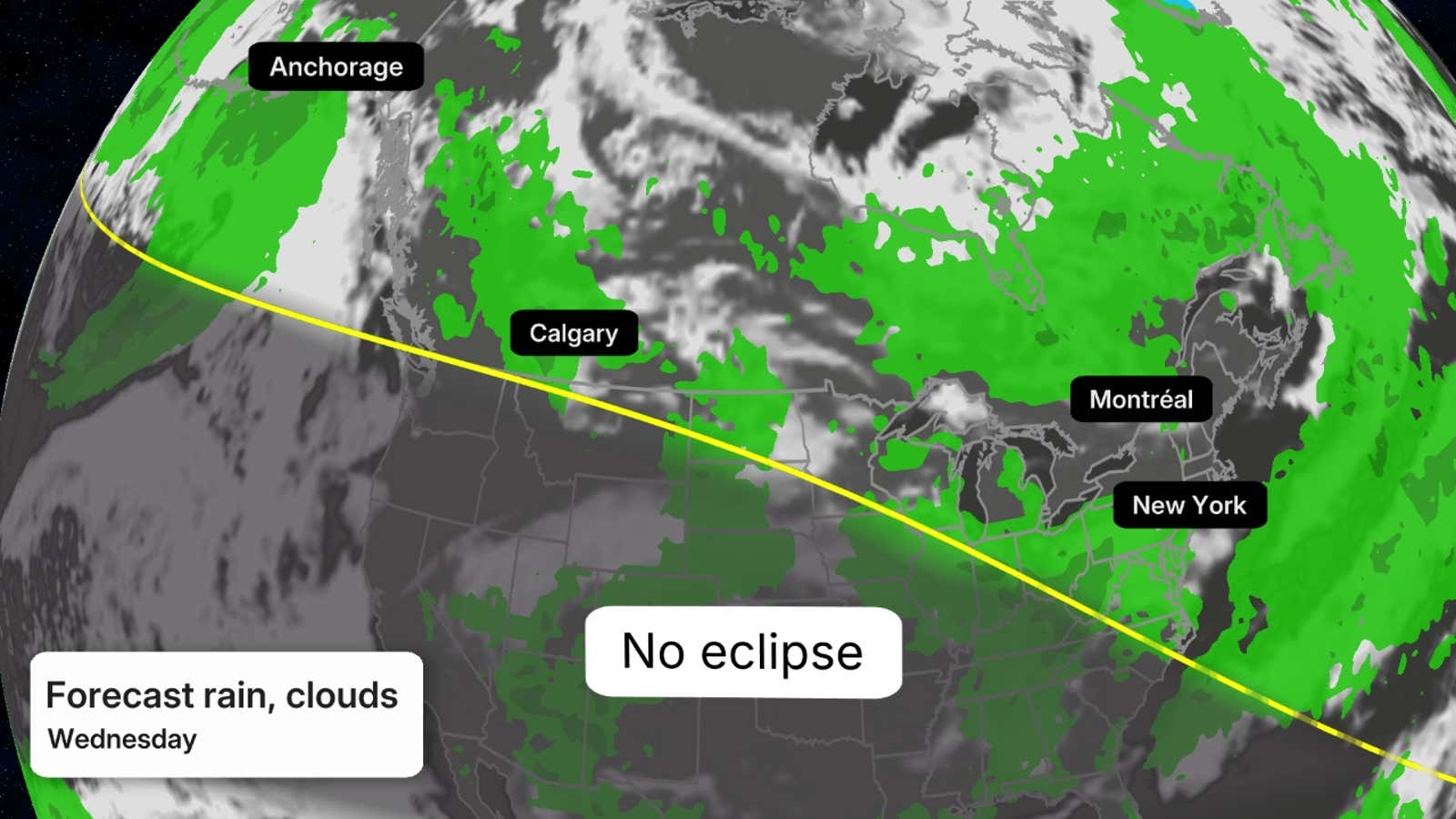
This map shows the forecast for rain and clouds on Wednesday, August 12, 2026. The darker green areas show where there’s a better chance for rain. Areas to the south of the yellow line shaded in gray will not be able to see Wednesday’s partial eclipse, even if the sky is clear.
Europe and northwest Africa
While another blistering heat wave will be in progress over much of western Europe Wednesday, clear skies (assuming no wildfire smoke) mean you’ll have fabulous viewing of the eclipse, despite the sweltering heat.
- Best viewing weather: Almost all of western Europe including Spain, Portugal, France, the south of England, Belgium, the Netherlands, Germany, Czechia, Poland, the Baltics, southern Sweden and southern Finland
- Cloudier view: Much of the Alps, Iceland, Ireland, Scotland and Norway
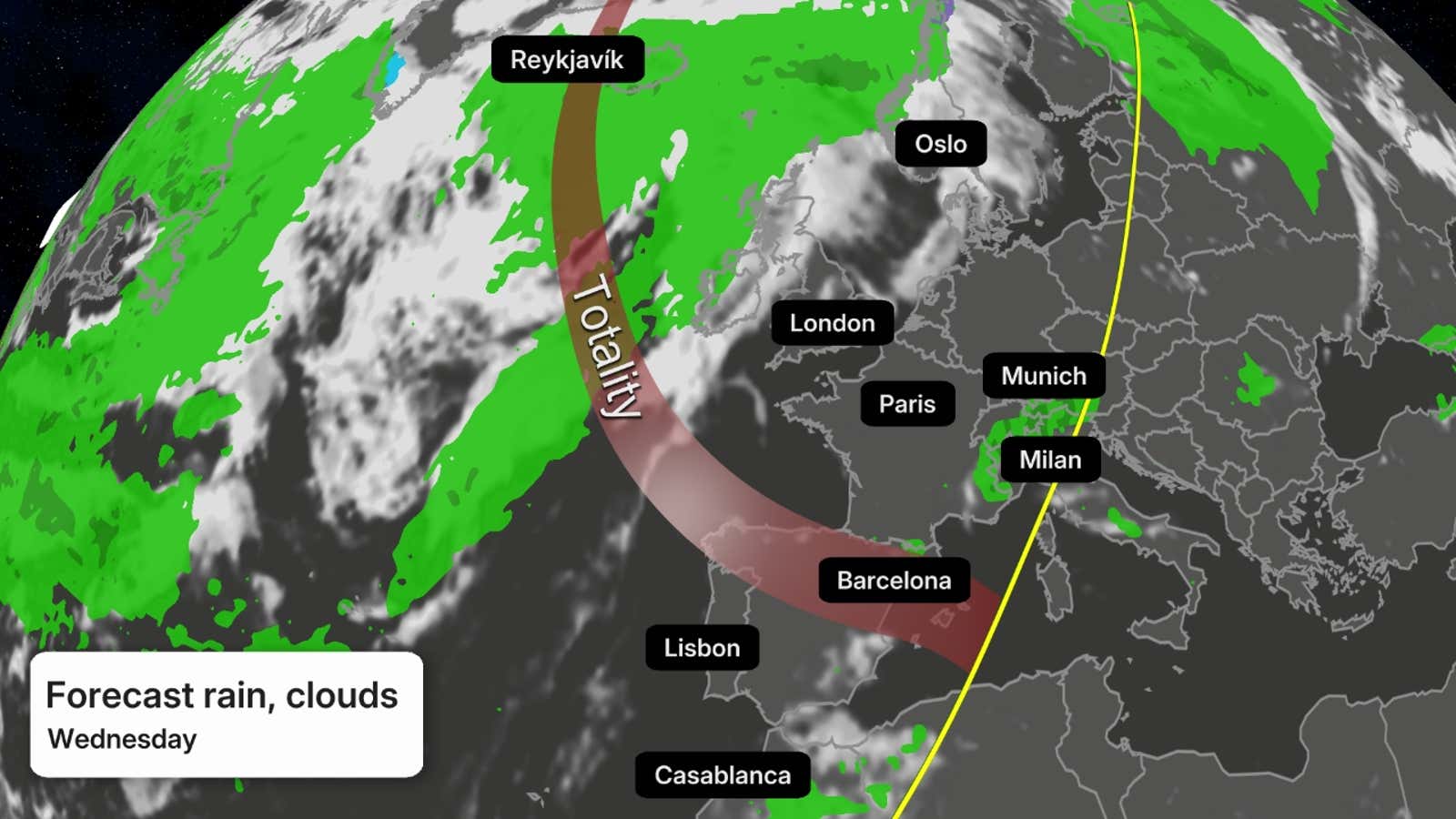
This is the same as the earlier map, but for western Europe and northwest Africa. The red stripe indicates where a total eclipse could be seen. The yellow line shows where the maximum eclipse coverage will occur at sunset.
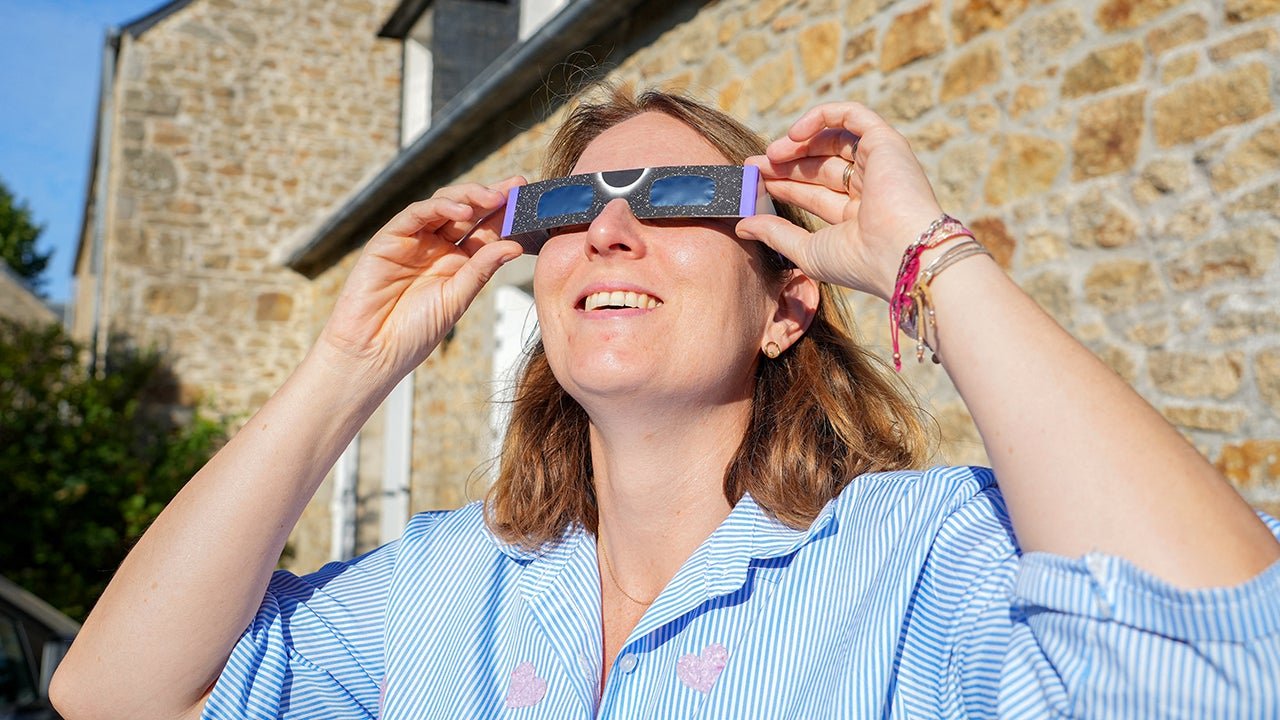
If you plan on watching the eclipse, don’t watch it without sun protection, as that can damage your eyes. Use eclipse glasses or filters that are certified or approved.
(MORE: Where to buy eclipse glasses, phone filters)
Jonathan Erdman is a senior meteorologist at weather.com and has been covering national and international weather since 1996. Extreme and bizarre weather are his favorite topics. Reach out to him on Bluesky, X (formerly Twitter) and Facebook.