Addison, T. Observations on fatty degeneration of the liver. Guys Hosp. Rep. 1, 476–485 (1836).
Ayonrinde, O. T. Historical narrative from fatty liver in the nineteenth century to contemporary NAFLD — reconciling the present with the past. JHEP Rep. 3, 100261 (2021).
Ludwig, J., Viggiano, T. R., McGill, D. B. & Ott, B. J. Nonalcoholic fatty liver disease: pathologic findings and clinical correlations. Mayo Clin. Proc. 73, 434–438 (1998).
Younossi, Z. M. et al. Nonalcoholic fatty liver disease: assessment of variability in pathologic interpretations. Mod. Pathol. 11, 560–565 (1998).
Matteoni, C. A. et al. Nonalcoholic fatty liver disease: a spectrum of clinical and pathological severity. Gastroenterology. 116, 1413–1419 (1999).
Schaffner, F. & Thaler, H. Nonalcoholic fatty liver disease. Prog. Liver Dis. 8, 283–298 (1986).
Eslam, M., Sanyal, A. J. & George, J. MAFLD: a consensus-driven proposed nomenclature for metabolic associated fatty liver disease. Gastroenterology. 158, 1999–2014 (2020).
Younossi, Z. M. et al. From NAFLD to MAFLD: implications of a premature change in terminology. Hepatology 73, 1194–1198 (2021).
Younossi, Z. M. et al. Are there outcome differences between NAFLD and metabolic-associated fatty liver disease? Hepatology 76, 1423–1437 (2022).
Rinella, M. E. et al. A multisociety Delphi consensus statement on new fatty liver disease nomenclature. J. Hepatol. 79, 1542–1556 (2023).
Younossi, Z. M. et al. Global survey of stigma among physicians and patients with nonalcoholic fatty liver disease. J. Hepatol. 80, 419–430 (2024).
Younossi, Z. M. et al. Clinical profiles and mortality rates are similar for metabolic dysfunction-associated steatotic liver disease and non-alcoholic fatty liver disease. J. Hepatol. 80, 694–701 (2024).
Torp, N. et al. Phosphatidylethanol and self-reported alcohol intake to subclassify individuals at risk of steatotic liver disease: an analysis of data from a prospective cohort study. Lancet Gastroenterol. Hepatol. 10, 975–985 (2025).
Vaz, J. et al. Phosphatidylethanol levels distinguish steatotic liver disease subgroups and are associated with risk of major liver outcomes. J. Hepatol. 83, 1011–1022 (2025).
Younossi, Z. M., Zelber-Sagi, S. & Krag, A. Reframing the spectrum of steatotic liver disease as a dynamic concept. J. Hepatol. 83, e191–e193 (2025).
Vuppalanchi, R. & Chalasani, N. Nonalcoholic fatty liver disease and nonalcoholic steatohepatitis: selected practical issues in their evaluation and management. Hepatology 49, 306–317 (2009).
Corrao, S. et al. Metabolic dysfunction-associated steatotic liver disease: a pathophysiology and clinical framework to face the present and the future. Nutr. Metab. Cardiovasc. Dis. 35, 103702 (2025).
El-Kassas, M. & Alswat, K. Steatotic liver disease as a new nomenclature for NAFLD from the perspectives of the MENA region: one size fits all this time. J. Hepatol. 80, e66–e68 (2024).
Manns, M. P., Burra, P., Sargent, J., Horton, R. & Karlsen, T. H. The Lancet–EASL Commission on liver diseases in Europe: overcoming unmet needs, stigma, and inequities. Lancet 392, 621–622 (2018).
Younossi, Z. M. et al. The global epidemiology of nonalcoholic fatty liver disease (NAFLD) and nonalcoholic steatohepatitis (NASH): a systematic review. Hepatology 77, 1335–1347 (2023).
Ciardullo, S. et al. Impact of MASLD and MetALD on clinical outcomes: a meta-analysis of preliminary evidence. Liver Int. 44, 1762–1767 (2024).
Amonker, S., Houshmand, A., Hinkson, A., Rowe, I. & Parker, R. Prevalence of alcohol-associated liver disease: a systematic review and meta-analysis. Hepatol. Commun. 7, e0000133 (2023).
Kalligeros, M. et al. Prevalence of steatotic liver disease (MASLD, MetALD, and ALD) in the United States: NHANES 2017–2020. Clin. Gastroenterol. Hepatol. 22, 1330–1332 (2024).
Younossi, Z. M. et al. Prevalence and predictors of cirrhosis and portal hypertension in the United States. Hepatology 82, 1229–1240 (2025).
Hansen, C. D. et al. Prevalence, severity and determinants of steatotic liver disease among individuals with metabolic and alcohol risk from the community. J. Hepatol. 83, 1278–1291 (2025).
Yang, A. H. et al. Prevalence of steatotic liver disease, advanced fibrosis and cirrhosis among community-dwelling overweight and obese individuals in the USA. Gut 73, 2045–2053 (2024).
Gawrieh, S. et al. Prevalence of steatotic liver disease, MASLD, MetALD and significant fibrosis in people with HIV in the United States. Aliment. Pharmacol. Ther. 59, 666–679 (2024).
Ho, G. J. K. et al. High global prevalence of steatotic liver disease and associated subtypes: a meta-analysis. Clin. Gastroenterol. Hepatol. 23, 2423–2432.1 (2025).
Diaz, L. A., Villota-Rivas, M., Barrera, F., Lazarus, J. V. & Arrese, M. The burden of liver disease in Latin America. Ann. Hepatol. 29, 101175 (2024).
Younossi, Z. M. et al. Prevalence of metabolic dysfunction-associated steatotic liver disease in the Middle East and North Africa. Liver Int. 44, 1061–1070 (2024).
Ong, J., Alswat, K., Hamid, S. & El-Kassas, M. Nonalcoholic fatty liver disease in Asia, Africa, and Middle East Region. Clin. Liver Dis. 27, 287–299 (2023).
Gulati, R., Moylan, C. A., Wilder, J. & Wegermann, K. Racial and ethnic disparities in metabolic dysfunction-associated steatotic liver disease. Metab. Target Organ Damage https://doi.org/10.20517/mtod.2023.45 (2024).
Ji, H. & Cheng, S. Sex differences in prevalence and prognosis of steatotic liver disease phenotypes: biological sex matters. J. Hepatol. 80, e68–e69 (2024).
Krag, A., Torp, N., Younossi, Z. M. & Israelsen, M. Reporting discrepancy of alcohol intake affecting estimated prevalence of MetALD and ALD. Lancet Gastroenterol. Hepatol. 10, 282–284 (2025).
Younossi, Z. M. et al. Binge drinking, metabolic dysfunction, and the spectrum of steatotic liver disease in the USA: a cross-sectional and longitudinal analysis. Lancet Gastroenterol. Hepatol. 11, 495–508 (2026).
Clayton-Chubb, D. et al. Metabolic dysfunction-associated steatotic liver disease in older adults is associated with frailty and social disadvantage. Liver Int. 44, 39–51 (2024).
Kim, K. et al. Incidence of metabolic dysfunction-associated steatotic liver disease and advanced fibrosis and impact of overweight/obesity in elderly population: a nationwide cohort study. J. Gastroenterol. Hepatol. 39, 2845–2852 (2024).
Clayton-Chubb, D. et al. Prevalence and outcomes of steatotic liver disease subtypes in older adults. Hepatol. Commun. 9, e0756 (2025).
Lee, E. J. et al. Prevalence of nonalcoholic fatty liver disease in pediatrics and adolescents: a systematic review and meta-analysis. World J. Pediatr. 20, 569–580 (2024).
Li, J. et al. Meta-analysis: global prevalence, trend and forecasting of non-alcoholic fatty liver disease in children and adolescents, 2000–2021. Aliment. Pharmacol. Ther. 56, 396–406 (2022).
Baird, S. et al. A call to action: the Second Lancet Commission on adolescent health and wellbeing. Lancet 405, 1945–2022 (2025).
Schwimmer, J. B., Biddinger, S. B. & Ibrahim, S. H. MASLD in children: integrating epidemiological trends with mechanistic and translational advances. J. Clin. Invest. 135, e186422 (2025).
National Institute on Alcohol Abuse and Alcoholism. Get the facts about underage drinking. NIH https://www.niaaa.nih.gov/publications/brochures-and-fact-sheets/underage-drinking (2026).
Alberti, K. G., Zimmet, P. & Shaw, J. Metabolic syndrome — a new world-wide definition. A consensus statement from the International Diabetes Federation. Diabet. Med. 23, 469–480 (2006).
Mannisto, V. et al. ALT levels, alcohol use, and metabolic risk factors have prognostic relevance for liver-related outcomes in the general population. JHEP Rep. 6, 101172 (2024).
Yun, B. et al. Liver cancer risk across metabolic dysfunction-associated steatotic liver disease and/or alcohol: a nationwide study. Am. J. Gastroenterol. 120, 410–419 (2025).
Israelsen, M. et al. Validation of the new nomenclature of steatotic liver disease in patients with a history of excessive alcohol intake: an analysis of data from a prospective cohort study. Lancet Gastroenterol. Hepatol. 9, 218–228 (2024).
Tampaki, M., Tsochatzis, E., Lekakis, V. & Cholongitas, E. Prevalence, characteristics and outcomes of patients with metabolic and alcohol related/associated liver disease (MetALD): a systematic review and meta-analysis. Metabolism 163, 156101 (2025).
van Kleef, L. A. et al. A comparison of the predictive value of 12 body composition markers for MASLD, at-risk MASH and increased liver stiffness in a general population setting. Am. J. Gastroenterol. 121, 1382–1392 (2026).
Niezen, S., Mendes, T. B. & Tapper, E. B. Waist-to-height ratio enhances predictive accuracy for severe hepatic steatosis and advanced fibrosis: a national cohort study. Clin. Gastroenterol. Hepatol. 24, 2019–202.e1 (2026).
Julian, M. T. et al. Abdominal obesity and dsyglycemia are risk factors for liver fibrosis progression in NAFLD subjects: a population-based study. Front. Endocrinol. 13, 1051958 (2022).
Yeo, Y. H. et al. Anthropometric measures and mortality risk in individuals with metabolic dysfunction-associated steatotic liver disease (MASLD): a population-based cohort study. Aliment. Pharmacol. Ther. 62, 168–179 (2025).
Younossi, Z. M. et al. The global epidemiology of nonalcoholic fatty liver disease and nonalcoholic steatohepatitis among patients with type 2 diabetes. Clin. Gastroenterol. Hepatol. 22, 1999–2010 (2024).
Huang, D. Q. et al. Liver stiffness progression in biopsy-proven metabolic dysfunction-associated steatotic disease among people with diabetes versus people without diabetes: a prospective multicenter study. Hepatology 81, 1553–1563 (2025).
Zhou, X. D. et al. Effect of hypertension on long-term adverse clinical outcomes and liver fibrosis progression in MASLD. J. Hepatol. 84, 254–265 (2026).
Lee, B. P., Molina, J., Kim, S., Dodge, J. L. & Terrault, N. A. Association of alcohol and incremental cardiometabolic risk factors with liver disease: a national cross-sectional study. Clin. Gastroenterol. Hepatol. 23, 2205–2213 (2025).
Golabi, P. et al. Components of metabolic syndrome increase the risk of mortality in nonalcoholic fatty liver disease (NAFLD). Medicine 97, e0214 (2018).
Leith, D., Lin, Y. Y. & Brennan, P. Metabolic dysfunction-associated steatotic liver disease and type 2 diabetes: a deadly synergy. touchREVIEWS Endocrinol. 20, 5–9 (2024).
Collier, A., Curran, C., Cameron, L., Wild, S. H. & Byrne, C. D. Liver fibrosis markers and all cause mortality in people with type 2 diabetes: a population based study (the Ayrshire Diabetes Outcomes Cohort (ADOC) Study). Diabetes Obes. Metab. 25, 2659–2668 (2023).
Tantai, X. et al. Effect of sarcopenia on survival in patients with cirrhosis: a meta-analysis. J. Hepatol. 76, 588–599 (2022).
Montano-Loza, A. J. et al. Sarcopenic obesity and myosteatosis are associated with higher mortality in patients with cirrhosis. J. Cachexia Sarcopenia Muscle 7, 126–135 (2016).
Golabi, P. et al. Contribution of sarcopenia and physical inactivity to mortality in people with non-alcoholic fatty liver disease. JHEP Rep. 2, 100171 (2020).
Hsieh, Y. C., Joo, S. K., Koo, B. K., Lin, H. C. & Kim, W. Muscle alterations are independently associated with significant fibrosis in patients with nonalcoholic fatty liver disease. Liver Int. 41, 494–504 (2021).
Di Cola, S. et al. Myosteatosis is closely associated with sarcopenia and significantly worse outcomes in patients with cirrhosis. J. Hepatol. 81, 641–650 (2024).
Hanai, T. et al. Alcohol-associated liver disease increases the risk of muscle loss and mortality in patients with cirrhosis. J. Gastroenterol. 59, 932–940 (2024).
Al-Azzawi, Y. et al. Sarcopenia is associated with longer hospital stay and multiorgan dysfunction in alcoholic hepatitis. Eur. J. Gastroenterol. Hepatol. 32, 733–738 (2020).
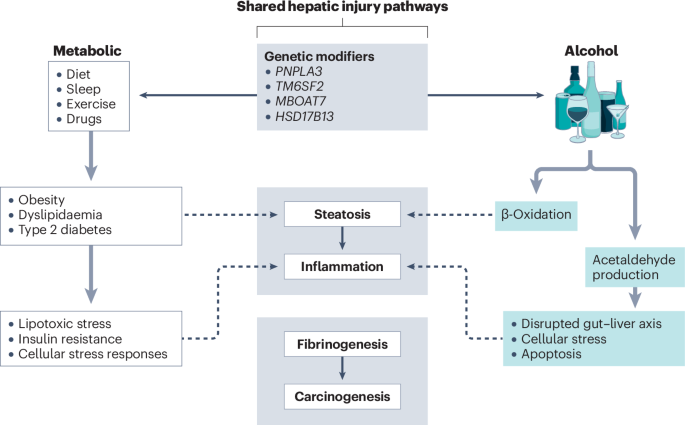
Iturbe-Rey, S. et al. Lipotoxicity-driven metabolic dysfunction-associated steatotic liver disease (MASLD). Atherosclerosis 400, 119053 (2025).
Mota, M., Banini, B. A., Cazanave, S. C. & Sanyal, A. J. Molecular mechanisms of lipotoxicity and glucotoxicity in nonalcoholic fatty liver disease. Metabolism 65, 1049–1061 (2016).
Hansen, J., Cherwitz, D. L. & Allen, J. I. The role of tumor necrosis factor-alpha in acute endotoxin-induced hepatotoxicity in ethanol-fed rats. Hepatology 20, 461–474 (1994).
Zhu, C., Tabas, I., Schwabe, R. F. & Pajvani, U. B. Maladaptive regeneration — the reawakening of developmental pathways in NASH and fibrosis. Nat. Rev. Gastroenterol. Hepatol. 18, 131–142 (2021).
Tilg, H., Moschen, A. R. & Kaneider, N. C. Pathways of liver injury in alcoholic liver disease. J. Hepatol. 55, 1159–1161 (2011).
Ghouse, J. et al. Integrative common and rare variant analyses provide insights into the genetic architecture of liver cirrhosis. Nat. Genet. 56, 827–837 (2024).
Israelsen, M., Trepo, E., Krag, A. & Stender, S. MetALD: genetic factors and clinical outcomes. Semin. Liver Dis. 45, 269–282 (2025).
You, M. & Arteel, G. E. Effect of ethanol on lipid metabolism. J. Hepatol. 70, 237–248 (2019).
Gao, B. & Bataller, R. Alcoholic liver disease: pathogenesis and new therapeutic targets. Gastroenterology 141, 1572–1585 (2011).
Israelsen, M. et al. Comprehensive lipidomics reveals phenotypic differences in hepatic lipid turnover in ALD and NAFLD during alcohol intoxication. JHEP Rep. 3, 100325 (2021).
Steinberg, G. R., Valvano, C. M., De Nardo, W. & Watt, M. J. Integrative metabolism in MASLD and MASH: pathophysiology and emerging mechanisms. J. Hepatol. 83, 584–595 (2025).
Israelsen, M. et al. Impact of acute alcohol consumption on circulating microbiome in asymptomatic alcohol-related liver disease. Gut 73, 1041–1044 (2024).
Hartmann, P., Seebauer, C. T. & Schnabl, B. Alcoholic liver disease: the gut microbiome and liver cross talk. Alcohol. Clin. Exp. Res. 39, 763–775 (2015).
Israelsen, M., Torp, N., Johansen, S., Thiele, M. & Krag, A. MetALD: new opportunities to understand the role of alcohol in steatotic liver disease. Lancet Gastroenterol. Hepatol. 8, 866–868 (2023).
Diaz, L. A., Arab, J. P., Louvet, A., Bataller, R. & Arrese, M. The intersection between alcohol-related liver disease and nonalcoholic fatty liver disease. Nat. Rev. Gastroenterol. Hepatol. 20, 764–783 (2023).
Marti-Aguado, D. et al. Low-to-moderate alcohol consumption is associated with increased fibrosis in individuals with metabolic dysfunction-associated steatotic liver disease. J. Hepatol. 81, 930–940 (2024).
Younossi, Z. M. Evolving spectrum of steatotic liver disease in the United States over 35 years: impact of binge drinking and metabolic dysfunction. Lancet. Gastroenterol. Hepatol. 11, 496–508 (2025).
Paik, J. M. et al. Prevalence of the spectrum of steatotic liver disease and associated fibrosis and cirrhosis among adults in the United States [abstract TOP-032]. J. Hepatol. 82, S660–S661 (2025).
Celsa, C. et al. Risk of hepatic and extrahepatic outcomes associated with metabolic dysfunction-associated steatotic liver disease and metabolic dysfunction and alcohol-associated steatotic liver disease: a systematic review and meta-analysis. Lancet Gastroenterol. Hepatol. 11, 496–508 (2025).
Ochoa-Allemant, P., Hubbard, R. A., Kaplan, D. E. & Serper, M. Adverse liver outcomes, cardiovascular events, and mortality in steatotic liver disease. JAMA Intern. Med. 185, 986–995 (2025).
Lee, H. H. et al. Metabolic dysfunction-associated steatotic liver disease and risk of cardiovascular disease. Gut. 73, 533–540 (2024).
Moon, J. H., Jeong, S., Jang, H., Koo, B. K. & Kim, W. Metabolic dysfunction-associated steatotic liver disease increases the risk of incident cardiovascular disease: a nationwide cohort study. EClinicalMedicine 65, 102292 (2023).
Patra, J. et al. Alcohol consumption and the risk of morbidity and mortality for different stroke types — a systematic review and meta-analysis. BMC Public. Health 10, 258 (2010).
Wood, A. M. et al. Risk thresholds for alcohol consumption: combined analysis of individual-participant data for 599,912 current drinkers in 83 prospective studies. Lancet 391, 1513–1523 (2018).
Millwood, I. Y. et al. Conventional and genetic evidence on alcohol and vascular disease aetiology: a prospective study of 500,000 men and women in China. Lancet 393, 1831–1842 (2019).
Aguilera, M. T. et al. Effect of alcohol abstinence on blood pressure: assessment by 24-hour ambulatory blood pressure monitoring. Hypertension 33, 653–657 (1999).
Suzuki, T. et al. Lipid profiles after changes in alcohol consumption among adults undergoing annual checkups. JAMA Netw. Open 8, e250583 (2025).
Chao, A. M., Wadden, T. A., Tronieri, J. S. & Berkowitz, R. I. Alcohol intake and weight loss during intensive lifestyle intervention for adults with overweight or obesity and diabetes. Obesity 27, 30–40 (2019).
Kase, C. A., Piers, A. D., Schaumberg, K., Forman, E. M. & Butryn, M. L. The relationship of alcohol use to weight loss in the context of behavioral weight loss treatment. Appetite 99, 105–111 (2016).
Louvet, A. et al. Low alcohol consumption influences outcomes in individuals with alcohol-related compensated cirrhosis in a French multicenter cohort. J. Hepatol. 78, 501–512 (2023).
Hofer, B. S. et al. Alcohol abstinence improves prognosis across all stages of portal hypertension in alcohol-related cirrhosis. Clin. Gastroenterol. Hepatol. 21, 2308–2317 (2023).
Hagstrom, H., Hemmingsson, T., Discacciati, A. & Andreasson, A. Alcohol consumption in late adolescence is associated with an increased risk of severe liver disease later in life. J. Hepatol. 68, 505–510 (2018).
Ranker, L. R., Ross, C. S., Rudolph, A. E., Weuve, J. & Xuan, Z. Identifying and describing trajectories of alcohol use frequency and binge drinking frequency among those aged 15–30 years in a national cohort of US adolescents: a group-based trajectory modeling approach. Addiction 118, 1739–1750 (2023).
Pinquart, M. Change in alcohol consumption in adolescence and emerging adulthood: a meta-analysis. J. Stud. Alcohol Drugs 85, 41–50 (2024).
Ayares, G. et al. MetALD: new perspectives on an old overlooked disease. Liver Int. 45, e70017 (2025).
Hansen, E. D. et al. Quantification of alcohol intake in patients with steatotic liver disease and excessive alcohol intake. JHEP Rep. 7, 101200 (2025).
Israelsen, M. et al. Rifaximin-α for liver fibrosis in patients with alcohol-related liver disease (GALA-RIF): a randomised, double-blind, placebo-controlled, phase 2 trial. Lancet Gastroenterol. Hepatol. 8, 523–532 (2023).
Israelsen, M. et al. Steatotic liver disease classification is dynamic, affecting clinical trial eligibility and subclass-specific treatments. Clin. Gastroenterol. Hepatol. 23, 2509–2518 (2025).
Dixon, W., Corey, K. E., Luther, J., Goodman, R. P. & Schaefer, E. A. Prevalence and clinical correlation of cardiometabolic risk factors in alcohol-related liver disease and metabolic dysfunction and alcohol associated liver disease (MetALD). J. Clin. Exp. Hepatol. 15, 102492 (2025).
Singal, A. K., Leggio, L. & DiMartini, A. Alcohol use disorder in alcohol-associated liver disease: two sides of the same coin. Liver Transpl. 30, 200–212 (2024).
Lannoy, S. & Sullivan, E. V. Trajectories of brain development reveal times of risk and factors promoting resilience to alcohol use during adolescence. Int. Rev. Neurobiol. 160, 85–116 (2021).
Karlsen, T. H. et al. The EASL-Lancet Liver Commission: protecting the next generation of Europeans against liver disease complications and premature mortality. Lancet 399, 61–116 (2022).
World Health Organization Europe. A focus on adolescent substance use in Europe, central Asia and Canada. Health Behaviour in School-aged Children international report from the 2021/2022 survey (WHO, 2024).
Louvet, A. et al. Management of alcohol-related liver disease: the French Association for the Study of the Liver and the French Alcohol Society clinical guidelines. Liver Int. 42, 1330–1343 (2022).
Arab, J. P. et al. Alcohol-related liver disease: clinical practice guidelines by the Latin American Association for the Study of the Liver (ALEH). Ann. Hepatol. 18, 518–535 (2019).
Bataller, R. et al. Alcohol-related liver disease: clinical practice guidelines. Consensus document sponsored by AEEH. Gastroenterol. Hepatol. 42, 657–676 (2019).
European Association for the Study of the Liver EASL clinical practice guidelines: management of alcohol-related liver disease. J. Hepatol. 69, 154–181 (2018).
Gottfredson, N. C. & Sokol, R. L. Explaining excessive weight gain during early recovery from addiction. Subst. Use Misuse 54, 769–778 (2019).
Herren, O. M., Gillman, A. S., Marshall, V. J. & Das, R. Understanding the changing landscape of health disparities in chronic liver diseases and liver cancer. Gastro Hep Adv. 2, 505–520 (2023).
Ochoa-Allemant, P., Marrero, J. A. & Serper, M. Racial and ethnic differences and the role of unfavorable social determinants of health across steatotic liver disease subtypes in the United States. Hepatol. Commun. 7, e0000324 (2023).
Scrinis, G. et al. Policies to halt and reverse the rise in ultra-processed food production, marketing, and consumption. Lancet. 405, 1566–1601 (2025).
Xanthakos, S. A. et al. AASLD practice statement on the evaluation and management of metabolic dysfunction-associated steatotic liver disease in children. Hepatology 8, 1352–1394 (2025).
Stanhope, K. L. et al. Consuming fructose-sweetened, not glucose-sweetened, beverages increases visceral adiposity and lipids and decreases insulin sensitivity in overweight/obese humans. J. Clin. Invest. 119, 1322–1334 (2009).
Geidl-Flueck, B. et al. Fructose- and sucrose- but not glucose-sweetened beverages promote hepatic de novo lipogenesis: a randomized controlled trial. J. Hepatol. 75, 46–54 (2021).
Chen, H. et al. Consumption of sugar-sweetened beverages has a dose-dependent effect on the risk of non-alcoholic fatty liver disease: an updated systematic review and dose-response meta-analysis. Int. J. Env. Res. Public Health 16, 2192 (2019).
Liu, W. et al. Meta-analysis of the association between major foods with added fructose and non-alcoholic fatty liver disease. Food Funct. 14, 5551–5561 (2023).
Crabb, D. W., Im, G. Y., Szabo, G., Mellinger, J. L. & Lucey, M. R. Diagnosis and treatment of alcohol-associated liver diseases: 2019 practice guidance from the American Association for the Study of Liver Diseases. Hepatology 71, 306–333 (2020).
Rinella, M. E. et al. AASLD practice guidance on the clinical assessment and management of nonalcoholic fatty liver disease. Hepatology 77, 1797–1835 (2023).
Tacke, F. et al. EASL–EASD–EASO clinical practice guidelines on the management of metabolic dysfunction-associated steatotic liver disease (MASLD). J. Hepatol. 81, 1 (2024) .
Jayabalan, D. et al. The impact of body weight change on liver histology in metabolic dysfunction-associated steatotic liver disease across various histological endpoints: a systematic review and meta-analysis. Am. J. Gastroenterol. https://doi.org/10.14309/ajg.0000000000003918 (2026).
Younossi, Z. M. et al. Global consensus recommendations for metabolic dysfunction-associated steatotic liver disease and steatohepatitis. Gastroenterology 169, 1017–1032 (2025).
Mozaffarian, D. et al. Nutritional priorities to support GLP-1 therapy for obesity: a joint advisory from the American College of Lifestyle Medicine, the American Society for Nutrition, the Obesity Medicine Association, and the Obesity Society. Obesity 33, 1475–1503 (2025).
Sievenpiper, J. L. et al. Nutritional and lifestyle supportive care recommendations for management of obesity with GLP-1-based therapies: an expert consensus statement using a modified Delphi approach. Obes. Pillars 17, 100228 (2025).
Mehrtash, F., Dushay, J. & Manson, J. E. I am taking a GLP-1 weight-loss medication — what should I know? JAMA Intern. Med. 185, 1180 (2025).
European Association for the Study of the Liver EASL clinical practice guidelines on nutrition in chronic liver disease. J. Hepatol. 70, 172–193 (2019).
Stine, J. G. et al. American College of Sports Medicine (ACSM) international multidisciplinary roundtable report on physical activity and nonalcoholic fatty liver disease. Hepatol. Commun. 7, e0400 (2023).
Tadokoro, T., Morishita, A., Himoto, T. & Masaki, T. Nutritional support for alcoholic liver disease. Nutrients 15, 1360 (2023).
Jophlin, L. L. et al. ACG clinical guideline: alcohol-associated liver disease. Am. J. Gastroenterol. 119, 30–54 (2024).
Garber, A. J. et al. Consensus statement by the American Association of Clinical Endocrinologists and American College of Endocrinology on the comprehensive type 2 diabetes management algorithm — 2020 executive summary. Endocr. Pract. 26, 107–139 (2020).
Society, C. C. et al. American Association of Clinical Endocrinologists consensus statement: algorithm for management of adults with dyslipidemia — 2025 update. Endocr. Pract. 31, 1207–1238 (2025).
Whelton, P. K. et al. Harmonization of the American College of Cardiology/American Heart Association and European Society of Cardiology/European Society of Hypertension blood pressure/hypertension guidelines: comparisons, reflections, and recommendations. Eur. Heart J. 43, 3302–3311 (2022).
Nadolsky, K. et al. American Association of Clinical Endocrinologists consensus statement: algorithm for the evaluation and treatment of adults with obesity/adiposity-based chronic disease — 2025 update. Endocr. Pract. 31, 1351–1394 (2025).
Bradley, K. A. et al. AUDIT-C as a brief screen for alcohol misuse in primary care. Alcohol. Clin. Exp. Res. 31, 1208–1217 (2007).
Sobell, L. & Sobell, M. Timeline follow-back for alcohol consumption. APA PsycNet https://doi.org/10.1037/t06202-000 (1992).
Koenig, L. B., Jacob, T. & Haber, J. R. Validity of the lifetime drinking history: a comparison of retrospective and prospective quantity-frequency measures. J. Stud. Alcohol Drugs 70, 296–303 (2009).
Nielsen, J. K. et al. Lifetime drinking history in patients with alcoholic liver disease and patients with alcohol use disorder without liver disease. Scand. J. Gastroenterol. 52, 762–767 (2017).
Krist, A. H. & Bradley, K. A. Addressing alcohol use. N. Engl. J. Med. 392, 1721–1731 (2025).
Stewart, S. H., Koch, D. G., Willner, I. R., Anton, R. F. & Reuben, A. Validation of blood phosphatidylethanol as an alcohol consumption biomarker in patients with chronic liver disease. Alcohol. Clin. Exp. Res. 38, 1706–1711 (2014).
Harris, J. C., Leggio, L. & Farokhnia, M. Blood biomarkers of alcohol use: a scoping review. Curr. Addict. Rep. 8, 500–508 (2021).
Biondi, A., Freni, F., Carelli, C., Moretti, M. & Morini, L. Ethyl glucuronide hair testing: a review. Forensic Sci. Int. 300, 106–119 (2019).
Dunn, W. et al. Utility of a new model to diagnose an alcohol basis for steatohepatitis. Gastroenterology 131, 1057–1063 (2006).
Loomba, R., Hagstrom, H. & Diaz, L. A. Emerging role of phosphatidylethanol testing in clinical practice for the identification of steatotic liver disease subtypes: is this the new standard? Gastroenterology 169, 1103–1107 (2025).
Stockwell, T. et al. Under-reporting of alcohol consumption in household surveys: a comparison of quantity-frequency, graduated-frequency and recent recall. Addiction 99, 1024–1033 (2004).
Tavaglione, F. et al. Clinical utility of phosphatidylethanol to detect underreported alcohol use and enhance steatotic liver disease subclassification. J. Hepatol. 83, 1023–1034 (2025).
Israelsen, M., Francque, S., Tsochatzis, E. A. & Krag, A. Steatotic liver disease. Lancet. 404, 1761–1778 (2024).
Arab, J. P. et al. Metabolic dysfunction and alcohol-related liver disease (MetALD): position statement by an expert panel on alcohol-related liver disease. J. Hepatol. 82, 744–756 (2025).
Carrieri, P., Barré, T., Bureau, M., Marcellin, F. & Mourad, A. Stigma and care avoidance in people with unhealthy alcohol use: a call for research and action. J. Hepatol. 77, 1221–1222 (2022).
Torp, N., Israelsen, M., Thiele, M., Rinella, M. E. & Krag, A. Phosphatidylethanol in steatotic liver disease. J. Hepatol. 83, 1189–1203 (2025).
Diaz, L. A. et al. Disparities in steatosis prevalence in the United States by race or ethnicity according to the 2023 criteria. Commun. Med. 4, 219 (2024).
Chen, V. L. & Flemming, J. A. Pour some sugar on me: glycemic control and the prevention of liver disease. Hepatol. Commun. 8, e0400 (2024).
Garcia-Compean, D., Kumar, R., Cueto-Aguilera, A. N. D., Maldonado-Garza, H. J. & Villarreal-Perez, J. Z. Body weight loss and glycemic control on the outcomes of patients with NAFLD. The role of new antidiabetic agents. Ann. Hepatol. 28, 100751 (2023).
Staufer, K. et al. Ethyl glucuronide in hair detects a high rate of harmful alcohol consumption in presumed non-alcoholic fatty liver disease. J. Hepatol. 77, 918–930 (2022).
Alexopoulos, A. S. et al. Glycemic control predicts severity of hepatocyte ballooning and hepatic fibrosis in nonalcoholic fatty liver disease. Hepatology 74, 1220–1233 (2021).
Piano, M. R. Alcohol’s effects on the cardiovascular system. Alcohol Res. 38, 219–241 (2017).
Bedogni, G. et al. Incidence and natural course of fatty liver in the general population: the Dionysos study. Hepatology 46, 1387–1391 (2007).
Dunn, N., Al-Khouri, N., Abdellatif, I. & Singal, A. K. Metabolic dysfunction and alcohol-associated liver disease: a narrative review. Clin. Transl. Gastroenterol. 16, e00828 (2025).
Vadiveloo, M. et al. Rapid diet assessment screening tools for cardiovascular disease risk reduction across healthcare settings: a scientific statement from the American Heart Association. Circ. Cardiovasc. Qual. Outcomes 13, e000094 (2020).
Schröder, H. et al. A short screener is valid for assessing Mediterranean diet adherence among older Spanish men and women. J. Nutr. 141, 1140–1145 (2011).
Martinez-Perez, C. et al. Integrative development of a short screening questionnaire of highly processed food consumption (sQ-HPF). Int. J. Behav. Nutr. Phys. Act. 19, 6 (2022).
Golan, M. Fifteen years of the family eating and activity habits questionnaire (FEAHQ): an update and review. Pediatr. Obes. 9, 92–101 (2014).
Food and Agriculture Organization of the United Nations. Food Insecurity Experience Scale: Survey Modules. FAO https://openknowledge.fao.org/server/api/core/bitstreams/de732ef0-e079-4c62-a93d-3a735c2e2722/content (2023).
US Department of Agriculture. U.S. Household Food Security Survey Module: Six-Item Short Form Economic Research Service. USDA https://ers.usda.gov/sites/default/files/_laserfiche/DataFiles/50764/short2024.pdf (2024).
Feng, G., Wong, V. W., Targher, G., Byrne, C. D. & Zheng, M. H. Non-invasive tests of fibrosis in the management of MASLD: revolutionising diagnosis, progression and regression monitoring. Gut 74, 335542 (2025).
Rasmussen, D. N. et al. Prognostic performance of 7 biomarkers compared to liver biopsy in early alcohol-related liver disease. J. Hepatol. 75, 1017–1025 (2021).
Henry, L., Eberly, K. E., Shah, D., Kumar, A. & Younossi, Z. M. Noninvasive tests used in risk stratification of patients with nonalcoholic fatty liver disease. Clin. Liver Dis. 27, 373–395 (2023).
Singh, J. et al. Lower FIB-4 threshold in patients with diabetes improves diagnostic accuracy of the test in a Hispanic population. Transl. Gastroenterol. Hepatol. 9, 16 (2024).
van Kleef, L. A. et al. FIB-4-based referral pathways have suboptimal accuracy to identify increased liver stiffness and incident advanced liver disease. Clin. Gastroenterol. Hepatol. 24, 733–742 (2026).
Graupera, I. et al. Low accuracy of FIB-4 and NAFLD fibrosis scores for screening for liver fibrosis in the population. Clin. Gastroenterol. Hepatol. 20, 2567–2576 (2022).
Oh, J. H. et al. Diagnostic performance of non-invasive tests in patients with MetALD in a health check-up cohort. J. Hepatol. 81, 772–780 (2024).
Torp, N. et al. MetALD: diagnosis and prognosis with non-invasive tests. Aliment. Pharmacol. Ther. 61, 70281 (2025).
Younossi, Z. M. et al. Updated global consensus recommendations for risk stratification, treatment initiation, and response monitoring in metabolic dysfunction-associated steatotic liver disease. Clin. Gastroenterol. Hepatol. https://doi.org/10.1016/j.cgh.2026.03.030 (2026).
Srivastava, A. et al. Prospective evaluation of a primary care referral pathway for patients with non-alcoholic fatty liver disease. J. Hepatol. 71, 371–378 (2019).
Vidal-Trecan, T. et al. Effectiveness of six international guidelines using fibrosis-4 and FibroScan for risk stratification of metabolic dysfunction-associated steatotic liver disease in type 2 diabetes. Clin. Gastroenterol. Hepatol. 23, 2176–2186.e2 (2025).
Zhang, X. et al. Clinical care pathway to detect advanced liver disease in patients with type 2 diabetes through automated fibrosis score calculation and electronic reminder messages: a randomised controlled trial. Gut 72, 2364–2371 (2023).
Sripongpun, P. et al. The steatosis-associated fibrosis estimator (SAFE) score: a tool to detect low-risk NAFLD in primary care. Hepatology 77, 256–267 (2023).
Strandberg, R. et al. Use of new CORE risk score to predict 10 year risk of liver cirrhosis in general population: population based cohort study. BMJ 390, e083182 (2025).
Yip, T. C. et al. Prognostic performance of the two-step clinical care pathway in metabolic dysfunction-associated steatotic liver disease. J. Hepatol. 83, 304–314 (2025).
Vali, Y. et al. Biomarkers for staging fibrosis and non-alcoholic steatohepatitis in non-alcoholic fatty liver disease (the LITMUS project): a comparative diagnostic accuracy study. Lancet Gastroenterol. Hepatol. 8, 714–725 (2023).
Abdallah, H. et al. Metabolic dysfunction-associated steatotic liver disease (MASLD): assessing metabolic dysfunction, cardiovascular risk factors, and lifestyle habits. Eur. J. Intern. Med. 138, 101–111 (2025).
Winder, G. S., Fernandez, A. C. & Mellinger, J. L. Integrated care of alcohol-related liver disease. J. Clin. Exp. Hepatol. 12, 1069–1082 (2022).
Diaz, L. A. et al. Management of alcohol use disorder: a gastroenterology and hepatology-focused perspective. Lancet Gastroenterol. Hepatol. 10, 475–490 (2025).
Younossi, Z. M. et al. Clinical and patient-reported outcomes from patients with nonalcoholic fatty liver disease across the world: data from the global Non-Alcoholic Steatohepatitis NASH)/Non-Alcoholic Fatty Liver Disease (NAFLD) registry. Clin. Gastroenterol. Hepatol. 20, 2296–2306 (2022).
Barbera, A. et al. Patient-reported outcomes in metabolic dysfunction-associated steatotic liver disease. Semin. Liver Dis. 45, 210–220 (2025).
David, K. et al. Quality of life in adults with nonalcoholic fatty liver disease: baseline data from the nonalcoholic steatohepatitis clinical research network. Hepatology 49, 1904–1912 (2009).
Younossi, Z. M., Golabi, P. & Henry, L. A comprehensive review of patient-reported outcomes in patients with chronic liver diseases. J. Clin. Gastroenterol. 53, 331–341 (2019).
Younossi, Z. M., Stepanova, M., Schattenberg, J. M. & Henry, L. Measuring health-related quality of life and patient-reported outcomes in chronic liver disease. J. Hepatol. 84, 457–472 (2026).
Pocuca, N. et al. A mixed-methods study of staff perspectives on the barriers and facilitators to the implementation of patient-reported routine outcome measures and feedback in alcohol and other drug treatment. Drug Alcohol Rev. 44, 759–771 (2025).
Douglas, A. et al. Reporting of patient-reported outcomes in trials on alcohol use disorder: a meta-epidemiological study. BMJ Evid. Based Med. 28, 21–29 (2023).
Younossi, Z. M. et al. Low disease awareness among metabolic dysfunction-associated steatotic liver disease (MASLD) and MASLD cirrhosis in the United States. Hepatology 82 (Suppl. 1), 2183 (2025).
Mynttinen, M. A., Mishina, K. E. & Kangasniemi, M. K. Adolescents’ perceptions and experiences of their responsibilities for their alcohol use — a group interview study. Children 8, 214 (2021).
Liu, M., Zhao, W. Q., Zhao, Q. R., Wang, Y. & Li, S. G. The impact of the peer effect on adolescent drinking behavior: instrumental-variable evidence from China. Front. Psychiatry 14, 1306220 (2023).
Sudhinaraset, M., Wigglesworth, C. & Takeuchi, D. T. Social and cultural contexts of alcohol use: influences in a social-ecological framework. Alcohol Res. 38, 35–45 (2016).
Quigley, J. Alcohol use by youth. Pediatrics. 144, e20191356 (2019).
Kopka, C. J., Pugliese, N., Brennan, P. N. & Lazarus, J. V. We must address the MASLD awareness gap, improve educational quality and prepare for the digitally quantified self. Liver Int. 44, 2099–2101 (2024).
Knight, J. R., Sherritt, L., Harris, S. K., Gates, E. C. & Chang, G. Validity of brief alcohol screening tests among adolescents: a comparison of the AUDIT, POSIT, CAGE, and CRAFFT. Alcohol. Clin. Exp. Res. 27, 67–73 (2003).
Newsome, P. N. et al. A placebo-controlled trial of subcutaneous semaglutide in nonalcoholic steatohepatitis. N. Engl. J. Med. 384, 1113–1124 (2021).
Chen, V. L. et al. Resmetirom therapy for metabolic dysfunction-associated steatotic liver disease: October 2024 updates to AASLD practice guidance. Hepatology 81, 312–320 (2025).
Noureddin, M. et al. Efruxifermin in compensated liver cirrhosis caused by MASH. N. Engl. J. Med. 392, 2413–2424 (2025).
Lee, B., Ghumman, U., Pedicone, L. D., Aldana, A. G. & Lawitz, E. Prospects of late-stage development agents in the treatment of metabolic dysfunction-associated steatohepatitis. Clin. Mol. Hepatol. 31, 1167–1196 (2025).
Younossi, Z. M. et al. Pathologic criteria for nonalcoholic steatohepatitis: interprotocol agreement and ability to predict liver-related mortality. Hepatology 53, 1874–1882 (2011).
Younossi, Z. M. et al. Predictors of fibrosis, clinical events and mortality in MASLD: data from the Global-MASLD study. Hepatology 84, 204–215 (2026).
El-Kassas, M., Othman, H. A., Elbadry, M., Alswat, K. & Yilmaz, Y. Risk stratification of patients with metabolic dysfunction-associated steatotic liver disease: steatohepatitis, fibrosis, and hepatocellular carcinoma. J. Clin. Exp. Hepatol. 15, 102415 (2025).
El-Kassas, M., Awad, A., Elbadry, M. & Arab, J. P. Tailored model of care for patients with metabolic dysfunction-associated steatotic liver disease. Semin. Liver Dis. 44, 54–68 (2024).
Ikejima, K., Kon, K. & Yamashina, S. Nonalcoholic fatty liver disease and alcohol-related liver disease: from clinical aspects to pathophysiological insights. Clin. Mol. Hepatol. 26, 728–735 (2020).
Eshraghi, R. et al. Effects of glucagon-like peptide-1 receptor agonists on alcohol consumption: a systematic review and meta-analysis. EClinicalMedicine 90, 103645 (2025).
Fortunato, E. K. et al. Brand-specific consumption of flavored alcoholic beverages among underage youth in the United States. Am. J. Drug Alcohol Abuse 40, 51–57 (2014).
Albers, A. B. et al. Flavored alcoholic beverage use, risky drinking behaviors, and adverse outcomes among underage drinkers: results from the ABRAND study. Am. J. Public Health 105, 810–815 (2015).
Loy, J. K. et al. Changes in alcoholic beverage choice and risky drinking among adolescents in Europe 1999–2019. Int. J. Env. Res. Public Health 18, 10933 (2021).
Olson, M. L., Rossheim, M. E., Sanders, S. B. & Yurasek, A. M. Alcohol demand and supersized alcopop consumption among undergraduate college students. Exp. Clin. Psychopharmacol. 30, 120–125 (2022).
Paradis, C., April, N., Cyr, C., Morin, R. & Niquette, M. The Canadian alcopop tragedy should trigger evidence-informed revisions of federal alcohol regulations. Drug Alcohol Rev. 38, 198–200 (2019).
Rossheim, M. E. et al. The evolving alcohol landscape: implications for public health and policy. J. Stud. Alcohol Drugs 86, 323–329 (2025).
Rossheim, M. E. et al. Underage drinkers’ first experience consuming a popular brand of supersized alcopop. Am. J. Drug Alcohol Abuse 46, 421–429 (2020).
Miech, R. A., Johnston, L. D., Patrick, M. E. & O’Malley, P. M. Monitoring the Future. National survey results on drug use, 1975–2023: overview and detailed results for secondary school students. Institute for Social Research https://monitoringthefuture.org/wp-content/uploads/2024/01/mtfoverview2024.pdf (2024).