
Last Updated on August 7, 2026 2:12 pm by INDIAN AWAAZ

Dr Bharti Kalra and Dr Sanjay Kalra
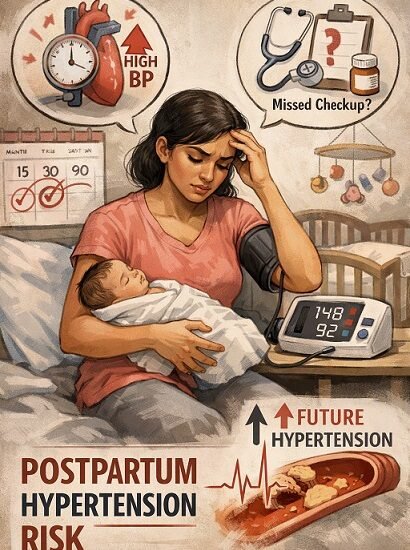
Women who experience hypertensive disorders of pregnancy (HDP) remain at an increased risk of developing chronic hypertension after childbirth. A recent study published in Hypertension (October 6, 2025) highlights the importance of postpartum blood pressure (BP) assessment, demonstrating that elevated systolic BP measured between 15 and 90 days after delivery is a strong predictor of incident hypertension within the first postpartum year.
The retrospective cohort study analyzed data from 5,657 women across two health systems in the southeastern United States between 2014 and 2017. All participants had a history of HDP but no pre-existing hypertension. Researchers evaluated postpartum BP measurements obtained between 15 and 90 days after delivery and examined their association with the subsequent development of hypertension.
Among the study population, only 2,520 women (45%) underwent postpartum BP evaluation, while nearly 40% of eligible women did not receive a BP check during this critical follow-up period. Over a median follow-up of 9.9 months, higher postpartum systolic BP was independently associated with a significantly greater risk of developing hypertension, with each increase corresponding to an 81% higher risk (hazard ratio 1.81). Women whose postpartum BP measured 140/90 mmHg had an estimated 12% cumulative incidence of hypertension at 12 months, compared with only 4.5% among those with BP of 110/65 mmHg.
These findings underscore the postpartum period as a crucial opportunity for cardiovascular risk assessment. Women with a history of HDP should not only receive routine BP monitoring after delivery but also be counseled regarding their long-term cardiovascular health. Early identification of elevated BP may facilitate timely lifestyle interventions, closer surveillance, and initiation of antihypertensive therapy when appropriate, thereby reducing progression to chronic hypertension.
The study also highlights a significant gap in postpartum care, with a substantial proportion of high-risk women missing recommended BP assessments. Strengthening postpartum follow-up protocols and ensuring timely blood pressure monitoring could play a pivotal role in preventing long-term cardiovascular complications in this vulnerable population.
Reference
Urrutia RP, et al. Blood pressure 15 to 90 days after a hypertensive disorder of pregnancy and later hypertension. Hypertension. Published online October 6, 2025. doi:10.1161/HYPERTENSIONAHA.124.24393.