
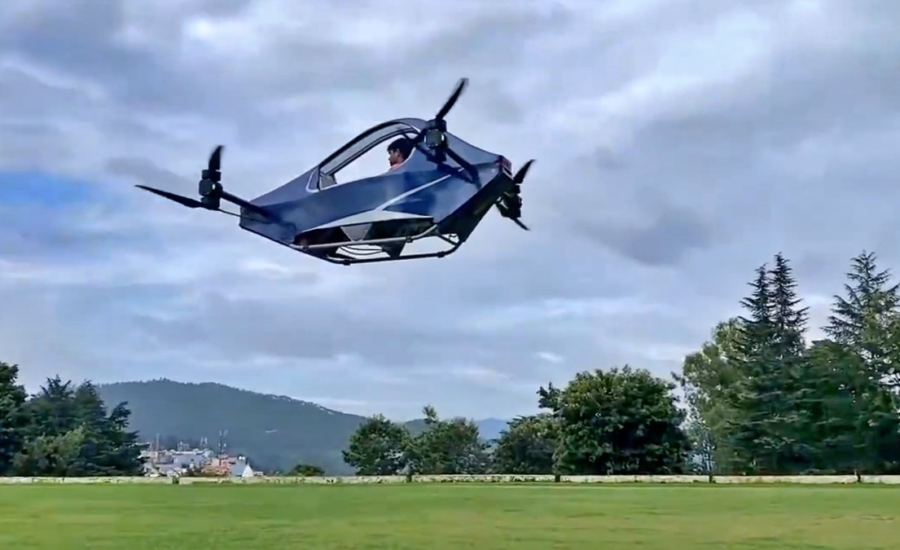
A young innovator from Uttarakhand’s Almora district has taken a significant step toward the future of personal mobility by successfully testing the prototype of an electric flying vehicle, showcasing a homegrown alternative to conventional transport powered entirely by electricity.
Ravi Tamta, from Kaflikhan village near the famous Jageshwar Dham, has developed HAPIDA SKYNeX, an electric personal flying vehicle through his startup, Hapida Sky Private Limited.
The successful prototype flight marks the first major milestone after years of research and development, bringing the vision of personal air mobility closer to reality.
Unlike conventional flying machines that rely on aviation fuel or experimental vehicles exploring ethanol-based propulsion, the HAPIDA SKYNeX is designed as a fully electric flying vehicle, making it an environmentally friendly alternative with zero tailpipe emissions.
According to the innovator, the project aims to make safe, affordable and sustainable personal air transportation accessible in India. The successful demonstration highlights the growing capabilities of Indian startups in developing advanced mobility technologies.
The achievement has also put the spotlight on Uttarakhand’s emerging innovation ecosystem.
Experts believe the state’s challenging Himalayan terrain makes it an ideal testing ground for next-generation aerial mobility solutions that can overcome limitations of road connectivity.
If developed further, electric personal flying vehicles could have applications far beyond urban transport. They could improve connectivity in remote Himalayan villages, support disaster relief and emergency response during landslides and floods, and provide faster access to isolated regions where road infrastructure is limited.
The technology could also give a boost to tourism by offering new modes of travel across the state’s mountainous landscapes.
The successful prototype flight represents years of dedicated research by Ravi Tamta and his team. While the vehicle is still in the prototype stage and will require further testing and regulatory approvals before commercial deployment, the demonstration signals India’s growing ambitions in the field of advanced air mobility.
– Ends