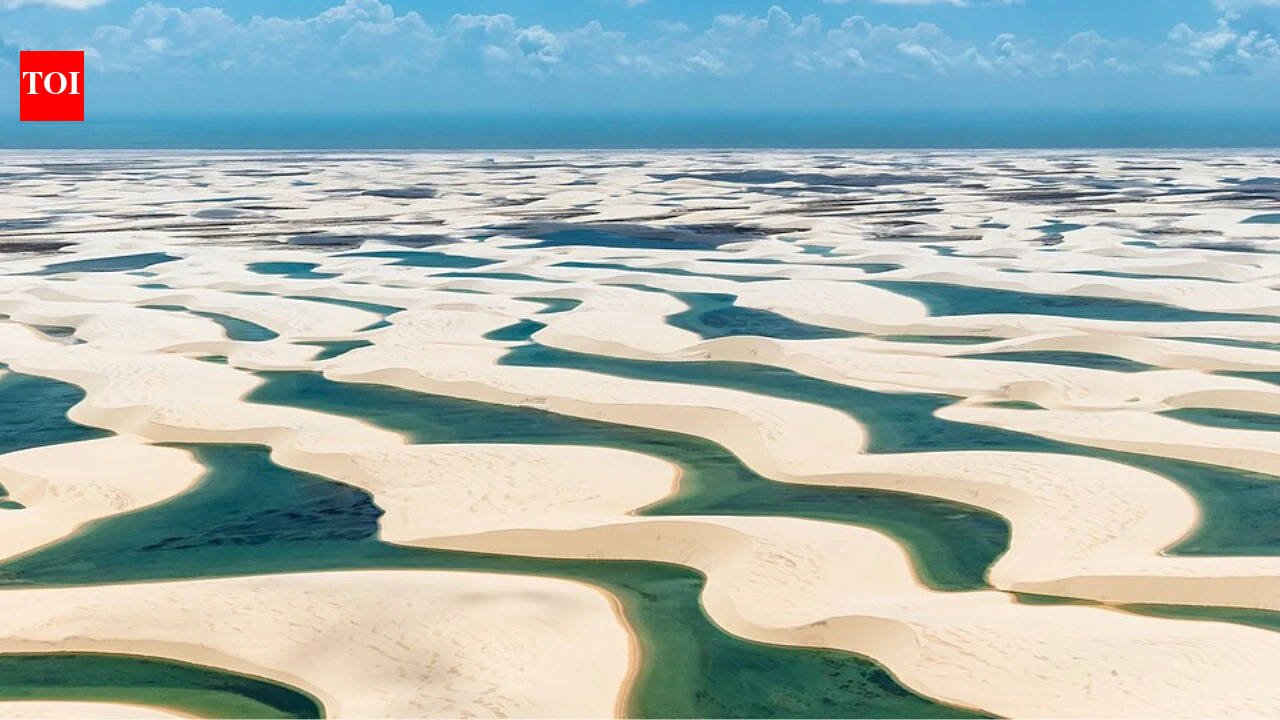
Imagine a desert. Now imagine that same desert filling up with thousands of turquoise lagoons deep enough to swim in, all in a matter of months. This is what happens every year in northeast Brazil, in a place called Lençóis Maranhenses. The site covers 156,562 hectares, or about 1,565 square kilometres, of white sand dunes dotted with temporary and permanent freshwater lagoons, according to the UNESCO World Heritage Centre, which listed the park in 2024 as a World Heritage site.It looks like a desert, but the rain says otherwiseLençóis Maranhenses, which means “bedsheets of Maranhão,” is named for the way the dunes ripple across the landscape like crumpled linen. But a true desert, by the standard geographical definition, gets less than 254 millimetres of rain in a year. This area gets a lot more: around 1,200 millimetres each year, well above the desert threshold. That’s one reason scientists call it a dune field rather than a true desert, even though it looks like one from above.
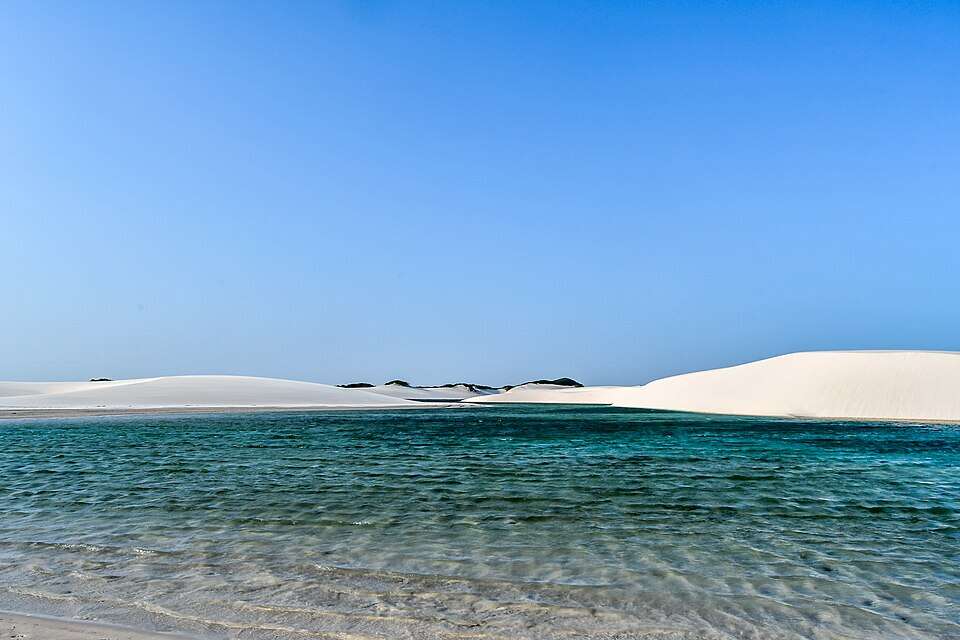
Rainwater collects in the valleys between dunes, forming lagoons that can run nearly 90 metres long. Image Credits: Wikimedia Commons
How thousands of lagoons appear almost overnightHeavy rains sweep the coast between January and June. Water gathers in the hollows between the dunes because a layer of clay and rock beneath the sand prevents it from draining away. The UNESCO listing mentions that the dunes form winding chains up to 75 kilometres long along an 80-kilometre coastline, individual dunes reaching 30 metres high as they move inland. The same listing says the dunes move at between 4 and 25 metres a year, which means the hollows between them and the lagoons that eventually fill those hollows never occupy quite the same spot twice.By July the lagoons reach their peak. Some of them are more than 90 metres long and nearly three metres deep, the Smithsonian reports. Their colours range from pale green to deep blue depending on the depth and sunlight. The dry season begins around August, and the lagoons begin to shrink. The magazine says that the water level can drop up to just under a metre each month, and by the end of the year many of the lagoons are completely dry, with only bare sand remaining.The surprising part: there are fish in the “desert”These are not empty lagoons. During the wettest months, water levels rise, and the lagoons connect to nearby rivers, allowing fish to swim in and settle for the season. One species copes differently with the dry months. Once its pool dries out, the wolf fish (also known as Hoplias malabaricus) buries itself in the wet muck and enters dormancy. Smithsonian’s reporting explains that it effectively hits pause on its life until the rains come again and wake it back up.
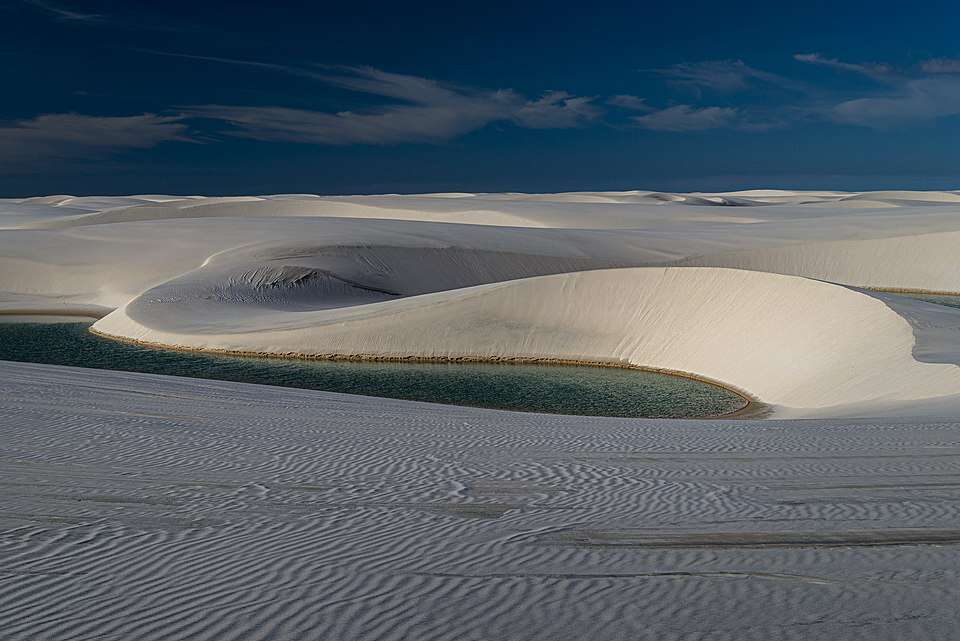
Wind constantly reshapes the dunes, so the landscape never looks quite the same twice. Wikimedia Commons
The dunes never stop movingThe wind constantly re-sculpts the sand, so this landscape is never quite complete. The 2019 study, ‘Modelling Dunes from Lençóis Maranhenses National Park (Brazil): Largest dune field in South America,’ published in Scientific Reports, used satellite images and GPS survey data to create a detailed elevation model of the dunes. The study, led by researcher A. L. S. dos Santos and colleagues, confirms this is the largest dune field in South America and describes the dunes as being in constant motion, advancing and retreating as conditions change. Along with the UNESCO listing, the paper helps explain why no map of Lençóis Maranhenses stays accurate for long. One year a lagoon may be there; the next, it may be filled in with fresh sand and a new one may open nearby.Why it’s worth the tripFor travelers looking for an unusual landscape, Lençóis Maranhenses is hard to beat. It has the visual drama of a desert, the surprise of a wetland and a wildlife story that nearly sounds made up. UNESCO’s own assessment says it’s one of the best surviving examples anywhere of how coastal dunes evolve over thousands of years, moulded by wind, sea and rain working together across the Quaternary period.The best time to see the lagoons at their fullest is between June and July, just before the dry season begins its slow erasure of the whole scene, until the rains return and the whole landscape starts again.