A new study shows liver and pancreatic fat accumulate well before diabetes develops in Asian Indians, making organ fat a far more reliable indicator of risk than body weight.
For decades, body mass index (BMI) has been the foundation for assessing obesity and diabetes risk. But new research suggests that this may not be the case for Asian Indians. Even people with a relatively modest BMI can harbour dangerous amounts of fat deep inside the body—particularly in the liver and pancreas—placing them on the path to diabetes long before blood sugar reaches diabetic levels.
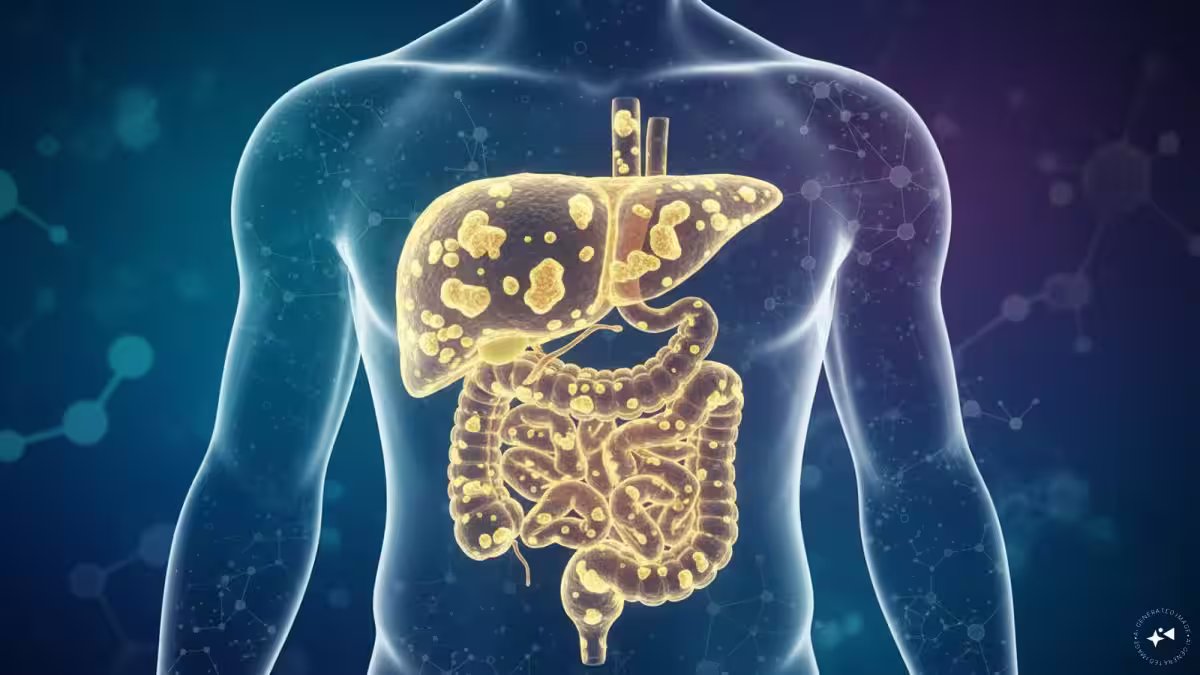
The study, published in Diabetologia, found that liver fat nearly doubled in people with prediabetes compared with those with normal blood sugar despite all participants having a similar average BMI of around 25 kg/m². More importantly, liver fat emerged as the strongest independent predictor of abnormal blood sugar, outperforming BMI even after adjusting for age.
The same is true for pancreatic fat. The study shows it is twice as high in people who are borderline diabetic compared to healthy adults.
“The most important finding is that metabolic dysfunction was already clearly evident at the prediabetes stage, despite only modest BMI,” says Dr Anoop Misra, senior author of the study and Executive Chairman of Fortis C-DOC Hospital for Diabetes and Allied Sciences. “Liver fat was almost twice as high in people with prediabetes as in those with normoglycaemia, and hepatic fat remained the strongest independent predictor of dysglycaemia after adjustment for age and BMI.”
 More from Health
The numbers were striking. Every one percentage point increase in liver fat was associated with approximately a 16% higher likelihood of prediabetes and an 11% higher risk of overall dysglycaemia.
“This matters because BMI alone may underestimate metabolic risk in Asian Indians,” Dr Misra says. “Prediabetes should not be regarded as a mild or passive intermediate state; it may already represent a stage of significant ectopic fat accumulation, insulin resistance and impending beta-cell dysfunction.”
The researchers recruited 45 adults—15 with normal glucose levels, 15 with prediabetes, and 15 with newly diagnosed type 2 diabetes—and matched them for BMI. Using advanced MRI techniques, they measured fat deposits in the liver, pancreas and multiple abdominal fat compartments. They also assessed total body fat using DEXA scans and evaluated insulin resistance and beta-cell function.
They found that people with prediabetes and diabetes also have more overall fat- more intra-abdominal or visceral fat, Superficial abdominal fat, and posterior abdominal fat. This shows that where fat is stored matters more than body weight alone.
Excerpts from an interview with Dr Misra.
What is the single most important finding of your study, and why should it matter?
The most important finding is that metabolic dysfunction was already clearly evident at the prediabetes stage, despite only modest BMI.
Liver fat was almost twice as high in people with prediabetes as in those with normoglycaemia (normal blood sugar levels), and hepatic or liver fat remained the strongest independent predictor of dysglycaemia (abnormal sugar levels) after adjustment for age and BMI. Each one per cent increase in hepatic fat was associated with approximately 16% higher odds of prediabetes and 11% higher odds of overall dysglycaemia.
This matters because it suggests that BMI alone may underestimate metabolic risk in Asian Indians. Prediabetes should not be regarded as a mild or passive intermediate state; it may already represent a stage of significant ectopic fat accumulation, insulin resistance and impending beta-cell dysfunction.
Your study found that liver fat was a stronger predictor of prediabetes and diabetes than BMI. Should screening for diabetes risk in Asian Indians move beyond BMI to include assessment of fatty liver, and how feasible is that in routine clinical practice?
Yes, I believe diabetes-risk assessment in Asian Indians needs to move beyond BMI. Our study shows that people with similar BMI can have markedly different amounts of liver, pancreatic and abdominal fat, and hepatic fat was the most consistent independent predictor of dysglycaemia.
However, I would not suggest that MRI should become a routine screening test. MRI-PDFF is highly accurate but expensive and not widely accessible. A more practical approach would be to identify persons at high risk using waist circumference/waist-to-height ratio, glycaemia and metabolic risk factors, and then selectively assess for fatty liver using available clinical and imaging tools or non-invasive markers.
One of the striking findings is that liver and pancreatic fat were already elevated in people with prediabetes and were not significantly higher in those with newly diagnosed diabetes. Does this suggest that the metabolic damage begins much earlier than we currently recognise?
Absolutely. This is one of the most important implications of the study. Liver fat was approximately twice as high in both prediabetes and newly diagnosed diabetes compared with normoglycaemia, while pancreatic fat was also significantly elevated in both groups. Importantly, there was no significant additional increase between prediabetes and diabetes. Liver fat appears to be the centre point of metabolism in Indians.
This suggests that a substantial component of ectopic fat accumulation may occur before overt diabetes develops. In our study, beta-cell function was still preserved or had compensated, whereas it declined with established diabetes. This creates a potentially important therapeutic window: if ectopic fat (deposition of fat in organs like the liver, heart, skeletal muscles and pancreas where fat is generally not stored) and insulin resistance can be reduced during prediabetes, it may be possible to delay or prevent subsequent beta-cell failure.
Your participants had significant liver and pancreatic fat despite having an average BMI of only around 25 kg/m². What does this tell us about the unique diabetes risk among Asian Indians compared with Western populations?
It reinforces the concept that Asian Indians are metabolically obese at a much lower BMI. Compared with Western populations, Asian Indians tend to develop greater abdominal adiposity, insulin resistance, and ectopic fat at lower levels of overall body weight. The message is therefore simple: in Asian Indians, where the fat may be more important than simply how much a person weighs.
Based on your findings, what are the most effective interventions to reduce liver and pancreatic fat at the prediabetes stage, and is there evidence that doing so can prevent progression to type 2 diabetes?
The first-line intervention should be early, sustained lifestyle modification aimed at reducing excess adiposity and ectopic fat—particularly through appropriate calorie restriction, improved dietary quality and routine physical activity.
There is also emerging evidence for pharmacological approaches. Our paper cites previous work in Asian Indians showing that 120 days of dapagliflozin reduced hepatic fat from 15.16% to 10.06% and pancreatic fat from 7.52% to 5.99% in people with type 2 diabetes. GLP-1-based drugs (semaglutide and tirzepatide) have also been associated with substantial weight loss and reductions in hepatic fat and liver stiffness.
Our findings deliver a strong rationale for intervening earlier—normoglycemia and especially prediabetes.