Exposure to secondhand cigarette smoke during the earliest stages of life may affect the mineral development of teeth, according to new research from scientists at the University of São Paulo in Brazil.
The study found that young rats exposed to cigarette smoke developed microscopic and chemical changes in their tooth enamel, despite no visible differences being detected by the naked eye.

Researchers from the Ribeirão Preto School of Dentistry at the University of São Paulo investigated how early-life exposure to cigarette smoke could influence enamel formation. The work forms part of a wider research programme examining how early environmental challenges, including smoking exposure, alcohol and toxic stress, can affect development.
The study was based on the Developmental Origins of Health and Disease theory, which suggests that experiences during pregnancy and early childhood can influence health later in life.
Professor Francisco Wanderley Garcia de Paula-Silva, the study’s advisor, said tooth enamel provides a valuable record of early-life exposures because it does not remodel after it forms: ‘Enamel is a very interesting structure because it can function as a biomarker. It forms at that specific point in life and doesn’t remodel afterward, unlike bone. Detecting changes in enamel can provide important information about very early exposures that a person sometimes can’t even recall.’
For the research, baby rats were divided into two groups. One group was exposed to cigarette smoke for five minutes twice a day from the second to the 28th day of life, while the control group was not exposed. The animals were placed in a controlled chamber to ensure researchers could isolate the effects of cigarette smoke.
The smoke-exposed rats gained less weight than the unexposed animals, reflecting previous findings on the impact of secondhand smoke on growth. However, their teeth appeared normal when examined visually.
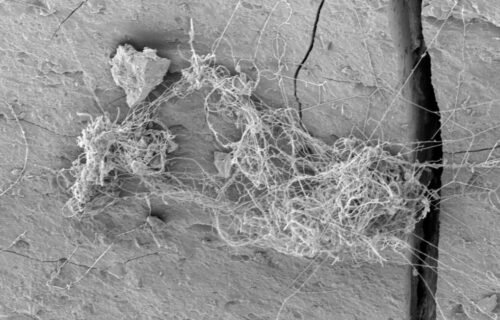
More detailed analysis revealed changes within the enamel structure, including increased spaces between enamel prisms, the microscopic structures responsible for organising the mineral composition of teeth. Researchers also found lower phosphorus levels and increased carbon content in the enamel of smoke-exposed animals.
Phosphorus is a key component of hydroxyapatite, the mineral that gives enamel its strength. Professor Paula-Silva said changes to enamel composition could potentially affect properties such as resistance to wear and fractures.
‘Enamel is the hardest structure in the human body precisely because it’s highly mineralised. The increase in carbon suggests a higher presence of organic material in the enamel, which isn’t considered normal.’
The researchers stressed that the findings cannot yet be directly applied to humans. Further studies are underway to examine whether longer or heavier exposure produces more severe enamel changes.
Professor Paula-Silva said: ‘Smoking is already recognised as a major risk factor for respiratory diseases and child development. What this study shows is that teeth may also bear the marks of such early exposures.’
The full research can be read here.
Photo: Abstral Official