
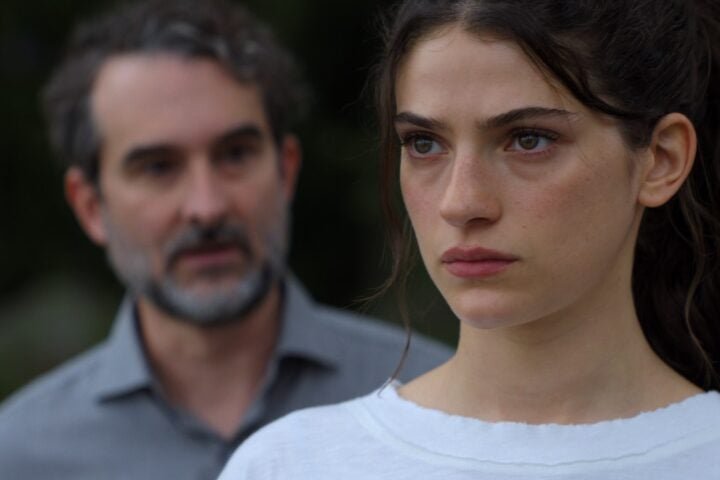
Megan Park’s Sterling Point is marked by a lackadaisical style and pace that gives viewers plenty of time to soak its lush scenery in. The Amazon show’s commitment to chill at times threatens to undercut its drama, but its vibes are immaculate.
The series begins in New York, where 17-year-old Annie (Ella Rubin) is about to have two bombshells dropped on her. The first is a rejection letter from the prestigious business school where she had hoped to spend the final summer of her pre-adult life. The second is the news that her estranged grandfather has passed away, leaving his Canadian island to her and her twin brother, Connor (Keen Ruffalo). Her plans in tatters, and filled with a sense that this island might be harboring some long-buried secrets about her family, Annie does what any sensible teenager would do by popping an Ambien and hopping on a plane.
From her very first scene, Annie is the kind of character you’ll gladly follow anywhere. The way Rubin alternates between movie-star elegance and goofball charm is reminiscent of a young Julia Roberts: One moment Annie is dazzling the room with a brilliant smile, and the next she’s falling over herself and offering flustered, hilarious apologies.
Park lets the camera luxuriate in the glittering waters and towering green trees of the Muskoka region of Canada, capturing silhouette-strewn sunsets and conjuring long, balmy summer nights. The world Annie arrives in feels wild but safe—big enough to endlessly explore but small enough to conquer in one of the sputtering little motorboats that all the local kids drive.

Annie quickly falls in with a new friend group, and the rest of Sterling Point is devoted largely to watching these weirdos hang out. Ramona (Amélie Hoeferle) is a tomboy with a deadpan wit and a paralyzing death-stare, and Oona (Bo Bragason) is a bohemian It girl whose transatlantic accent seems to seduce everyone she comes in contact with while Oona’s wise-beyond-her-years little sister, Maple (Mable Strachan), looks on in quiet exasperation.
This group of uncool cool kids is cut from the same cloth as the teens in Park’s My Old Ass. They’re open-minded, identity-conscious, and great at talking about their feelings but often just as bad at acting on them as you’d expect teens to be. They party, smoke, and talk like adults but retain an endearing childhood naïveté. They’re also burdened with secret crushes and love triangles, providing Sterling Point with fuel for slow-burning drama.
And it turns out they’re not the only ones. Over the course of the series, Annie learns more about the life her adoptive mother lived in Canada, uncovering a tale involving extra-marital affairs, unplanned pregnancies, and uncertain parentage. At times it feels like you’ll need a big corkboard covered in red string to keep track of all the romantic relationships and familial connections. (Is there a term for the child your adoptive parent had with someone else?)
With so many jilted lovers and dirty secrets in the mix, one might expect Sterling Point to be a little spikier. No one acts out of malice, and whether it’s the decades-old mistakes of the older characters or the shiny new ones that Annie makes, the series always presents them as bad choices made by good, if messy, people.
Park often seems more interested in the hushed, confessional conversation that follows the big blow-out than the big blow-out itself, rendering some of the show’s major conflicts oddly tame. Ramona’s transition from a hyper-guarded ball of hostility to Annie’s new BFF, for one, happens a little too seamlessly. What Sterling Point excels at, though, is tracing the quiet aftermath: moments of bruised introspection, as characters dissect their own flaws with disarming honesty, which gives the show’s breezy tone and aesthetic some much-needed weight.
Cast: Ella Rubin, Amélie Hoeferle, Jacob Whiteduck-Lavoie, Keen Ruffalo, Bo Bragason, Jay Duplass, Mabel Strachan, Jeffrey Dean Morgan Network: Amazon
Since 2001, we’ve brought you uncompromising, candid takes on the world of film, music, television, video games, theater, and more. Independently owned and operated publications like Slant have been hit hard in recent years, but we’re committed to keeping our content free and accessible—meaning no paywalls or fees.
If you like what we do, please consider subscribing to our Patreon or making a donation.