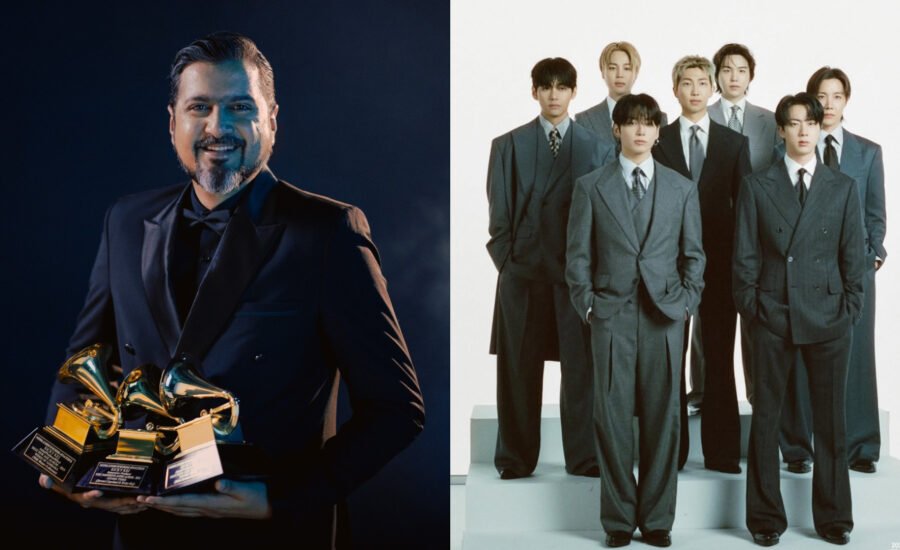
As a three-time Grammy Award winner and an Asian musician living and working on the continent, the Recording Academy holds a deeply special place in my life. I have profound respect for the Academy’s core mission: to serve as the definitive standard for musical excellence and to elevate artists globally.
This is precisely why I feel compelled to speak up. The Academy’s recent announcement of a new Best Asian Pop Performance category originates from a desire to expand Grammy recognition in a way that is more reflective of our ever-changing global soundscape. At first glance, these changes feel like long-awaited progress; a reflection of our industry’s diversity in the digital age. However, my strong belief is that this approach misses the mark on what genuine global inclusion requires.
The Challenge of Relevance and Global Audience Growth
In recent years, the modern music landscape has shifted dramatically. The Recording Academy is navigating a world where domestic U.S. viewership has fluctuated. More people outside the United States care about the Grammys today than ever before, and the Academy naturally seeks to remain relevant to this expanding global audience.
Recently, the iconic supergroup BTS announced they would not be entering their music in the 2027 Grammys. In many ways, creating the Best Asian Pop Performance category was a tailored attempt to honor mega-groups in K-Pop and engage their massive fan bases. While I understand why BTS took a strong stand by skipping the Grammys entirely, this situation highlights a growing disconnect between how international artists are honored and how they are categorized. Since their first nomination in 2021, BTS has been nominated a total of five times but ultimately have not won in either a Genre or General Field category. I feel this result is largely rooted in how the voting body is structured.
Structural Silos & Committee Power
I appreciate the Recording Academy’s recent clarification regarding the BTS boycott: that submitting to a genre-specific category like Asian Pop does not technically disqualify an artist from General Field categories like Record, Album, or Song of the Year. While this is true in theory, it overlooks a very real administrative constraint.
If an artist like BTS submits a track to Best Asian Pop Performance, that same track automatically becomes ineligible for standard, genre-neutral categories where it might naturally belong, such as Best Pop Duo/Group Performance, Best Pop Solo Performance, Best Dance/Electronic Recording, Best R&B Solo Performance, Best Melodic Rap Performance, or Best Dance Pop Recording. Furthermore, even if an artist opts to enter a broader pop category, the Academy’s Genre Committees hold the administrative discretion to reassign the entry to the Asian Pop category. In my past experience, these decisions are typically non-appealable.
The unintentional result is a framework that risks structurally segregating Asian artists. By creating geographically bounded categories like “Best Asian Pop” or “Best African Music Performance,” we aren’t fully integrating world music into the main stage and risk excluding diverse regions from the historically prestigious categories that carry the most weight. It inadvertently sends a message that international excellence is celebrated primarily within a designated corner.
Whose Asia? Whose Pop?
Another fundamental issue is that “global diversity” is still frequently viewed through an American-centric lens, focusing primarily on the vibrant diaspora within the U.S. It brings to mind Major League Baseball’s “World Series,” which is played exclusively by teams in the U.S. and Canada. When searching for administrative Asian representation or consultation, the focus often falls on Asian-American professionals based in industry hubs like Los Angeles or New York. While their contributions are vital, they operate within the American music machinery and may not always fully capture the realities, nuances, and ground-level music movements happening across Asia itself, where I live and create music.
This disconnect becomes clear in the scope and criteria of the category itself. The current guidelines highlight contemporary popular music from Asian markets. Specifically mentioning K-Pop, J-Pop, and C-Pop. Asia is a vast continent of over 4.5 billion people. As a non-East Asian artist, I have to ask: where does this leave the rich, profound musical traditions of India, Sri Lanka, Iran, Saudi Arabia, Vietnam, Türkiye, or Armenia? While not explicitly excluded, they are functionally overlooked. If the category is intended primarily for East Asian pop formats that mirror Western production, the criteria should transparently reflect that, rather than using a broad continental label that leaves out more than half the region.
Honoring True Artistry Over Western Parity
The Grammy Awards were created to celebrate artistic mastery, technical achievement, and innovation, not merely commercial chart dominance. Yet, there is an increasing tendency to prioritize international music only when it adopts Western production styles, arrangements, and chord structures.
By focusing strictly on “Pop” iterations, the Academy risks overlooking the extraordinary traditional, classical, and non-pop genres that represent the height of musical achievement. Across India and the broader Asian continent, there are masters whose innovation and artistry are unmatched globally, yet they remain largely invisible to the current voting ecosystem, again, because of how the voting body is constituted.
Building a Truly Global Recording Academy
In my opinion, the Recording Academy has a clear choice. One valid option is to embrace its identity as a premier national U.S. award show and step back from claiming to be a global arbiter, which is a completely respectable stance. However, if the Academy’s vision — as it has stated on numerous occasions — is to truly reflect a global standard of excellence, systemic changes are needed.
I suggest four constructive solutions. First, to fortify global membership by aggressively recruiting and granting active voting rights to musicians, industry professionals, and ethnomusicologists who live and work natively outside the United States, particularly across Asia and Africa, to diversify the perspective of the voting pool.
Second, to de-center Western pop structures by expanding recognition beyond foreign music that mimics American Top 40 formats. True diversity requires celebrating traditional, folk, and non-Western classical music forms, where deep artistic mastery lives.
Third, to incorporate global artists into the main broadcast rather than limiting their recognition to the pre-telecast Premiere Ceremony. Artists across Asia and India command stadium crowds and streaming numbers that rival the world’s biggest stars; their presence belongs on the main stage. Just because an artist is not known in the U.S. does not mean they aren’t a huge global superstar.
Finally, promote external cultures domestically by using the Academy’s immense global platform to educate and expose Western audiences to diverse musical forms from around the world, rather than primarily using the platform to export Western pop formats globally.
By making these structural adjustments, I believe we can build a Recording Academy that authentically reflects, honors, and celebrates the full spectrum of our global soundscape and is uniquely positioned to elevate musical excellence wherever it may be.