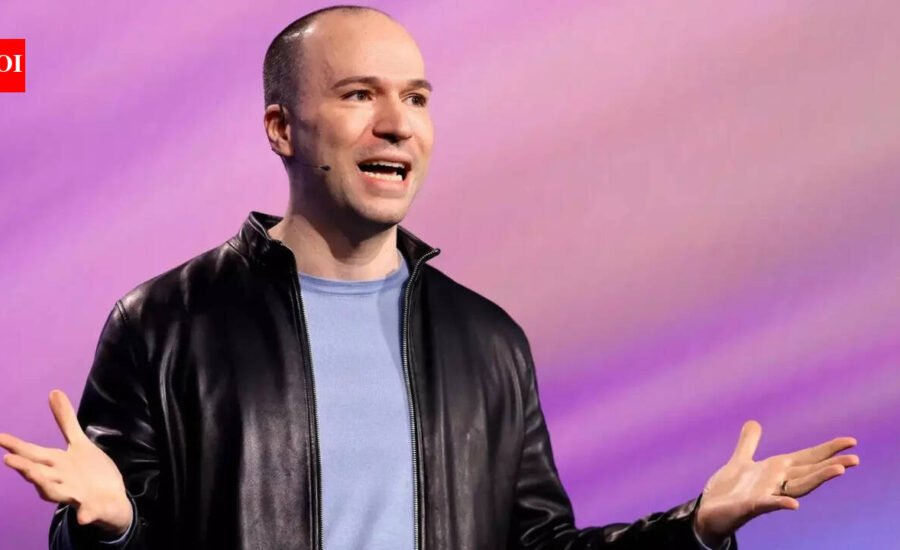
Greg Brockman used the plural, and the plural is the story. OpenAI‘s president told independent journalist Joanna Stern that the company is building “a family of devices” for its AI models, which turns a year of leaks and lawsuits into something on the record: this was never a one-gadget project. He would not give a date. He would only say you can expect them soon.The device the world already half-knows about, he refused to touch. Bloomberg reported in July that OpenAI starts with a screenless smart speaker, battery-powered so you can carry it from the laundry room to the kitchen, fitted with a camera and sensors to read what’s around it, and built with small moving parts so it feels like company rather than an appliance waiting for orders. Asked to confirm it, Brockman folded the question back into the family line and left it there.
Why OpenAI believes voice will replace typing on its AI devices
The bet underneath the hardware is small to describe and enormous to get wrong: that we will talk to our computers for the vast majority of what we do. Brockman is aware of the obvious hole in that. Open-plan offices do not want forty people speaking to forty machines. He raised the soundproof “beak” masks now turning up on desks, said he doesn’t wear one, and argued their very existence proves the demand is real even if nobody thinks masks are the answer.Then there’s the camera in your living room. OpenAI is working on verifiable, auditable guarantees that only the model ever reads a user’s private data, a direct response to lingering doubts about how private ChatGPT’s temporary chat mode actually is.
Apple’s trade secrets lawsuit still shadows OpenAI’s hardware push
Apple sued OpenAI in July in a California federal court, alleging the company asked Apple job candidates to bring components and prototypes into interviews and that more than 400 ex-Apple employees now work there. Chief hardware officer Tang Tan is a named defendant. Apple wants an injunction, which would stop the speaker selling before it ever sells. Brockman stayed narrow: OpenAI is focused on its own technology, and “we have no interest in other companies’ trade secrets. We are plenty innovative.”The money explains the heat. OpenAI paid $6.5 billion for Jony Ive’s studio io, has roughly five products in development, and is reportedly scoping a phone with Qualcomm and MediaTek. The what and the why are now public. Whether any of it reaches a shelf before a judge reaches a decision is the part Brockman left alone.