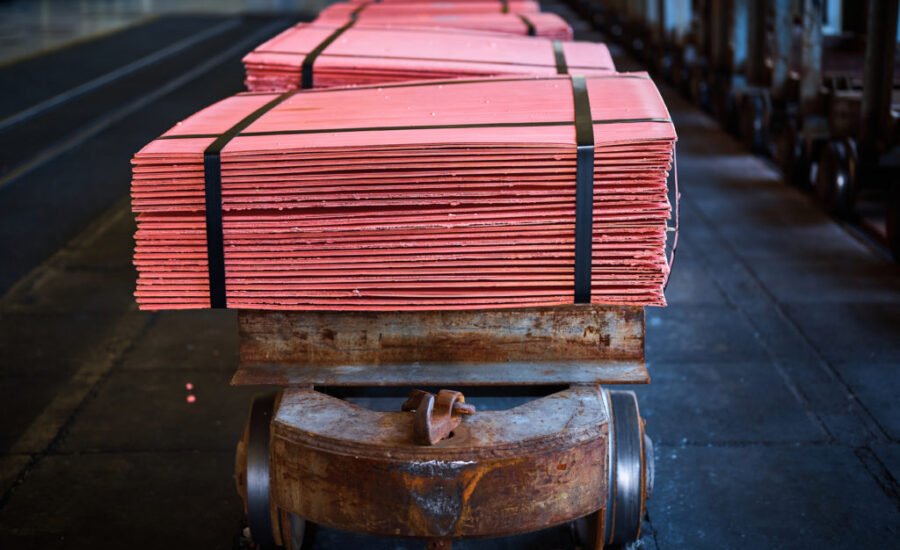
Stacks of cathode copper sheets. Stock image.
Copper is pouring into the US at the fastest rate in at least 12 years as traders position ahead of President Donald Trump’s decision on tariffs on refined imports.
More than 200,000 metric tons arrived in July, the biggest monthly inflow on record in IHS Markit shipping data going back to 2014. The import surge will add to vast US stockpiles that have accumulated over the past year, with combined Comex and London Metal Exchange inventories exceeding 740,000 tons and LME data Friday showing another 110,860 tons in private storage in US ports.
The influx is being closely watched as the hoard has been built at the expense of supplies in the rest of the world. Inventories in LME warehouses outside the US have fallen sharply this year as traders diverted metal to American ports to capture higher prices.
The flows have accelerated even after a June 30 deadline for Commerce Secretary Howard Lutnick to recommend action on tariffs passed without an announcement. Producers, consumers and traders are awaiting clarity as the White House weighs whether to extend protection from semi-finished copper products to raw metal.
Meanwhile, Comex copper in New York continues to trade at a hefty premium to the LME, preserving an arbitrage that encourages shipments into the US.

“The tariff arbitrage is ruling the roost over demand growth,” said Michael Cuoco, head of metals at StoneX Financial Inc. “Those that are closer to whomever is making the formal decision believe they will be better off by bringing more copper into the US today rather than tomorrow.”
Official Comex inventories have climbed more than 40% this year to a record, while the total US copper hoard is widely estimated at well above 1 million tons. The threat of tariffs is allowing the US to build stockpiles of a metal increasingly viewed as strategic for power grids, artificial intelligence, electric vehicles and defense.
The White House has yet to indicate when Trump will decide on refined copper tariffs. Supporters argue the levies would encourage investment in domestic mining and processing, while opponents say they would raise costs for manufacturers that rely on imported copper and make US-made products less competitive. The debate comes on top of existing 50% tariffs on semi-finished copper products and derivatives.
A decision to impose tariffs on raw metal would likely trigger one final rush of shipments before the levies take effect, while abandoning the proposal could reverse trade flows as merchants unwind positions accumulated over the past 18 months.
The tariff threat has dominated the copper market for much of the past year, repeatedly pushing New York futures above London prices. Last July, Trump directed Lutnick to study whether refined copper imports should face phased tariffs beginning at 15% in January 2027.
The Comex-LME arbitrage — the spread between front-month Comex copper and the LME cash contract — averaged more than $350 a metric ton in July, comfortably high enough to attract metal from overseas.
At the same time, the London market is showing signs of a squeeze, with nearby contracts trading at a premium of about $65 to three-month futures, the widest since January. That price structure, known as backwardation, signals short-term tightness.
(By Yvonne Yue Li and James Attwood)