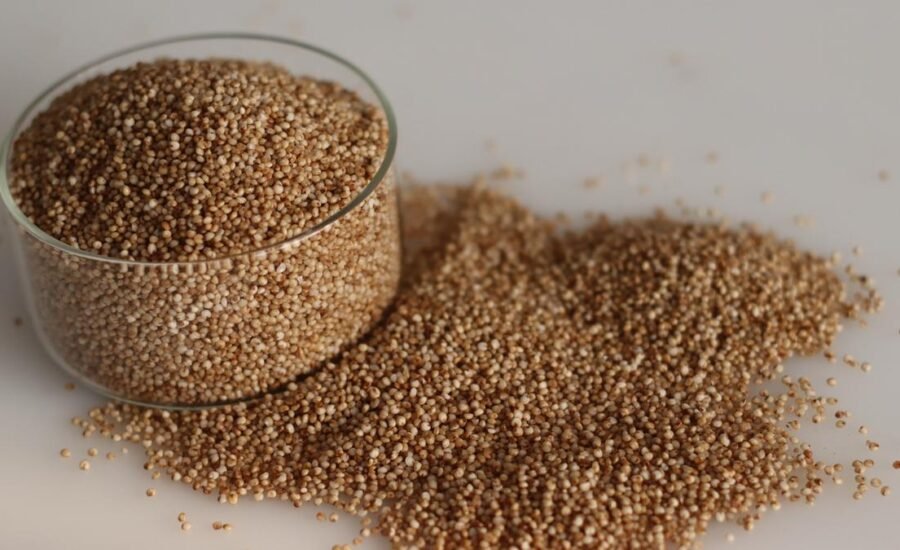

Image used for representational purposes only.
| Photo Credit: Getty Images/iStockphoto
GUWAHATI
Researchers across two continents may have given an iron-and-zinc boost for India’s Millets Mission, launched as a concept in 2007 and taken forward a decade later.
Nutrition and health specialists in India and the U.S. conducted a nine-month study among toddlers in Mumbai’s urban slums. They found that iron- and zinc-fortified pearl millets fed to these toddlers during the study period did not cause detectable harmful changes to the developing gut microbiome, offering a potentially safer option to combat iron deficiency.
The gut microbiome is a collection of trillions of helpful and harmful microorganisms, including bacteria, viruses, and fungi living inside the digestive tract, particularly the large intestine.
The study was led by researchers at Cornell University’s Joan Klein Jacobs Centre for Precision Nutrition and Health. Its Indian collaborators were Shobha A. Udipi and Padmini Ghugre of Mumbai’s SNDT Women’s University and Ramesh D. Potdar of the Centre for the Study of Social Change, a Mumbai-based NGO.
‘Integrated approach must for increasing millet production’
Their findings, published in Nature Communications, represent what the researchers believe is one of the first studies to examine how bio-fortified crops affect the human gut microbiome and could be a food-based strategy to address iron deficiency in early childhood.
The SNDT Women’s University team helped develop the millet-based foods and recipes, and delivered them to 20 sites in partnership with the NGO.
Working with farmers
Iron deficiency affects roughly one in four people worldwide and hits young children especially hard, slowing brain development and leaving the body vulnerable to infection. Iron supplements, the standard fix, work but come with a catch, the researchers said.
Previous research found that supplements can disrupt the gut’s bacterial ecosystem, boosting populations of harmful pathogens in the colon while inhibiting the growth of beneficial microbes and causing diarrhoea, constipation, and tarry stools.
“We thought that a food-based approach could help us move away from one-size-fits-all supplementation strategies to address population health, while also being a way to personalise nutritional interventions. So, we decided to test it,” Saurabh Mehta, founding director at the Jacobs Centre and principal investigator on the study, said.
The researchers worked with farmers to develop a pearl millet variety containing almost three times the iron and zinc as standard millet through traditional cross-breeding.
The trial enrolled 223 children 12 to 18 months old in Mumbai, where iron deficiency and anaemia are common.
Fighting pathogens
The researchers found that the children eating the bio-fortified millet showed increased activity in microbial pathways associated with fighting pathogens, including the production of natural antibiotic-like compounds, and with antioxidant metabolism, which helps maintain a healthier gut environment. At the same time, markers linked to harmful bacteria were lower in their guts by the study’s end.
Unlike supplements, which require distribution infrastructure and depend on consistent behaviour, bio-fortified crops can be grown and eaten the same way ordinary crops are, and may offer a self-sustaining approach to improving nutrition, the researchers said.
India produces more than 40% of the world’s millets, which include pearl millet (bajra), sorghum (jowar), and finger millet (ragi).
Published – August 06, 2026 05:51 pm IST