
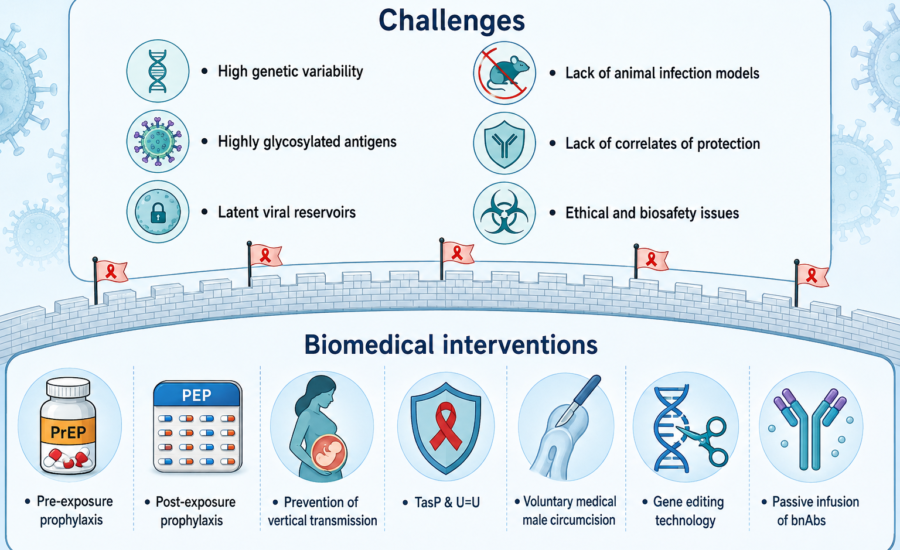
From six-monthly injections to gene editing and engineered antibodies, researchers outline how established and emerging strategies could reduce HIV transmission while the search for an effective vaccine continues.
Review: Biomedical Interventions for HIV Prevention and Control: Beyond Vaccination.
In a recent review published in the journal Viruses, researchers synthesized the evolving landscape of non-vaccine biomedical interventions, specifically those designed to reduce the acquisition and transmission of the human immunodeficiency virus (HIV).
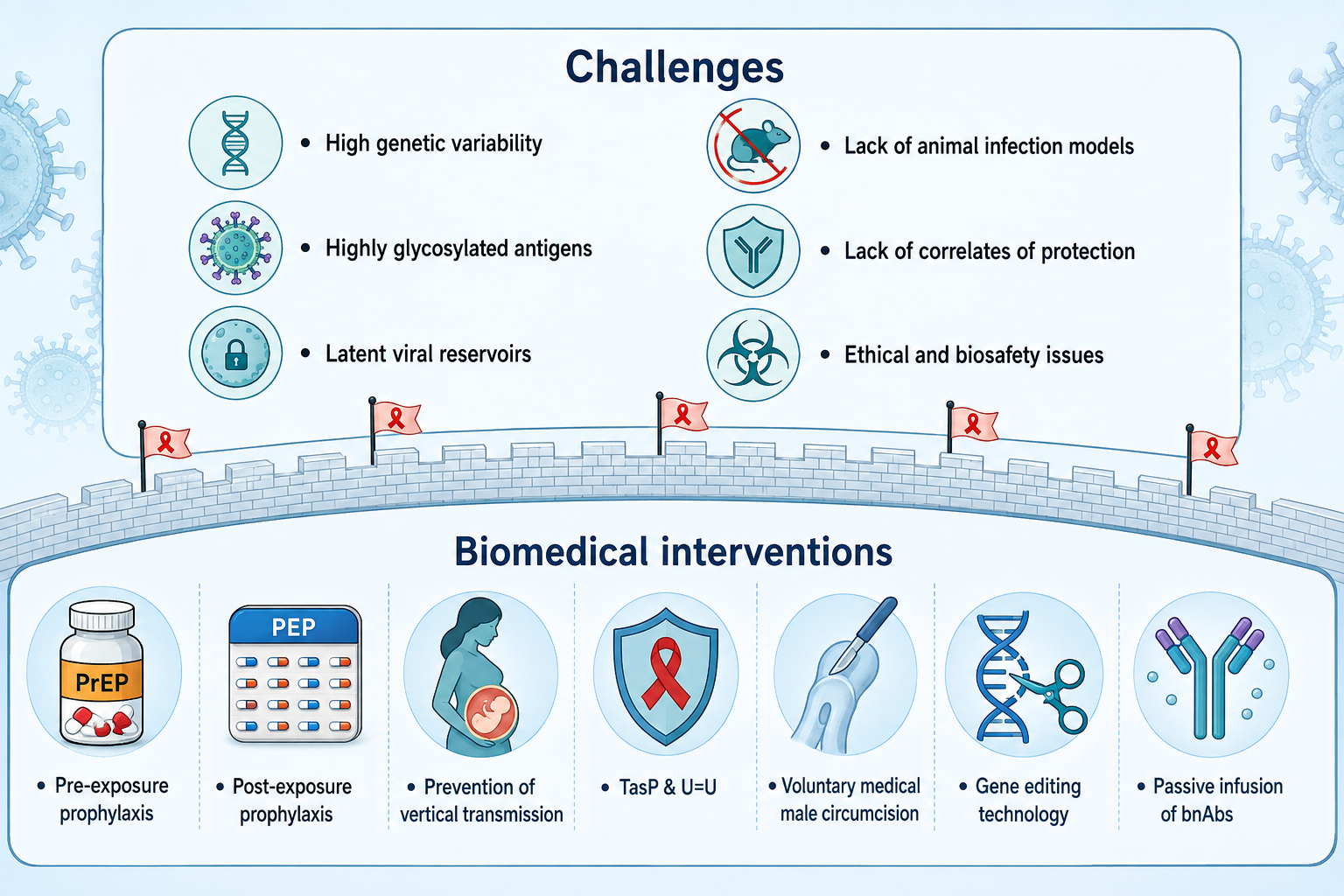
The authors explored several core biological barriers that have complicated the development of effective HIV interventions, including the high genetic variability observed in HIV strains, glycosylation of the virus’s envelope, and the persistence of latent viral reservoirs. Furthermore, they outlined the clinical efficacy and logistical hurdles of contemporary prevention modalities.
The authors highlighted that, while an effective prophylactic HIV vaccine remains technically elusive, developing strategies such as long-acting injectables, gene-editing technologies, and broadly neutralizing antibodies (bNAbs) may provide viable pathways toward achieving the global 2030 target of ending the acquired immunodeficiency syndrome (AIDS) epidemic.
Background
Despite more than four decades of intensive clinical research, the human immunodeficiency virus (HIV) remains one of the most severe and persistent global health crises. Current estimates indicate that approximately 39.9 million individuals were living with HIV in 2023, when approximately 1.3 million new infections were reported.
While substantial advances in our scientific understanding of HIV have resulted in behavioral interventions and conventional antiretroviral therapy (ART) that have significantly reduced transmission and mortality, ART alone cannot eliminate integrated proviral DNA from latent cellular reservoirs.
Previous reviews on the topic have consequently emphasized the need to develop protective prophylactic vaccines, but have also elucidated that structural and evolutionary hurdles intrinsic to the virus severely hamper vaccine development efforts.
Specifically, HIV exhibits extremely high reverse-transcriptase-driven mutation rates and frequent genomic recombination, making it difficult to develop vaccines that provide broad protection against genetically diverse circulating strains.
Furthermore, studies have shown that the dense N-linked glycan shields surrounding the virus’s envelope glycoprotein gp120 induce “conformational masking,” enabling the virus to evade neutralizing antibodies.
Finally, the paper organized alternative biomedical interventions according to whether they act before exposure, shortly after exposure, or after HIV infection has become established.
About the review
The review aimed to address these persistent knowledge gaps and inform future HIV research and public health policy by reviewing and summarizing current and investigational biomedical strategies for HIV prevention and control.
The review synthesized evidence from clinical trials, epidemiological models, and mechanistic studies, which were classified under six major challenge domains: 1. Genetic hypervariability, 2. Envelope glycosylation, 3. Latent viral reservoirs, 4. Animal model limitations, 5. Absence of defined correlates of protection, and 6. Ethical and biosafety issues in intervention development and clinical testing.
The authors organized biomedical interventions into pre-exposure, post-exposure, and post-infection stages. They discussed: 1. Pre-Exposure Prophylaxis (PrEP), 2. Post-Exposure Prophylaxis (PEP), 3. Treatment as Prevention (TasP) and the Undetectable = Untransmittable (U=U) principle, 4. Testing as prevention, prevention of vertical transmission, and Voluntary Medical Male Circumcision (VMMC), and 5. Emerging Technologies, including gene-editing approaches such as CRISPR-Cas9 and Brec1 recombinases, and the passive infusion of engineered multispecific bNAbs.
Review findings
The authors highlighted that newer long-acting formulations, such as lenacapavir, offer an important advance in HIV prophylaxis. In the case of lenacapavir, a long-acting HIV-1 capsid inhibitor, Phase III clinical trials PURPOSE 1 and 2 reported prevention efficacy estimates of 100% and 96%, respectively, with subcutaneous injections administered every six months in the studied populations.
Similarly, long-acting cabotegravir injections were associated with a 66% to 89% reduction in HIV acquisition compared with daily oral TDF/FTC. These findings support the potential of long-acting treatments to address the adherence challenges associated with daily oral PrEP.
In the realm of post-infection control, the authors reaffirmed that ART-mediated viral suppression under the U=U principle effectively eliminates the risk of sexual transmission when viral loads remain continuously suppressed. Furthermore, the paper reported that comprehensive vertical transmission prevention strategies can reduce mother-to-child transmission rates to below 1%.
Voluntary male circumcision was also found to be an effective HIV prevention measure, with studies highlighting that VMMC has decreased heterosexual acquisition risk in men by approximately 60% through the removal of foreskin tissue enriched with CD4+ T-cell targets. However, it does not eliminate HIV acquisition risk, prevent transmission from men living with HIV to their partners, or replace other prevention measures.
Finally, evaluations of emerging technologies highlighted that gene-editing approaches, including CRISPR-mediated editing of the CCR5 co-receptor and Brec1-mediated excision of integrated proviral DNA, have shown promise in laboratory and animal studies, with limited early clinical evidence available for some approaches. Bispecific and trispecific bNAbs have demonstrated improved antiviral breadth primarily in preclinical models, while passively infused bNAbs have shown acceptable safety and tolerability in humans.
However, these approaches remain experimental. Gene editing faces challenges, including limited editing efficiency, delivery, off-target effects, ethical concerns, and potential tumorigenesis, while bNAbs are constrained by high production and storage costs, strain-specific activity, and the potential need for repeated administration.
Conclusions
The authors concluded that, while a prophylactic HIV vaccine remains the ultimate goal, it is unlikely to become clinically available soon because of continuing technical hurdles. Instead, established non-vaccine biomedical interventions provide highly effective tools for reducing transmission, while investigational approaches may broaden future prevention and treatment options and contribute to the global 2030 goal of ending the AIDS epidemic.
Source:
- Liao, Y., Wen, Z., Shi, M., Zou, H., & Sun, C. (2025). Biomedical Interventions for HIV Prevention and Control: Beyond Vaccination. Viruses, 17(6), 756. DOI: 10.3390/v17060756, https://www.mdpi.com/1999-4915/17/6/756