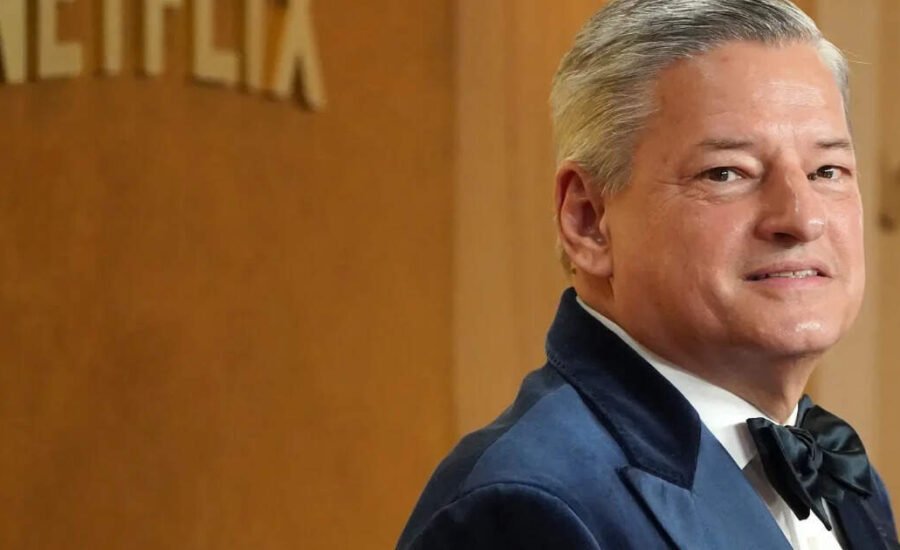
While Netflix has an estimated 20-25 million paid users in India, against a global base of more than 325 million, he sees the country offering enormous headroom for expansion and being crucial for the firm to succeed globally.
Sarandos told Javed Farooqui and Vinod Mahanta in an interview that India’s deep appetite for entertainment, thriving creative ecosystem, rising smartphone and connected TV penetration, and affordable internet make it one of the most strategic markets for the platform.
Edited excerpts:
India’s average revenue per user remains far below developed markets despite a large aggregate size. As Netflix completes a decade in India, how has the market challenged your initial assumptions?
When we launched Sacred Games, we introduced a new model of premium, cinematic television to India. It was ambitious, lavish and unlike anything on Indian TV then.

Looking back, I think we should have invested in both high-end scripted shows and reality formats simultaneously.
The success of Lock Upp shows audiences also love dramatic, cliffhanger-driven unscripted entertainment. Netflix serves more than a billion viewers with very different tastes, and our job is to offer the best version of whatever they come for, scripted or unscripted.We also learnt that every market has different needs, with some genres underserved and others already well served.
India has been a steep learning curve for American companies. The usual product and business model playbook rarely works, and average revenue per user is low. How did Netflix crack it?
India has always been a fascinating entertainment market. Audiences are value-conscious, not just price-conscious—they’ll pay for the best if they consistently get it.
Many American companies try one big idea and move on. We took a different approach, investing continuously across genres and delivering fresh programming at scale.
With over a billion global viewers, we learnt you need enough choice to delight people every time they pick up the remote. Netflix isn’t a visitor in India’s entertainment ecosystem; we’ve become a leader in one of the world’s most complex markets.
India is among the largest entertainment markets globally. Where does it fit into your overall global strategy?
There is a big appetite for entertainment in India and a large consumer base. I think those people have generally been underserved since there aren’t enough screens for as many people who want to watch a movie.
We are trying to solve it through different screens like TV and mobile. That’s why I think the market is so attractive and the principles of entertainment are exactly the same.
But let’s use the new technology to help solve a problem in India, which is being able to quench an appetite for more content and more entertainment.
Cricket has shifted from television to mobile, and IPL viewership keeps growing. Would Netflix consider bidding for IPL or other major sports rights in India?
Live sports are an important opportunity, but our strategy isn’t to chase full-season league rights.
We’ve been building our live technology globally and will expand it market by market. Our focus is on unique Netflix events rather than becoming another broadcaster.
In the US, we’ve chosen marquee occasions like NFL games on Christmas and MLB’s Home Run Derby instead of entire seasons. The idea is to bring a younger, more engaged audience and a different creative approach that adds value to leagues, rather than simply driving up rights prices.
That’s the model we’re more likely to replicate elsewhere, including India. It would be very unlikely for us to get the whole season of cricket. An eventisable event, a tournament—those are the kinds of things.
When you look at India from Los Gatos, what defines success—subscribers, profitability, cultural impact or the global reach of Indian stories?
It’s all of those.
We’re a business, so revenue and profit matter because they fund continued investment. But cultural impact matters, too, and you can feel it when a local show like Lock Upp dominates social media and becomes part of the national conversation.
Success isn’t about a single hit. It’s about consistently entertaining audiences while building a sustainable business. Our ability to keep investing in India ultimately depends on our ability to keep entertaining India, creating a virtuous cycle of growth and reinvestment.
Will you revisit your pricing strategy in India, given how value-conscious the market is?
India has been an important testing ground for Netflix, including our first mobile-only plan, which has since influenced markets globally.
But our approach here is no different from anywhere else: the key is delivering value, not just lowering prices. Every time someone presses play, they decide whether Netflix is worth paying for.
India keeps us honest because audiences have high expectations and demand compelling content that justifies the subscription.
Netflix has stayed true to its core strategy in India while adapting its product and pricing. Has that balance kept you competitive in the market?
Reed Hastings (Netflix co-founder) instilled an extraordinary level of focus from the beginning.
For years, Netflix was a one-product, one-price company, and that discipline built a very strong foundation.
As we’ve grown, we’ve been able to add multiple price points, products, partnerships and content formats without losing that focus.
We started with one premium scripted series, House of Cards. Today, we make scripted shows, unscripted entertainment and stories across every imaginable language.
India reflects that evolution because there isn’t one India—it’s like a world in itself, with different languages, cultures and lifestyles.
You are trying to appeal to the world when you are appealing to India. There could be no Netflix globally without India. You can’t be successful without it.
Streaming in India has moved from growth at any cost to capital discipline. How has Netflix’s investment philosophy evolved?
We never looked at India as a market we could simply buy. That strategy has eaten companies around the world.
The most exciting projects attract multiple buyers and bidders, which is good for the creative community.
We’re certainly not in a phase of doing this cheaper or skimming the market. India still demands the level of investment it takes to win.
But we haven’t just thrown money at it. What you see on screen is spectacular, and that’s the approach we’ve taken since we first came to India.
How do you plan to grow Netflix’s paid subscriber base in India while maintaining its premium positioning?
I think there’s enormous headroom for both.
We want Netflix to be desirable, but not unattainable. Ultimately, consumers decide whether we’re delivering value.
It’s very easy to cancel Netflix—it’s just one click—so we have to earn consumers’ trust and admiration every day. That’s what keeps us focused on delivering great entertainment.
Is Netflix’s India business profitable?
We report a global P&L rather than market-wise numbers, but we’re very happy with the economics of our India business.
We’ve never been in the loss leader business. That’s why we stayed away from expensive rights like NFL football and still built a large business.
But are you happy with Netflix India’s current business?
Very. I’m impatient by nature, but I’m thrilled with our progress over the past decade.
We’ve built a strong slate across films, series and now unscripted programming.
Shows like The Great Indian Kapil Show and Lock Upp have been particularly impactful, proving we can succeed in formats many thought we couldn’t.
Our goal is to be the first place you check and the last service you cancel. That means constantly finding new creators, investing in skills, and strengthening India’s creative ecosystem while generating significant economic impact.
When will Netflix launch its ad-supported plan in India?
I’m sure it’s coming down the road, but we’re not there yet.
What impact will AI have on the media and entertainment industry?
AI will be a step change for entertainment, much like the shift from 2D hand-drawn animation to computer-generated animation, which ultimately created a bigger industry and more jobs.
At Netflix, hundreds of projects already use AI for tasks such as pre-visualisation, helping filmmakers plan complex shots, improve safety and reduce risks on set.
AI is also transforming post-production and visual effects, making high-quality effects affordable for films that otherwise couldn’t have justified the cost.
De-ageing actors, for instance, has become dramatically cheaper and better than it was just a few years ago.
But there have been concerns of likely job losses because of the use of AI in M&E?
Every time there is technological advancement, that has been the worry. And it generally doesn’t prove to be true.
In fact, it opens up a world of opportunities that people didn’t imagine before that new technology.
I mean, there are still directors who want to shoot on film.