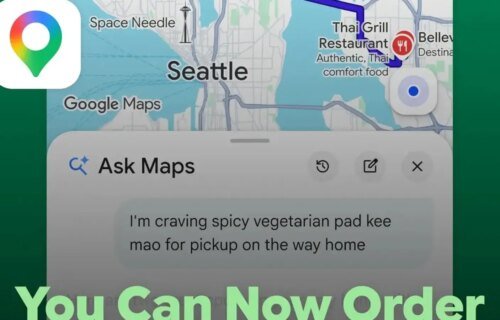
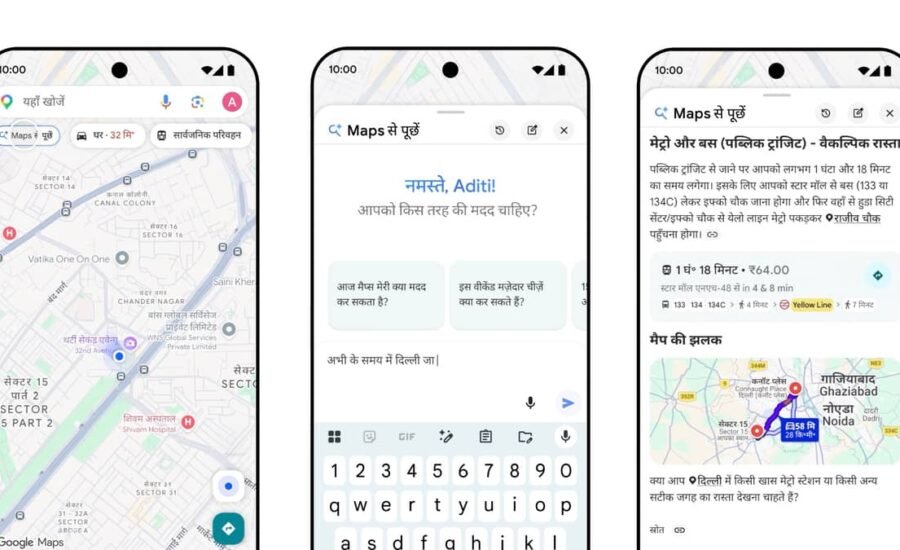
Google has expanded Ask Maps, the conversational layer it built into Google Maps using its Gemini models, with a set of updates aimed specifically at users in India. The additions include Hindi language support, live public transport information and a feature the company calls Personal Intelligence, which draws on a user’s email to shape its suggestions.
Ask Maps first appeared in India and the US, allowing people to put questions to the app in ordinary language rather than typing keywords into a search box. Instead of hunting for a restaurant by category and then checking reviews for atmosphere, a user can ask for somewhere quiet enough to hold a conversation, or check whether a venue has a children’s play area before booking. The company says the feature has also been used to assemble itineraries.
From today, Ask Maps will understand and reply in Hindi. Google says the assistant will handle the language conversationally rather than through fixed commands, covering searches for places, route planning and questions about a locality.
Personal Intelligence allows users to connect Ask Maps to Gmail, with support for other services such as Calendar expected later. Once connected, the assistant can read details of flights or restaurant bookings sitting in a user’s inbox and factor them into its answers without the user having to spell out their plans.
A traveller with a few hours to spare, for instance, could ask what to do near their hotel before a flight the following day. The assistant would draw the hotel’s location from the booking confirmation in Gmail, suggest places nearby, and advise on when to leave for the airport.
Google has stressed that the connection is optional. Gmail access is switched off by default and must be enabled by the user. The company has published a separate note setting out how it handles data for the feature.
For users who have history settings switched on, Ask Maps will retain previous exchanges. Someone who asked the assistant for suggestions during earlier trip planning can return later and ask it to recall what it proposed, rather than beginning the process again.
The assistant also surfaces live data, including expected traffic on a commute, current weather conditions, and how crowded a shop or restaurant is at a given moment — the last of which is intended to help users avoid queues.
The live data now extends to public transport. A transit widget within Ask Maps displays current schedules and delays for buses, the metro and trains.
Asking about departures from ISBT Kashmere Gate, for example, returns live timings across inter-city buses, local buses and the metro, along with route changes and connecting services. Where a service is delayed, the estimated wait updates automatically, giving passengers a clearer sense of when to set off for the station.