
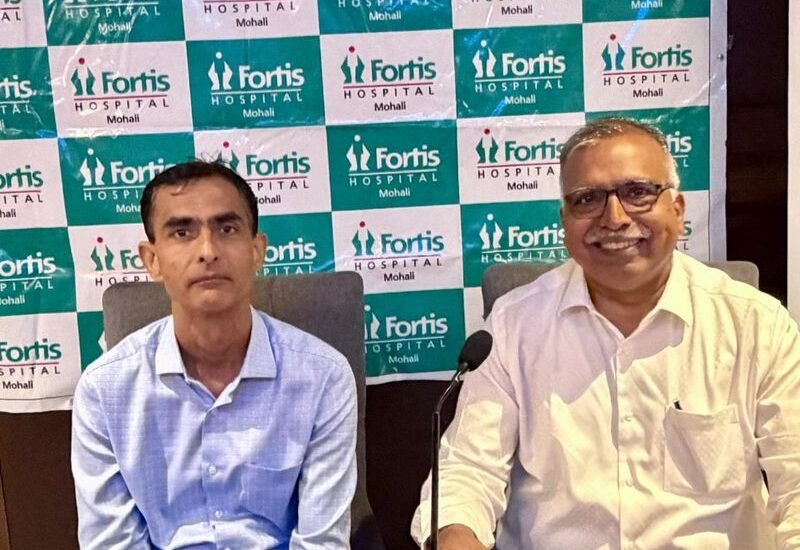
Advanced neuromodulation procedures such as Deep Brain Stimulation (DBS) and Vagus Nerve Stimulation (VNS) are emerging as effective treatment options for patients suffering from neurological and psychiatric disorders that no longer respond to medication. Specialists at Fortis Hospital, Mohali say these minimally invasive procedures are helping patients regain independence and significantly improve their quality of life.
During a discussion on the subject at Hoshiarpur, the Neuro-Modulation team at Fortis, Mohali comprising Dr Nishit Sawal, Senior Consultant, Neurology; and Dr Anupam Jindal, Director, Neurosurgery, deliberated on the treatment modalities and decided to perform Deep Brain Stimulation (DBS) surgery.
Highlighting the benefits of DBS, Dr Anupam Jindal said the procedure has revolutionised the treatment of Parkinson’s disease by significantly improving tremors, stiffness, walking difficulties and other movement-related complications while reducing medication requirements.
DBS is primarily used to treat Parkinson’s disease and other movement disorders such as dystonia, essential tremors and ataxia. The procedure involves implanting thin electrodes into specific areas of the brain that control movement. These electrodes deliver carefully controlled electrical impulses to regulate abnormal brain activity responsible for symptoms such as tremors, muscle stiffness, slowed movement, impaired balance and difficulty in walking or speaking.
Unlike conventional brain surgery, DBS does not destroy brain tissue. The implanted electrodes are connected to a small battery-operated pulse generator placed under the skin near the chest, allowing doctors to adjust stimulation according to the patient’s condition. The treatment not only improves motor functions but also reduces the dependence on long-term medication, enabling patients to lead a more active and independent life.
Doctors said DBS has transformed the management of advanced Parkinson’s disease, particularly for patients whose symptoms are no longer adequately controlled with medicines. The procedure is also beneficial in reducing involuntary movements caused by prolonged use of anti-Parkinson’s drugs.
Vagus Nerve Stimulation (VNS) is another advanced therapy offered for patients with drug-resistant epilepsy, severe depression and anxiety disorders. The procedure involves implanting a small electrical pulse generator beneath the skin on the left side of the chest. A thin wire connects the device to the vagus nerve in the neck, which carries signals between the brain and various organs. Gentle electrical stimulation of the nerve helps regulate abnormal brain activity, leading to a reduction in epileptic seizures and improvement in mood disorders.
According to specialists, VNS has proven particularly beneficial for patients who have not responded satisfactorily to medicines. Since the stimulation is programmable, doctors can fine-tune the therapy according to each patient’s clinical response while allowing them to continue their routine activities with minimal disruption.
The effectiveness of these therapies is reflected in the experience of patients treated at the hospital. A 64-year-old man suffering from advanced Parkinson’s disease had been experiencing severe tremors of the hands, arms and head, difficulty in speaking, stiffness of limbs and impaired coordination. Despite taking multiple medicines, his condition continued to deteriorate. After evaluation by the Neuro-modulation team led by Dr Anupam Jindal and Dr Nishit Sawal he underwent Deep Brain Stimulation surgery. Following rehabilitation, his symptoms improved considerably, his dependence on medication reduced and he has now returned to leading a normal and independent life.
In another case, a 70-year-old woman from Punjab had battled severe depression accompanied by anxiety for nearly three decades without meaningful relief from medication. She underwent Vagus Nerve Stimulation surgery, after which her depression and anxiety showed significant improvement. Doctors said she has since resumed her normal daily routine, highlighting the potential of VNS as an effective option for patients with treatment-resistant psychiatric disorders.