
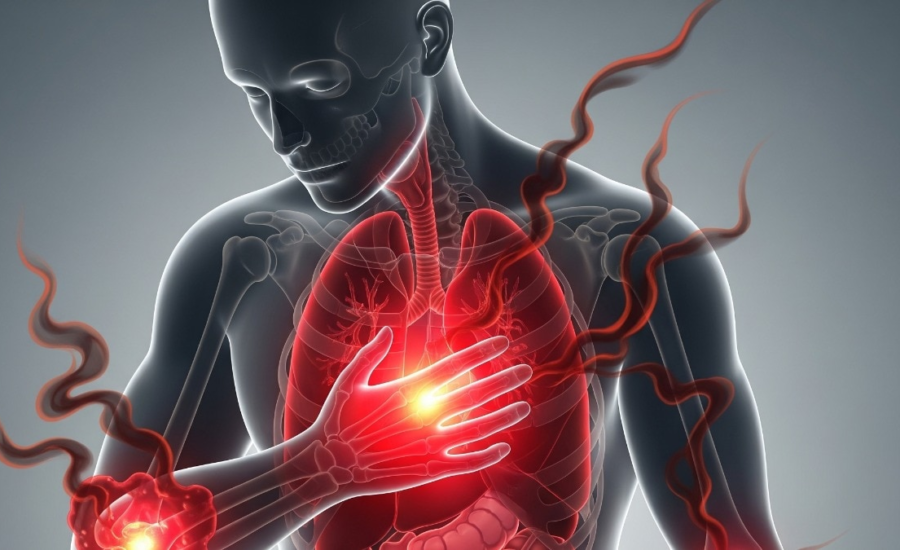
 Inflammation is the body’s natural defence mechanism. If you cut your finger or catch an infection, inflammation helps you heal. But when it quietly smoulders inside the body for years, it can become dangerous.
Dr Navin Gnanasekaran, head of radiology at Apollo Hospitals, Chennai and author of India’s first book on longevity, The 100-Year Blueprint, describes chronic inflammation as a “silent fire” – a slow burn that may eventually damage organs, accelerate ageing and increase the risk of diseases, including cancer.
Researchers now use the term inflammageing to describe the close relationship between chronic inflammation and ageing.
According to Dr Gnanasekaran, this is particularly relevant for Indians, who have a greater tendency to accumulate visceral fat – the fat that surrounds internal organs. Unlike the fat under the skin, visceral fat is metabolically active and constantly releases inflammatory chemicals such as cytokines and tumour necrosis factor.
Over time, this persistent inflammatory state can harm blood vessels, the heart and even the brain.
CANCER CONNECTION
The link between chronic inflammation and cancer lies at the cellular level. Persistent inflammation damages DNA, increasing the chances of errors when cells divide. These genetic mistakes can eventually trigger uncontrolled cell growth – the hallmark of cancer.
Inflammation may also interfere with the body’s natural clean-up process, known as autophagy, in which damaged or abnormal cells are removed before they become a problem. When this system does not function efficiently, rogue cells can survive and multiply, further raising cancer risk.
While inflammation is not the sole cause of cancer, it creates an environment that makes cancer more likely to develop over time.
KNOW YOUR NUMBERS
One of the biggest challenges is that chronic inflammation rarely produces obvious symptoms. Many people feel perfectly well while inflammation silently damages their bodies.
That’s why blood tests and body composition assessments can be valuable, particularly for those with risk factors such as obesity, diabetes or a family history of chronic disease.
Dr Gnanasekaran recommends discussing these inflammatory markers with your doctor during a preventive health check-up:
C-reactive protein (CRP) and high-sensitivity CRP (hs-CRP): Widely used markers that indicate inflammation in the body.
ESR (erythrocyte sedimentation rate): Another blood test that reflects ongoing inflammation.
Homocysteine: Elevated levels may indicate inflammation and increased cardiovascular risk.
Fasting insulin: Although not routinely included in most health packages, this test can detect insulin resistance, a condition closely linked with chronic inflammation and visceral fat.
Beyond blood tests, waist circumference is an important indicator, especially for Indians, who tend to develop health risks at lower levels of abdominal fat. Tracking trends in waist size over time is often more useful than focusing on a single measurement.
A DEXA scan remains the gold standard for measuring body fat distribution, although an eight-electrode smart scale can provide a reasonable estimate for routine monitoring.
The encouraging news is that chronic inflammation is often reversible. Dr Gnanasekaran says the solution is less about miracle foods and more about consistent lifestyle habits.
Getting seven to eight hours of quality sleep, building muscle through regular strength training, moving more throughout the day and reducing visceral fat can significantly lower inflammation.
The veteran radiologist also recommends time-restricted eating or intermittent fasting for suitable individuals, as it helps the body switch from relying solely on glucose to burning stored fat, improving what experts call metabolic flexibility.
Combined with limiting ultra-processed foods and maintaining a healthy weight, these habits can help extinguish the silent fire long before it causes lasting damage.
– Ends