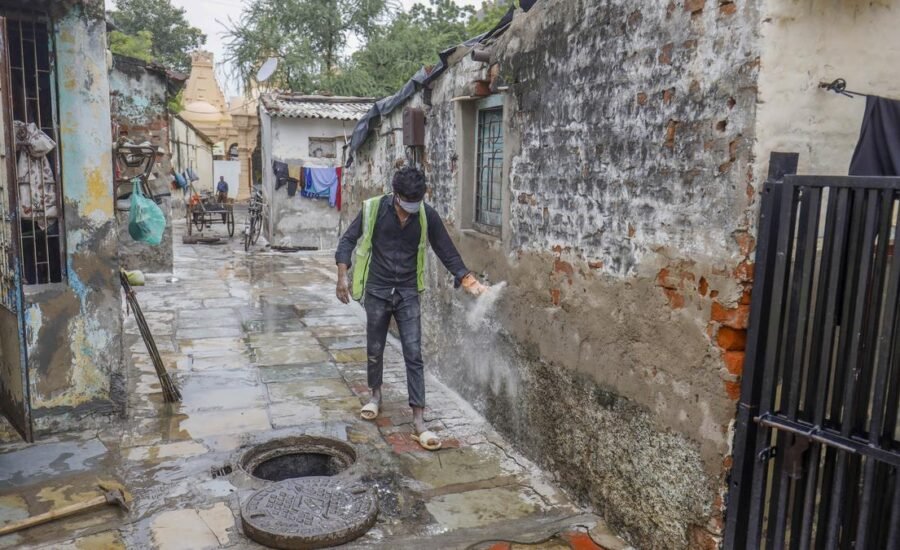
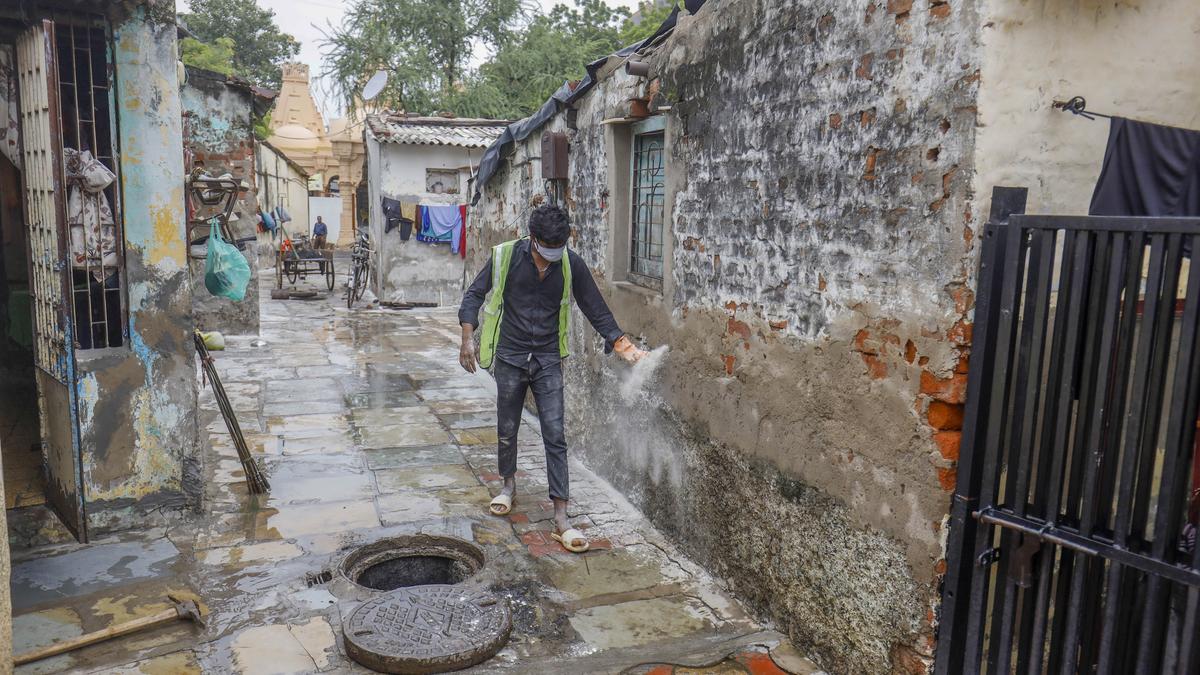
A municipal worker sprinkles gamaxine powder in a residential locality to curb the spread of Chandipura virus, in Ahmedabad.
| Photo Credit: PTI
The Union Health Ministry has deployed a national team to Gujarat and Rajasthan to strengthen the response to the ongoing Chandipura virus outbreak, which has resulted in at least 22 child deaths this monsoon season. The virus, transmitted largely by sandflies, can cause inflammation of the brain and mostly affects children.
The multidisciplinary national joint response team comprises experts from the National Centre for Disease Control, the Indian Council of Medical Research, and the Department of Animal Husbandry and Dairying. It will supplement the efforts of the two State governments in outbreak investigation, epidemiological assessment, clinical management, laboratory coordination, vector surveillance and implementation of public health measures, the Ministry said in a statement on Wednesday.

The team will work closely with State health departments to review the on-ground response and submit recommendations to the Ministry after completing its field assessment.
Research on transmission
“The collaborative exercise brings together specialists in epidemiology, virology, entomology, veterinary sciences and laboratory diagnostics to understand the complete clinical spectrum of Chandipura virus infection — from mild febrile illness to Acute Encephalitis Syndrome (AES) — and generate evidence for strengthening public health interventions,’’ the Ministry said, adding that the key focus of the investigation is to understand the virus transmission cycle.
While sandflies are the established vectors of the Chandipura virus, scientists are also examining whether other arthropods — including mosquitoes, ticks, and mites — may have a role in transmission as well.
Animal surveillance has also been expanded to determine whether the virus is circulating among domestic animals that could potentially act as reservoirs. Blood samples from cattle, buffaloes, and goats, along with milk samples, have been collected for testing. Around 70 animal blood samples have been collected so far and are being analysed for the Chandipura virus and other relevant pathogens. Authorities have clarified that no conclusions can be drawn until laboratory investigations are completed.
Published – August 05, 2026 08:58 pm IST