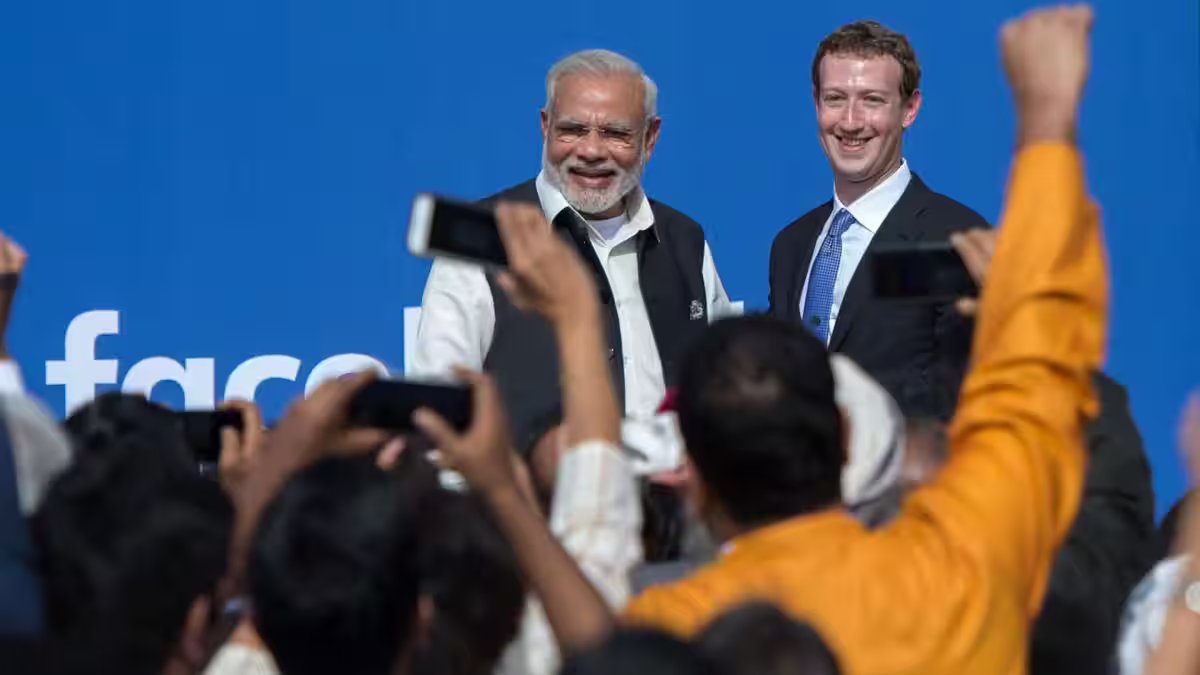
In a meeting with Meta representatives, Parliamentary Standing Committee on Communications and IT chairman Nishikant Dubey has said that Mark Zuckerberg should personally apologise for the brief removal of Prime Minister Narendra Modi’s Facebook video. He noted that the episode seemed like a ‘deliberate attempt to tarnish the PM’s image’ and could not be dismissed simply as a ‘technical error’
Facebook’s woes in India don’t seem to end. After Meta issued an apology for removing Prime Minister Narendra Modi’s video from Facebook and Instagram on July 28, the Parliamentary Standing Committee on Communications and Information Technology stated that the tech giant’s chief, Mark Zuckerberg, would have to tender an apology to the Indian leader.
Nishikant Dubey, the chairman of the Parliamentary Standing Committee on Information Technology, further warned that if Zuckerberg did not apologise, the government should consider withdrawing Meta’s safe harbour protection under Section 79 of the Information Technology Act.
As the row between Meta and the Indian government widens, here’s exactly what happened and how it keeps snowballing into a bigger issue.
PM Modi’s video removed
On July 23, amid Gen Z-led protests at Jantar Mantar, Prime Minister Modi posted a video addressing the nation’s youth. In it, the PM assured students that the government would strengthen the law against paper leaks and set up fast-track courts.
Days later, on July 28, the post suddenly disappeared from PM Modi’s official Facebook page. Users attempting to view the post were briefly shown a notice, stating that the content had been withheld in India over a “legal request”.
 More from Explainers
Soon enough, the message quickly circulated on social media with many wondering why the PM’s video had been brought down.
Meta reinstates the video with a clarification
Hours later, Meta reinstated the video on its Facebook platform, noting that the removal was caused by a technical glitch. “The content was removed in error and has since been restored,” a Meta spokesperson had said.
But the explanation didn’t seem adequate, with the Ministry of Electronics and Information Technology asking Meta to submit a written response within 10 days.
Meta said on July 31 that it was in touch with the agencies and cooperating to resolve the matter.
Parliament officials meet with Meta representatives
On August 3, members of the Parliamentary Standing Committee on Communications and Information Technology met with representatives of Meta to discuss the matter of the removal of PM Modi’s video.
Notably, representatives of Google and YouTube were also present at the meeting.
At the onset of the meeting, Dubey, the chairman of the parliamentary panel, told the representatives that the removal of the video posted by the PM was a “highly serious issue”, adding that it was either a failure of the system or “a deliberate attempt to tarnish the image” of the prime minister, which could not be dismissed as a technical error.
Several BJP MPs in the panel also raised questions over alleged algorithmic bias, arguing that objectionable material remained available on the platform while “genuine” content was removed.
Dubey, quoted by the Indian Express, pointed out to the representatives of the social media giants, “If you look at the algorithmic viewership of the BJP, Congress, Samajwadi Party, and Aam Aadmi Party, the viewership is only 23 million, whereas those who are neither a registered party nor a registered NGO, and are somehow inciting things on the streets, their algorithm is at 27 million. All political parties combined are at 23 million… Recently, an anti-reservation forum was formed five-six days ago, it is at seven million, and the reason for this is their [social media platforms] policy that they will give preference to new people, and they will not give preference to older people.”
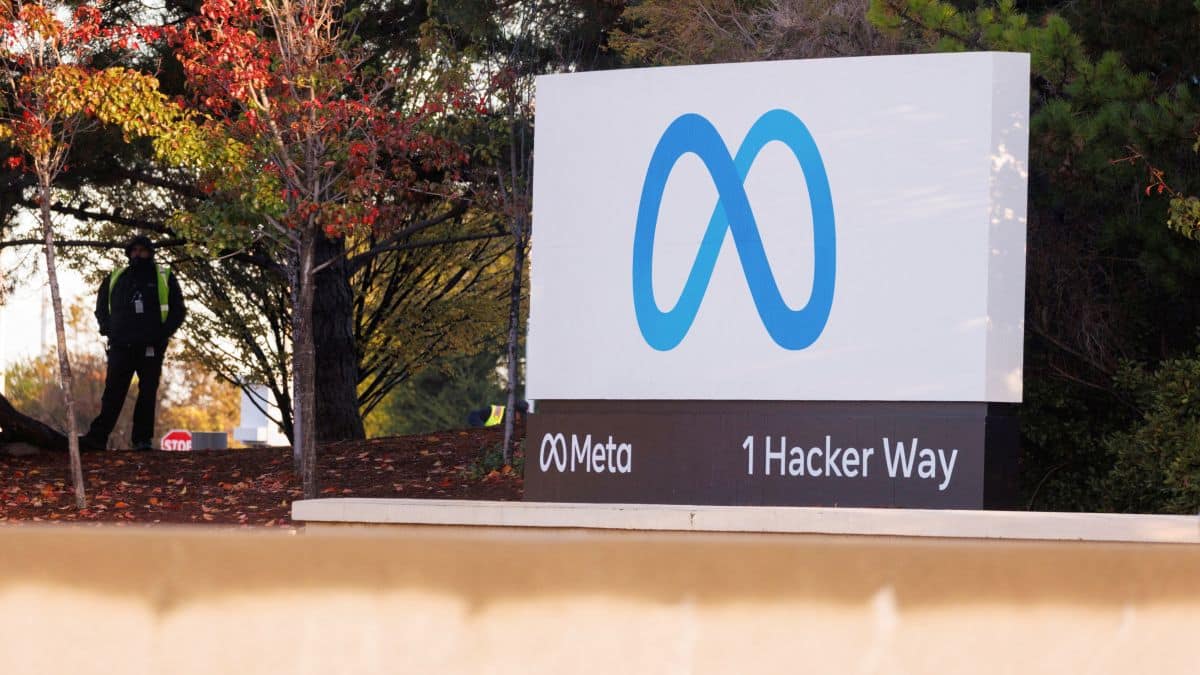
A security guard stands watch by the Meta sign outside the headquarters of Facebook parent company Meta Platforms Inc in Mountain View, California, US. The company’s representatives were grilled in India on Tuesday (August 3) over the removal of PM Modi’s video from its Facebook platform. File image/Reuters
Following the meeting, Dubey once again reiterated the seriousness of the issue, telling reporters that the committee had made two things clear: An apology from Mark Zuckerberg and that if the head of Meta didn’t apologise, then the tech giant would lose its safe harbour protection under Section 79 of the Information Technology Act.
Dubey even added, “This is not the first time Meta has done this,” referring to Zuckerberg’s earlier apology over remarks linked to India’s 2024 elections. At the time, Zuckerberg had claimed in a podcast that in elections around the world in 2024, most incumbent governments, including the one in India, had been voted out of power.
Following Zuckerberg’s statement, IT and Information & Broadcasting Minister Ashwini Vaishnaw called him out for furthering “misinformation”.
What comes next for Meta
It’s not yet clear if Zuckerberg will tender an apology himself over the issue. However, there are certain considerations he may have to keep in mind.
India is a significant market for Meta. According to data from digital intelligence provider Sensor Tower, Meta’s Facebook has had an average of 362 million daily active users. Instagram has 501 million, whereas WhatsApp has 837 million daily active users.
The same data reveals that Google’s YouTube had 646 million, and Elon Musk’s X had 15 million, making Meta the dominant social media company in India.
This was even highlighted in Meta India’s vice-president of public policy, Shivnath Thukral’s post, apologising for Zuckerberg’s remarks in 2024. He had then emphasised that “India remains an incredibly important country for Meta and we look forward to being at the heart of its innovative future”.
We will have to wait and watch to see what comes next in this saga. But one thing is clear: Meta’s clout is surging in India. But with greater reach comes greater responsibility and, in this case, greater scrutiny.
With inputs from agencies