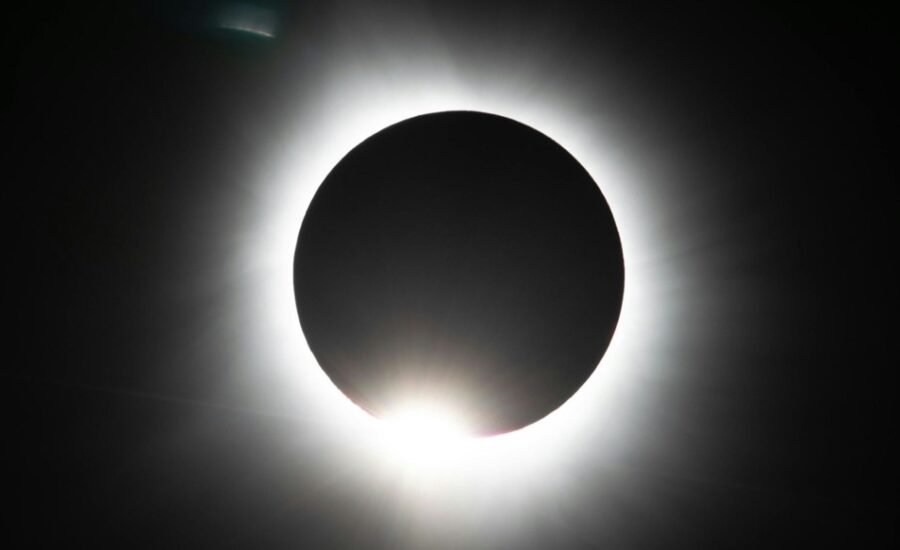
The path of totality, where the Moon completely covers the Sun, will pass through northern Russia before crossing Greenland, Iceland, the North Atlantic, and northern Spain. In most locations, totality will last less than two minutes, reaching just under two and a half minutes near the center of the eclipse path in Greenland, Russia, and over the North Atlantic.
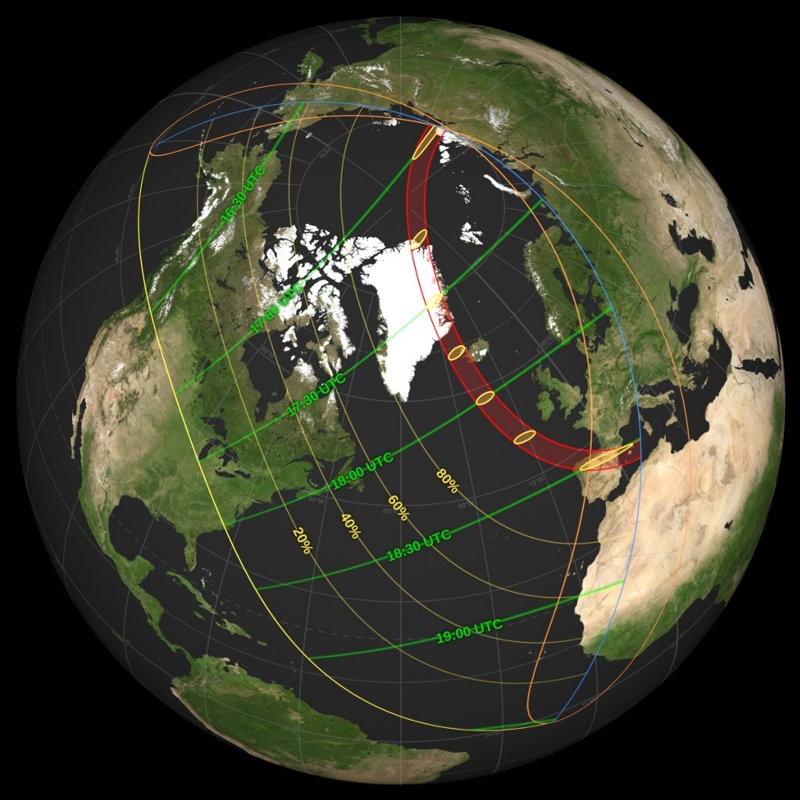
Many other regions, including parts of the northern United States from Alaska to North Carolina, most of Canada, much of Europe, and northwestern Africa, will experience a partial solar eclipse. Observers in mainland Europe and Africa along the western edge of the eclipse path will have the chance to see a rare sunset eclipse, with the Sun setting while still partially covered by the Moon.
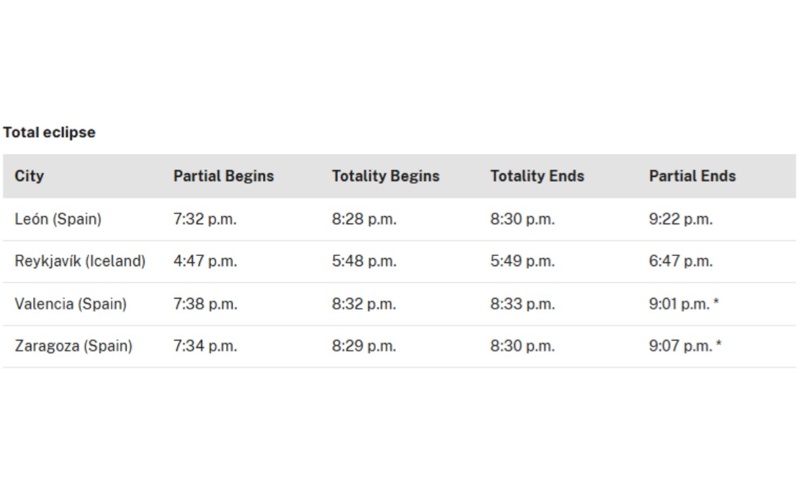
The timing of totality will vary by location. In northern Russia, it will occur around midday, while Greenland and Iceland will see the eclipse in the late afternoon or early evening. In Spain and the northwestern tip of Portugal, totality will take place shortly before sunset.
NASA stressed that it is safe to look directly at the Sun only during the brief period of totality. During all partial phases, viewers should use certified solar viewing glasses or other approved solar filters. Regular sunglasses do not provide adequate protection. People without eclipse glasses can safely observe the event using indirect methods such as a pinhole projector.
The agency also warned against viewing the Sun through cameras, telescopes, binoculars, or other optical devices unless they are fitted with specialized solar filters, as doing so can cause serious eye injury.
NASA will broadcast the eclipse live beginning at 1:15 p.m. EDT on Aug. 12 for viewers outside the eclipse path.
Earlier, Qazinform News Agency reported that meteor activity is increasing across the Northern Hemisphere ahead of the annual Perseid meteor shower, which is expected to peak on Aug. 13.