The Supreme Court has stayed proceedings in cases pending before the Karnataka and Bombay High Courts challenging the constitutional validity of the ‘Sahyog Portal’ and the powers under the Information Technology (Intermediary Guidelines and Digital Media Ethics Code) Rules, 2021 for take down of online content.
A Bench comprising Chief Justice of India Surya Kant, Justice Joymalya Bagchi and Justice V. Mohana passed the order on July 22 while hearing transfer petitions filed by the Union government.
The Centre has sought the transfer to the Supreme Court of four proceedings pending before the Karnataka and Bombay High Courts. Issuing notice on the transfer petitions, returnable on August 10, the Court directed:
“Meanwhile, following proceedings before the High Court(s) shall remain stayed.”
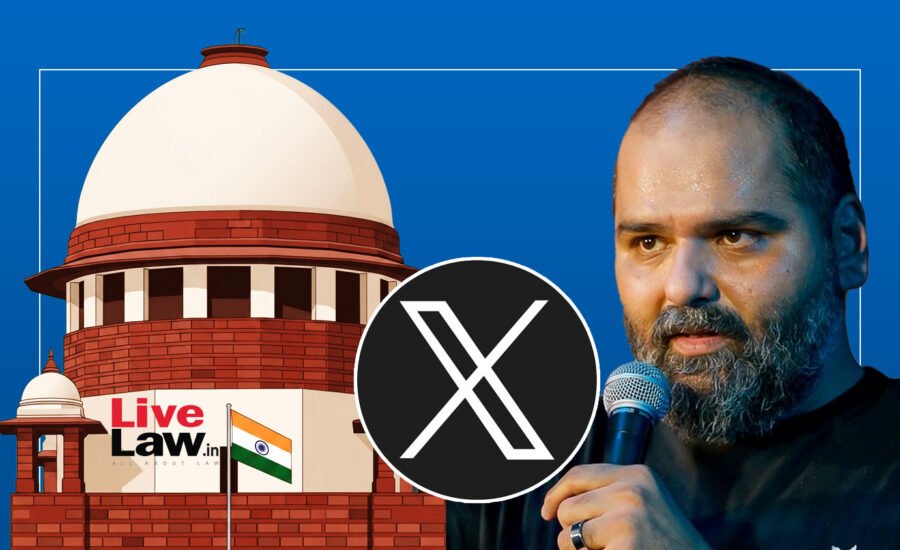
The matters include the petition filed by X Corp (formerly Twitter), and DigiPub News Foundation (organisation of digital news portals) in the Karnataka High Court.


Also, the petitions filed by Kunal Kamra and Senior Advocate Haresh Jagtiani in the Bombay High Court are also stayed.
The cases raise questions regarding the legality of the Sahyog portal and the Central government’s authority to direct intermediaries to remove or disable online content under Section 79(3)(b) of the Information Technology Act, 2000, read with Rule 3(1)(d) of the Information Technology (Intermediary Guidelines and Digital Media Ethics Code) Rules.
It was X Corp which challenged the take-down mechanism by approaching the Karnataka High Court first, challenging the blocking order. In September 2025, Justice M. Nagaprasanna upheld the validity of the Sahyog portal and dismissed X Corp’s challenge.
In February 2026, Kunal Kamra and Haresh Jagtiani filed separate writ petitions in the Bombay High Court challenging the constitutional validity of the ‘Sahyog Portal’ and the 2025 amendment to Rule 3(1)(d) of the Information Technology (Intermediary Guidelines and Digital Media Ethics Code) Rules, 2021.
The petitioners contended that the impugned mechanism creates a parallel content-blocking framework that circumvents the procedural safeguards mandated under Section 69A of the Information Technology Act, 2000. It has been argued that the Sahyog Portal permits blocking of online content without prior notice to the user, thereby violating principles of natural justice and free speech guarantees. Rule 3(1)(d) and the Sahyog Portal is challenged as wholly illegal and ultra vires the IT Act, and in contravention of the Supreme Court’s judgment in Shreya Singhal v. Union of India [2015 (5) SCC 1]. The plea states that Rule 3(1)(d) and the Sahyog Portal create a takedown regime parallel to that of Section 69A of the IT Act and the Blocking Rules without the legally mandated safeguards, and is therefore manifestly arbitrary.
The Union government has now sought transfer of all four proceedings to the Supreme Court for a consolidated adjudication.
Solicitor General Tushar Mehta appeared for the Union, assisted by Advocates Madhulika Upadhyay, Arun Kumar Singh, Sushma Verma, Rajat Nair and Gaurang Bhushan.
Case : UNION OF INDIA & ANR v DIGIPUB NEWS INDIA FOUNDATION & ORS.| Transfer Petition(s)(Civil) No(s). 2071-2074/2026