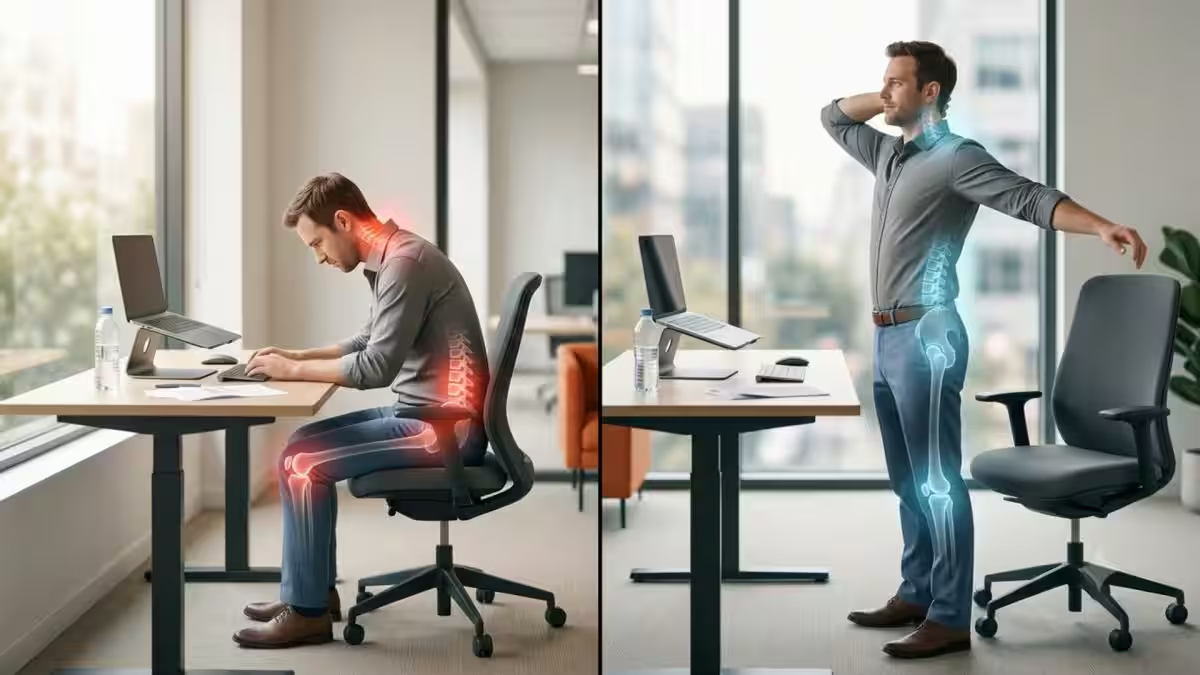
From stiff knees and aching hips to neck pain and poor posture, experts explain why hours at your desk could be taking a toll on your joints, and the simple habits that can help.
Most of us blame age, long workdays or a tough workout when our knees creak or our back stiffens. But the real culprit could be something far more ordinary- sitting.
Whether you’re glued to a laptop, commuting for hours or binge-watching your favourite series, spending too much time in one position can quietly affect your joints, muscles and posture. And contrary to popular belief, a one-hour gym session at the end of the day may not undo the effects of sitting for eight to ten hours straight.
Orthopaedic specialists say prolonged sitting is emerging as one of the most overlooked contributors to joint stiffness and musculoskeletal pain, particularly among office workers and people with sedentary lifestyles.
Why does sitting for too long make your joints stiff?
“Our joints are designed to move,” says Dr Yogesh K, Senior Consultant, Arthroscopy and Sports Injury, Aster Whitefield Hospital.
He explains that remaining seated for long periods reduces the natural movement that keeps joints healthy. Cartilage relies on movement to receive nutrients through synovial fluid, the natural lubricant that allows joints to move smoothly. Without regular movement, this lubrication decreases, often leading to stiffness and discomfort when you finally stand up.
Dr Pushkar Chawla, Director and Unit Head, Orthopaedics, ShardaCare-HealthCity, echoes the concern, explaining that prolonged sitting keeps joints like the hips, knees, ankles and lower back locked in the same position for too long, restricting the circulation of synovial fluid and making movement uncomfortable after extended inactivity.
 More from Health
Your hips and knees take the biggest hit
If you spend most of your day at a desk, your hips and knees are likely paying the price.
According to Dr Yogesh, keeping the hips flexed for hours causes the hip flexor muscles to tighten while the gluteal muscles, which stabilise the pelvis, gradually weaken through inactivity. Over time, this imbalance alters posture and places additional strain on the lower back and knees.
Dr Chawla adds that prolonged sitting also weakens the muscles supporting the joints, particularly the glutes, thighs and core. As these muscles lose strength, more stress shifts onto the joints themselves, increasing the likelihood of pain, instability and even early wear and tear.
It isn’t just your legs
The effects of prolonged sitting aren’t limited to the lower body.
Poor posture, such as slouching over a laptop or sitting without adequate lumbar support, can tighten the neck, shoulders, hip flexors and hamstrings. This often leads to persistent neck stiffness, shoulder discomfort and lower back pain, while reduced flexibility can gradually affect the way you move and walk.
Can one workout undo a full day of sitting?
Not entirely. One of the biggest misconceptions, says Dr Yogesh, is believing that an hour of exercise cancels out an otherwise sedentary day.
“Exercise is extremely important, but staying seated without moving for eight to ten hours creates continuous stress on joints and soft tissues,” he explains. The solution isn’t simply exercising once a day, it’s incorporating movement throughout the day.
Simple habits that can protect your joints
Doctors recommend making movement a regular part of your workday instead of waiting until evening. Some easy habits include:
-Stand up and walk for two to five minutes every 30 to 45 minutes.
-Stretch your hips, calves and hamstrings regularly.
-Alternate between sitting and standing whenever possible.
-Strengthen your core, glutes and quadriceps to improve joint stability.
-Set up an ergonomic workstation with proper lumbar support, feet flat on the floor and knees at hip level.
-Stay active outside work through walking, swimming, cycling or resistance training.
When should you see a doctor?
Occasional stiffness after sitting usually improves with movement. However, persistent pain shouldn’t be ignored.
“If stiffness continues despite lifestyle changes, or if it’s accompanied by swelling, locking or significant pain, it’s important to consult an orthopaedic specialist to rule out underlying joint disease,” advises Dr Yogesh.
The takeaway is simple- movement really is medicine. Sitting itself isn’t the enemy, but remaining still for hours at a stretch can gradually affect joint health. Breaking up sedentary time with frequent movement may be one of the easiest and most effective ways to protect your mobility for years to come.