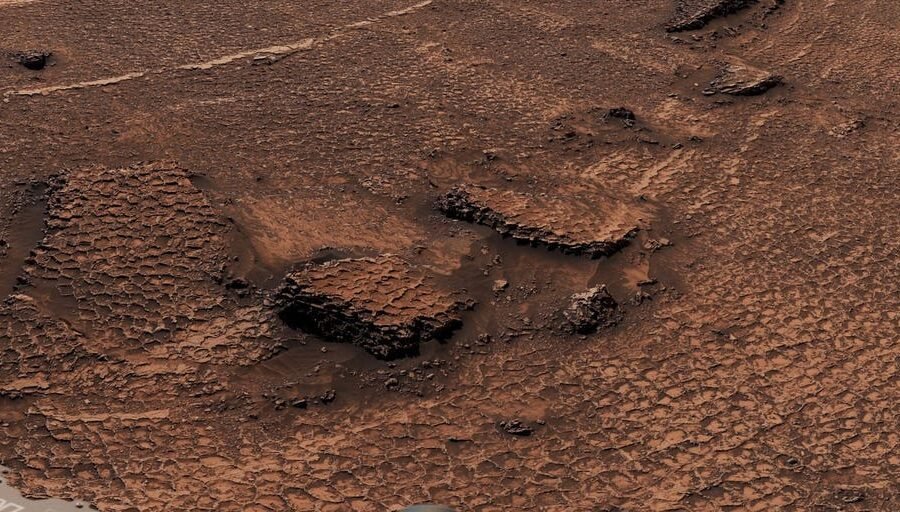
NASA’s Curiosity rover captured a clear panorama of Mars’ Gale Crater in August.
Space lovers can rejoice over the new stunning images shared by NASA’s Curiosity rover as it continues to share photos from Mars.
While NASA’s Curiosity rover was exploring the dry, desert planet, it stumbled across honeycomb-like textures called polygonal fractures, each measuring about 1.5 to 3 inches wide.
NASA PREPARES FOR CRITICAL SPACEWALK TO MAKE REPAIRS AND UPGRADE INTERNATIONAL SPACE STATION
“The polygonal shapes spread in all directions for as far as the rover can see,” NASA said. “They even wrap around the sides of a nearby butte nicknamed Miraflores, which stands 20 feet (6 meters) tall and is topped with a thick cap of sand.”
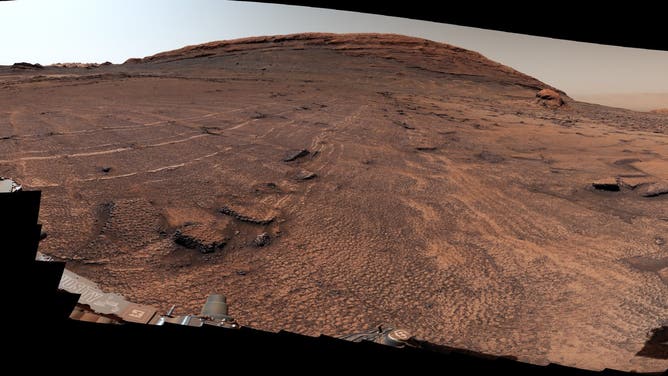
NASA’s Curiosity rover stumbled across honeycomb-like textures on Mars.
(@NASAMars / X)
Through further research, scientists have been able to measure the shapes and chemistry of the landscape and are hopeful of discovering clues to how these features formed.
Experts note that some of the polygons in the dry landscape show signs of past mud cracks, which could have formed as a result of cycles of warm and cold temperatures or compression that squeezed water out of the sediment when the surface was buried.
THE BEST CELESTIAL EVENTS IN 2026 YOU WON’T WANT TO MISS
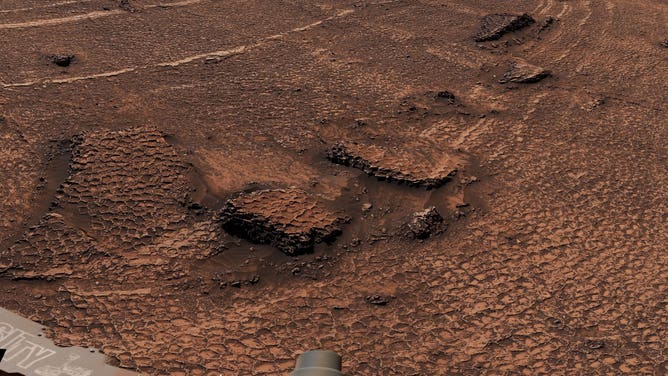
Honeycomb textures across the dry landscape on Mars.
(@NASAMars / X)
This research can help scientists understand what other features the planet can hide and how life may have evolved on Mars billions of years ago, when it was a wet planet.
AUGUST SKYWATCHING GUIDE: FROM A PLANETARY PARADE AND ECLIPSES TO A METEOR SHOWER
“Billions of years ago, lakes and streams dappled the lower foothills of Mount Sharp, a 3-mile-tall (5-kilometer-tall) mountain that Curiosity has been ascending since 2014,” NASA said. “The rover has previously uncovered chemistry left over from Mars’ watery history, including carbon-based molecules believed to be precursors to RNA and DNA, two nucleic acids that carry genetic information.”
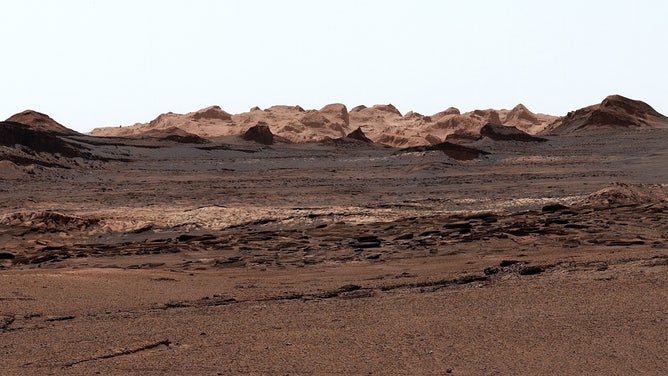
The dry and desert landscape across Mars.
(@NASAMars / X)
Despite this, scientists have no way of knowing whether biological or geological processes created the organic molecules, but nonetheless affirm that ancient Mars at one point had the right chemistry to sustain life.
Even if life no longer exists on Mars or never existed at all, water could be vital for the planet as humans form colonies in the future.
MAN VS MACHINE: WHO WILL WALK ON MARS FIRST?
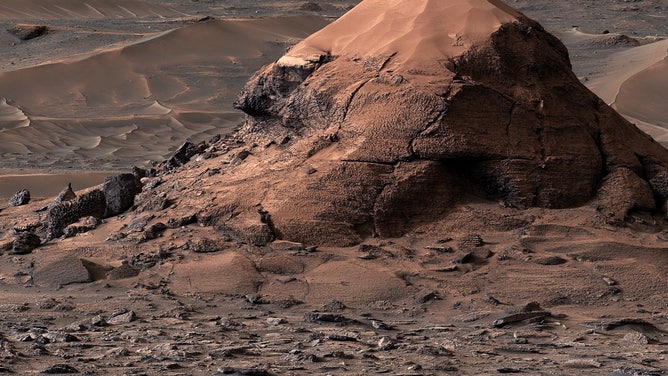
A new 360-degree panorama from Mars.
(@NASAMars / X)
WILL SPACEX LAND ANYTHING ON MARS BEFORE 2030?
The discovery of the photogenic honeycombs sheds light on the possibility of microbial life on the planet and on the evolution of water, which can help scientists understand how it influenced the red planet’s geology.