
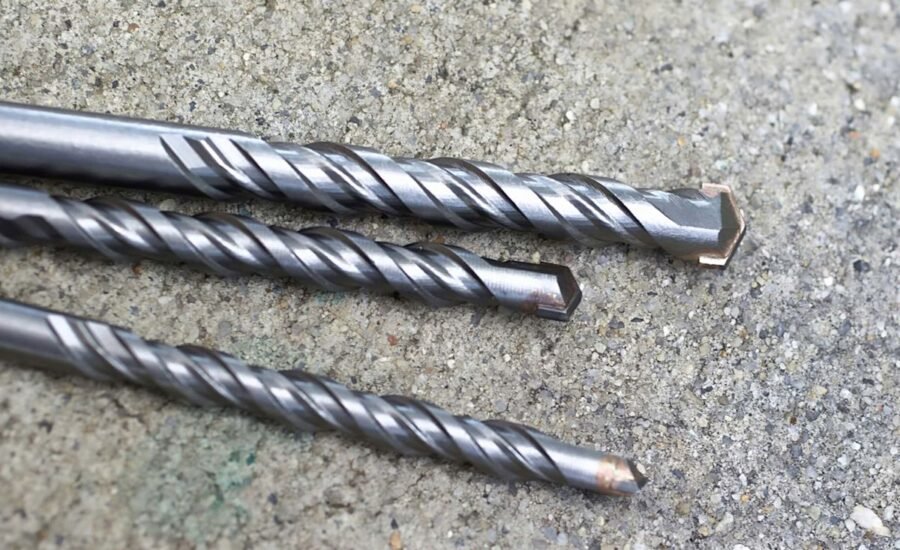
One of the toughest materials on Earth has had an equally tough manufacturing problem. It is so incredibly hard that making anything from it is expensive, wasteful, and a bit of a nightmare. Now, researchers think they have found a workaround.
Scientists have successfully 3D printed tungsten carbide-cobalt (WC-Co), an industrial material prized for its extreme hardness, using a new technique that preserves its legendary durability while using less material. If the process scales up, it could make everything from drill bits to factory cutting tools cheaper to produce and far less wasteful.
This metal is such a pain to work with
Tungsten carbide-cobalt isn’t exactly a household name, but chances are it has helped make many of the products around you. It is used in cutting tools, mining equipment, industrial drills, machining tools, and construction equipment because it can survive extreme pressure, intense friction, and years of abuse without wearing down.
Advertisement
Advertisement
However, that same toughness makes it incredibly difficult to manufacture. Traditional production relies on a process called powder metallurgy, where tungsten carbide and cobalt powders are compressed under enormous pressure before being heated until they bond together. The method produces exceptionally durable parts, but it is also expensive and often wastes a significant amount of raw material. This is especially problematic because tungsten and cobalt aren’t exactly cheap.
The trick was not melting the metal
Instead of carving away chunks of this ultra-hard material, the research team flipped the process on its head. They used a specialized form of 3D printing called hot-wire laser irradiation, which combines a laser with a heated filler wire. Rather than blasting everything until it melts into a puddle, the system gently softens the material just enough to build it layer by layer.
Completely melting tungsten carbide can damage its microscopic structure, reducing its hardness, which would defeat the entire purpose of using it in the first place. It’s a bit like trying to sculpt ice cream. Too much heat and you’ve ruined the thing you are trying to shape. By carefully controlling the temperature, the researchers managed to keep the material in its sweet spot.
They pulled it off without sacrificing the hardness
The team produced tungsten carbide-cobalt with a hardness above 1,400 Vickers Hardness (HV), a standard measurement of how resistant a material is to dents and deformation. For context, that’s firmly in the territory of industrial supermaterials. It is still below ultra-hard materials like diamond, but tough enough for the demanding jobs that destroy ordinary metals.
Advertisement
Advertisement
Even more importantly, the researchers managed to avoid the kinds of cracks and structural defects that often plague attempts to manufacture extremely hard materials. After experimenting with different printing approaches, they improved the process by adding a nickel-alloy intermediate layer and tightly controlling the temperature, allowing them to preserve the material’s mechanical strength while printing it.
The gold mine for manufacturers
The biggest advantage is that factories can potentially print only the expensive material they actually need. Instead of machining away costly tungsten carbide until the desired shape appears, manufacturers could deposit the material exactly where it provides value.
Less waste means lower costs, more efficient production, and fewer critical materials ending up as scrap. For industries already trying to stretch supplies of tungsten and cobalt, that’s a compelling proposition.
There’s still work to do before your local hardware store stocks 3D-printed industrial drill bits. The team wants to reduce cracking even further, improve durability, and figure out how to produce more complex shapes. But the proof of concept is there.
Advertisement
Advertisement
Source: Science Daily
Read the original article on GEEKSPIN.
Affiliate links on GEEKSPIN may earn us and our partners a commission.