
1 min readUpdated: Aug 5, 2026 06:26 PM IST
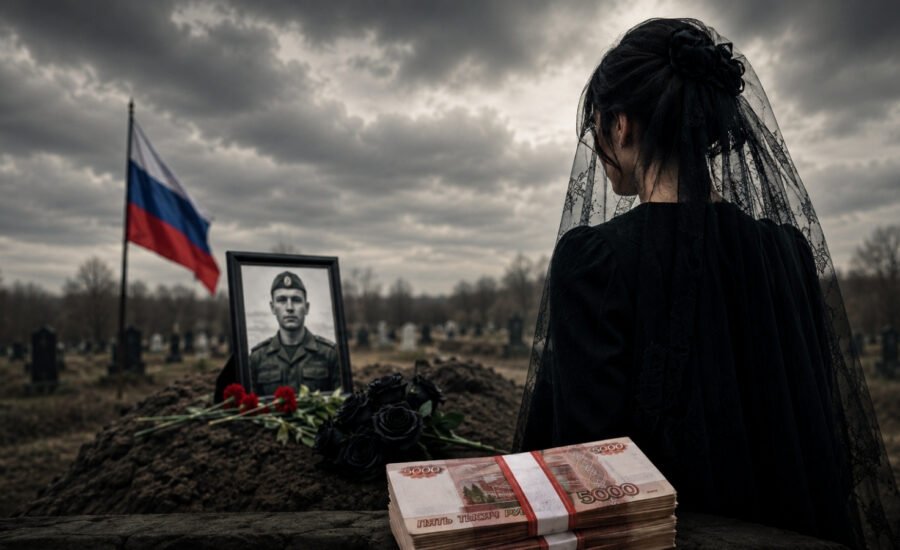
As casualties mount on the front lines in Ukraine, a troubling scam is sweeping across Russia: predatory opportunists, dubbed “black widows,” are allegedly enticing vulnerable soldiers into rapid, fast-tracked marriages right before deployment-or even on their deathbeds, reports CNN. Under Russian law, legal next of kin receive lump-sum compensation starting at 5 million rubles ($64,000) when a service member dies in combat.
However, grieving relatives are increasingly finding themselves cut out of these official survivor payouts by strangers who married their loved ones just days before they were killed, sparking nationwide outrage and calls for a legal crackdown.

Here’s a look at CNN’s findings about the “black widow scam”.
How do ‘black widows’ work?
Women dubbed “black widows” are accused of exploiting Russia’s wartime compensation system by marrying soldiers shortly before they are deployed to Ukraine. If the soldier is killed, the wife, being the legal next of kin, becomes eligible for a government death payout worth millions of rubles, often excluding the soldier’s parents or children from receiving the compensation.
.
As Russia’s war casualties climb, fast-track wartime marriages meant to support soldiers’ families are being turned into a payout scam — leaving real families with nothing but the bill.
Standard payout to legal heirs of a soldier killed in action
RUB 50,00,000
approx Rs 59,50,000 (exchange rate: 1 Ruble ≈ Rs 1.19, rate varies)
Sum a realtor cited on a podcast as reason to marry a deployed soldier
RUB 80,00,000
approx Rs 95,20,000 (exchange rate: 1 Ruble ≈ Rs 1.19, rate varies)
00
How the scheme runs
2022 Russia streamlines marriage rules for enlistees — waiting periods waived, mass weddings televised to lift morale.
Since As frontline deaths mount, the fast-marriage route is allegedly exploited to capture soldiers’ death benefits.
Recent Cases surface in hospitals, courts and even within military ranks — triggering prosecutions and public anger.
Now Lawmakers, including Leonid Slutsky, are pushing for legal protections for soldiers’ families.
01
The exhibits
In St Petersburg, 37-year-old Maria learned only after her 59-year-old father Yury’s death that he had quietly enlisted — and married a woman 22 years his junior just two days before leaving for the front, per CNN’s reporting.
Under Russian succession rules, that made the new wife his legal next of kin — first in line for the state’s death benefit, ahead of his own daughter, who says she had never even heard the woman’s name.
When Maria later visited her father’s flat, she found it had already been sold to new owners who insisted the sale was lawful. The bride, the buyer and the money were gone — CNN reports Maria was left holding a set of keys to a home that is no longer hers.
CNN’s reporting points to a wider pattern behind these unions: hurried courtships timed to a soldier’s deployment, and in some cases, marriages performed at a wounded soldier’s bedside.
One case involved a military hospital nurse dismissed after being accused of marrying five injured servicemen in her care, shortly before each died of his wounds.
In Tomsk, a real-estate agent, Marina Orlova, was recorded on a podcast telling a host that marrying a deployed soldier for the survivor payout was a workable way to fund a cheap apartment purchase. After public outrage, per CNN, both women were prosecuted and sentenced to community service, and ordered to apologise to soldiers and their families.
In Ryazan, per CNN, soldier Georgy Kostyrko married Angelina Varyukhina just ten days after meeting her online, during a short spell of leave. He later filed for divorce after she posted online content with other men — but was killed in action before it was finalised.
Varyukhina argued the posts were meant to provoke jealousy and that the couple had since reconciled. Kostyrko’s mother challenged her claim to next-of-kin status in court.
A Russian court ultimately stripped Varyukhina of her next-of-kin status — a rare instance of the system correcting itself after the fact. Case outcome, as reported by CNN
02
The payout gap that fuels it
The gap between the state’s baseline payout and the sums allegedly floated as a reason to marry a soldier for profit, in rubles (approx. rupee value in brackets, exchange rate varies):
.