On the morning of May 10, 2025, a panicked Pakistan reached out to India through the DGMO hotline seeking an immediate ceasefire amid Operation Sindoor. However, India made a calculated decision to keep Pakistan waiting till the afternoon. The reason, according to retired Chief of Defence Staff (CDS) General Anil Chauhan, was that half of India’s planned strikes on Pakistan were yet to take place.
Speaking at a media event, General Anil Chauhan underlined that India was determined to achieve its military objectives before agreeing to halt operations. The former CDS, who played a key role in planning and implementation of Operation Sindoor, said Pakistan sought a truce believing that its strikes on Indian targets had achieved their intended effect and was fearful of further escalation by Delhi.
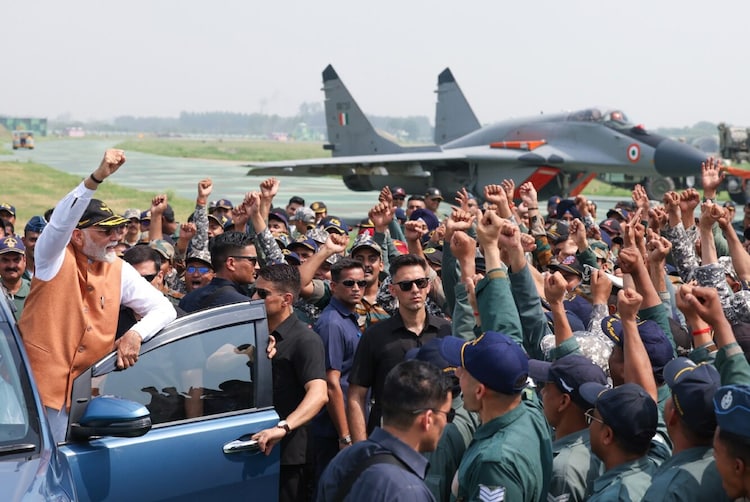
HOW OP SINDOOR CEASEFIRE WAS REACHED?
General Chauhan revealed that the “biggest surprise” for him was when Pakistan dialled India on May 10 for talks. “It was surprising… This was because on May 9, the kind of rhetoric emerging from the Pakistani side was that they would sort India out in 48 hours,” he said.
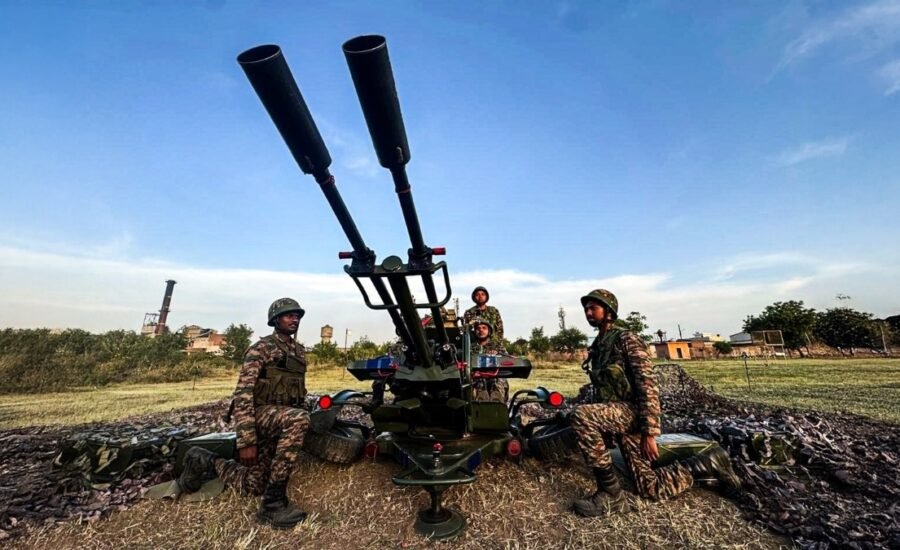
However, from the night of May 9 till May 10 afternoon, India unleashed a wave of strikes on 11 Pakistani military sites and airbases, damaging hangars, radar sites and several fighter jets.
General Chauhan underlined that it was to send a clear message that no military installation in Pakistan was beyond the reach of the armed forces.
In fact, such was the extent of damage at sites like Nur Khan in Rawalpindi, Rahim Yar Khan and Bholari that they are undergoing repairs even to this day.
“Within about eight hours, they (Pakistan) picked up the phone. We had not even executed half of our plans,” he said. Pakistan very well knew that if the hostilities continued, they would lose “faster” and “further”, General Chauhan said.
“Why we did not accept (the truce) at 9.30 am but carried on till afternoon was because we wanted the victory to be more decisive,” he further said.
India launched Operation Sindoor on May 7 last year in retaliation to the Pahalgam terror attack, which left 25 tourists dead. In the first wave of strikes, India took out nine terror camps located deep inside Pakistan linked to outfits Jaish-e-Mohammad and Lashkar-e-Taiba.
Pakistan responded by firing drones and missiles targeting military sites across border towns in Jammu and Kashmir, Punjab, and Rajasthan. However, most of them were neutralised or intercepted. It was then that India moved to strike Pakistan’s military sites.
General Chauhan stressed that Delhi’s strength lay in its military commanders’ ability to assess the effects of both Indian and Pakistani strikes much faster than their rivals.
“We had better battlefield transparency… We knew what our attacks had achieved, what Pakistan’s attacks had achieved… we could make decisions faster,” he said.
‘WANTED VICTORY TO BE MORE DECISIVE’
General Chauhan asserted that having a far clearer picture of the battlefield and of one’s realistic capabilities proved crucial.
He said Islamabad wanted to replicate the way Delhi managed to conduct deep strikes in Pakistan despite not crossing the border. Till then, India had destroyed a large number of Pakistani radars.
“Pakistan thought that if they could carry out operations in depth and with speed, they would be able to cause substantial damage,” the former CDS said.
However, even before they could act, India had already started pounding its airfields. With airstrips at key bases damaged, Pakistan could no longer generate sorties.
“The reason why they (Pakistan) called around 9.30 am on May 10 was because of the air power,” General Chauhan said. “They thought now it was better to talk. Otherwise, it would go beyond that,” he further said.
The Indian military, however, was determined to leave a lasting impact before bringing the conflict to a close. To ensure a decisive outcome, a fresh wave of strikes was launched at 10 am and another at 1 pm before agreeing to a ceasefire.
“India pressed ahead with the third wave of strikes. It had to be decisive,” General Chauhan said.
– Ends