- Migratory animals use the Earth’s magnetic field to navigate, but scientists don’t have all the answers to how exactly this ability evolved.
- Recent studies suggest magnetoreception in animals may have evolved independently from the magnetic systems found in bacteria.
- Although the origins of magnetoreception remain elusive, it is an important ability preserved across the animal kingdom.
Magnetoreception is like an internal compass that animals use in their journeys, using the Earth’s magnetic field. It helps migratory birds navigate across the central Asian flyway, for example, or turtles, fish and other animals travel across vast distances.
Recent research raises new questions about the evolutionary origins of magnetoreception and suggests that it may have evolved independently in complex animals.
About three billion years ago, the Earth was still anoxic (oxygen made up less than 0.001% of the atmosphere), and the oceans had an abundance of metal ions, including iron. Eukaryotic cells, which make up complex life forms, including animals, didn’t exist yet; life was dominated by archaea, the microorganisms that inhabit all kinds of extremes.
In this scenario, iron ions found widely in the surrounding waters, could easily pass through a cell membrane and cause toxicity by stimulating free radicals in the cell. But the archaea were highly adaptable. These tiny microorganisms evolved the ability to protect themselves from the toxicity of iron by simply forming crystals out of iron oxide inside cell structures, a process called magnetite biomineralisation.
The magnetic abilities of bacteria
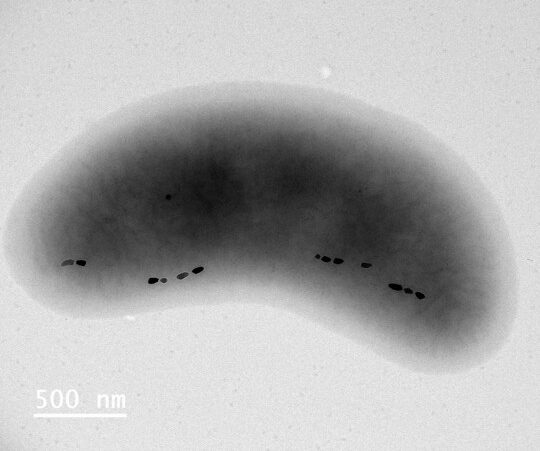
Like most other abilities, bacteria is assumed to have adapted magnetite biomineralisation, a process where living organisms create iron oxide crystals inside cell structures, from their archaean ancestors. Over time, some bacteria repurposed magnetosomes into tiny magnetic compasses. Now, they could make chains of these crystals and orient themselves along the Earth’s magnetic field.
The bacteria originally developed small (nanoscale) magnetosomes that remained preserved in ~1.9 billion-year-old sediments as magnetofossils.
But recent research uncovered much larger magnetofossils. Sediments dating back as far as 56 million years ago revealed ‘giant’ magnetofossils thought to be biomineralised by an (unknown) organism that lived during that era.
“We’re not talking about simple bacteria here, rather about more complex organisms. Something that benefited from being able to navigate over large distances and is also common enough that they leave a fossil record,” says Richard J. Harrison, professor at the Department of Earth Sciences, University of Cambridge; the leading author of the study on giant magnetofossils, published last year.
“Organisms originally developed the ability to grow small magnetite crystals, but then over time, they learned that actually, these larger ones are much better suited to navigational magnetoreception,” says Harrison, and adds, “to me, it’s not a giant crazy leap to say that maybe some organisms just grow those crystals in one giant crystal rather than trying to build it out of lots of tiny little magnetite bricks.”
Evolving magnetoreception in complex animals
Bacteria that use Earth’s magnetic field to navigate have a large cluster of genes that is involved in the entire process from biomineralisation of iron to the construction of magnetic crystals or magnetosomes. This magnetosome gene cluster has been traced back to a common microbial ancestor of ancient origin.
“All to date, all the bacteria that do make magnetosomes seem to have a shared genetic mechanism. We can look through metagenomes and make a guess that something could be magnetotactic based on that genetic signature,” says Arash Komeili, Professor at UC Berkeley, in an interview in a Berkeley News press release, talking about his research on the magnetic properties of aquatic bacteria.
A variety of animals, birds, fish and even some invertebrates use magnetoreception. So the assumption is that somewhere along the way, the magnetosomes must have transferred from archaea and bacteria to eukaryotes and more complex animals. However, none of the birds and animals that impressively display magnetoreception have the magnetosome gene cluster that has been identified in microorganisms.
“I think it’s a good hypothesis that there would be a link between magnetotactic bacteria and higher eukaryotes that employ magnetoreception, right? But when searching for a genetic relationship, we don’t find the same genetic signature,” says Komeili.
The only solid evidence for a link between bacteria and eukaryotes is from simple, single-celled eukaryotes called protists that acquire magnetoreception by either ingesting a number of magnetotactic bacteria or forming a symbiotic relationship with the bacteria. But the trail goes cold there.
Instead, scientists now speculate that magnetoreception as seen in complex animals may have evolved independently from the magnetotactic ability seen in bacteria and simple eukaryotes.

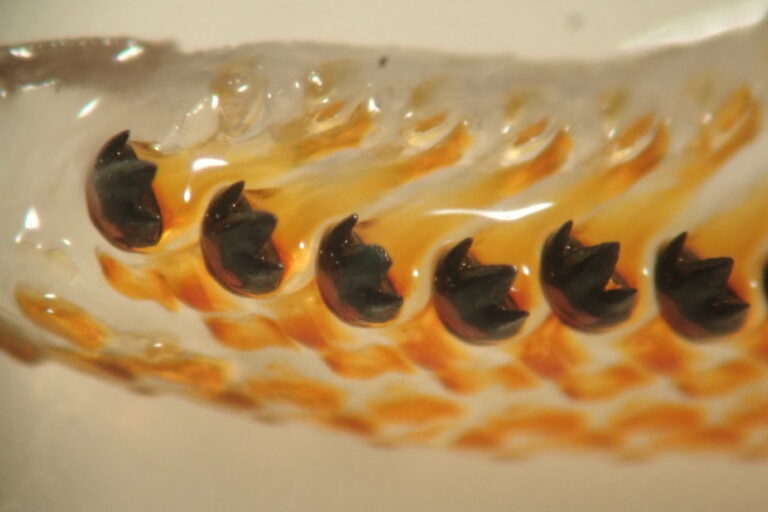
Associate Professor Michiko Nemoto and colleagues at Okayama University study how molluscs called chitons, biomineralise iron to form magnetite. The process of magnetite formation is completely different from magnetotactic bacteria. The chiton uses a unique protein to biomineralise iron and form magnetite teeth that it uses to graze on algae growing on rocks. This protein has no similarity to those responsible for magnetite biomineralisation in bacteria.
“I do not think that chiton magnetite biomineralisation has a direct evolutionary link to magnetotactic bacteria. Magnetotactic bacteria synthesise magnetite inside intracellular vesicles. In contrast, chitons form magnetite in an extracellular matrix, somewhat like the way vertebrates form mineralised tissues such as teeth. Rather than evolving from bacterial magnetosomes, chiton magnetite biomineralisation may have evolved by modifying an extracellular matrix-based tooth formation system,” says Nemoto.
“We do know that it’s possible for animals to independently evolve and produce magnetite. Using chitons as an example, it seems conceivable that some other animal might have evolved magnetite for one reason or another and then that came to be associated with the nervous system that endowed the animals with a magnetic sense,” says Kenneth Lohmann, Professor at the University of North Carolina and unrelated to the study.
Research continues on magnetoreception origins
All living cells need iron. It is absolutely essential for life. Animals have a lot of processes that require a steady supply of iron. In fact, most of the enzymes, including haemoglobin, wouldn’t work without iron.
“The important point is that iron metabolism is universal. Every living cell deals with iron, and it has been argued that the chemistry of controlled iron oxidation that produces magnetite is not all that different from the chemistry that handles everyday iron storage and transport in animals,” says Swastik Mondal, Scientist (F) and Divisional Chair at CSIR-CGCRI.
So, it’s not a far cry to say that some of the iron could also be converted into magnetite. However, simply making magnetite wouldn’t endow the animal with a magnetoreception sense. The cell that has the ability to make magnetite and detect the Earth’s magnetic fields should also connect with the nervous system. The challenge is finding which cells of the body of the animal or bird have both these properties. Think about senses like sight, hearing, and touch. For them to work, the cells need to be constantly exposed to the environment to get the correct signals and send them to the brain. But magnetic fields can pass through the entire body; any cell can get a signal from the Earth’s magnetic field. Combine that with the nanoscopic size of magnetite crystals, and it is like finding a tiny needle in a mountain of haystacks.
“So far, no one has been able to identify with certainty a magnetic receptor in any animal,” says Lohmann.
While origins of magnetoreception remain elusive, ongoing research, including the recent discoveries, offer more insights into this important ability preserved across the animal kingdom.
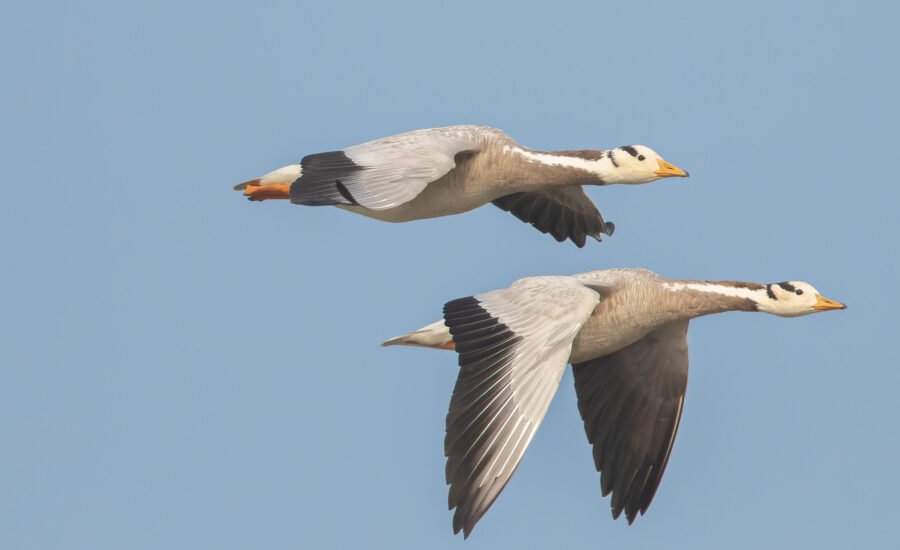
Banner image: A pair of bar-headed geese in flight. They migrate from Central Asia to India in large flocks during the winter. Image by Hari K. Patibanda via Wikimedia Commons (CC BY 2.0).