More than 13 lakh people are getting a rather unusual space trip, while sitting in their homes, here on Earth.
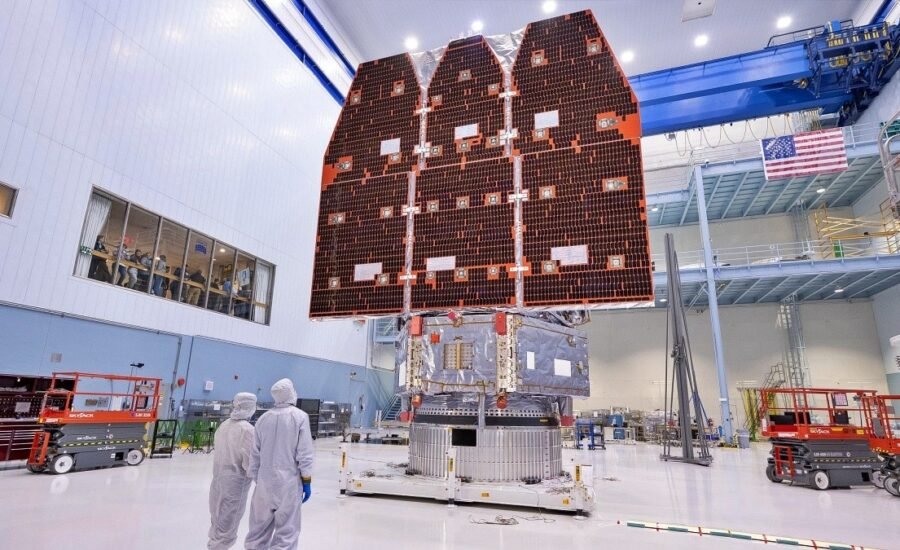
Their names are set to travel aboard Nasa‘s Nancy Grace Roman Space Telescope when it launches towards a point nearly 15 lakh km from Earth.
The names have been stored on an SD card attached to the observatory, turning a major scientific mission into a small time capsule of public participation.
Nasa invited people around the world to submit their names through its free “Send Your Name with Roman” campaign.
Participants received a digital boarding pass after signing up, giving them a personal connection to a mission designed to explore some of the biggest mysteries of the universe.
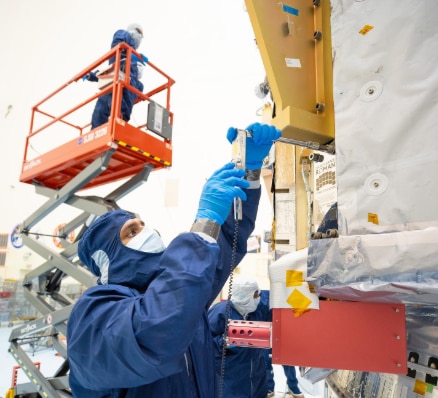
The campaign closed on July 12, with the collected names uploaded to the card that will fly with Roman.
The idea follows a long-running Nasa tradition of carrying people’s names and messages aboard spacecraft.
This time the names of millions will accompany Nasa’s next groundbreaking space telescope.
WHAT IS NASA’S NANCY GRACE ROMAN TELESCOPE?
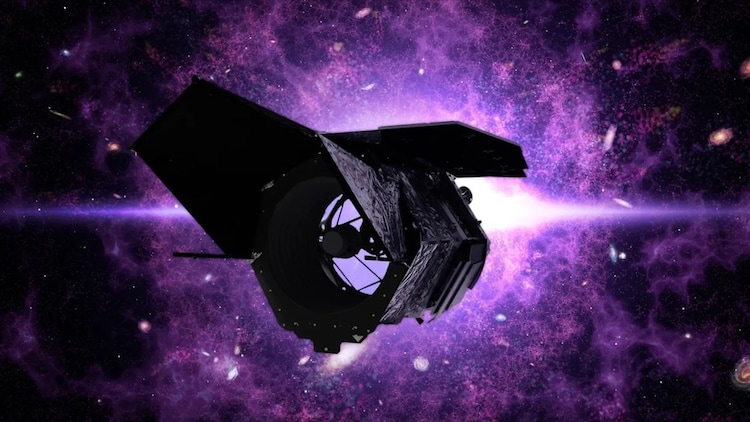
The Nancy Grace Roman Space Telescope is Nasa’s next major space observatory and is named after Nancy Grace Roman, the space agency’s first chief astronomer and a key figure in making the Hubble Space Telescope possible.

The telescope is designed to survey enormous areas of the sky while looking for answers to two major questions: What is dark energy doing to the expansion of the universe, and how common are planets beyond our solar system?
Its Wide Field Instrument will give Roman a field of view at least 100 times larger than Hubble’s, allowing it to survey huge stretches of the cosmos far more quickly.
Nasa expects the observatory to discover thousands of exoplanets and study billions of galaxies over its mission.
WHEN WILL NANCY GRACE ROMAN TELESCOPE LAUNCH?
Nasa is targeting August 30, 2026, for the launch aboard a SpaceX Falcon Heavy from Launch Complex 39A at Kennedy Space Center in Florida.
The target liftoff time is 4:50 pm IST.
After launch, Roman will travel to the second Sun-Earth Lagrange point, or L2.
This is a region where the gravitational effects of the Sun and Earth allow a spacecraft to maintain a stable orbit while keeping a broad, unobstructed view of space.
Roman’s primary mission is planned to last five years, with enough fuel to potentially support another five years.
So while the millions of names may be passengers in spirit, they will accompany a telescope embarking on a far more ambitious journey.
A journey aimed at revealing what the universe is made of, how it is changing and whether worlds beyond our solar system are more common than we realise.
– Ends