
WhatsApp group chats are borrowing a few tricks from workplace platforms.
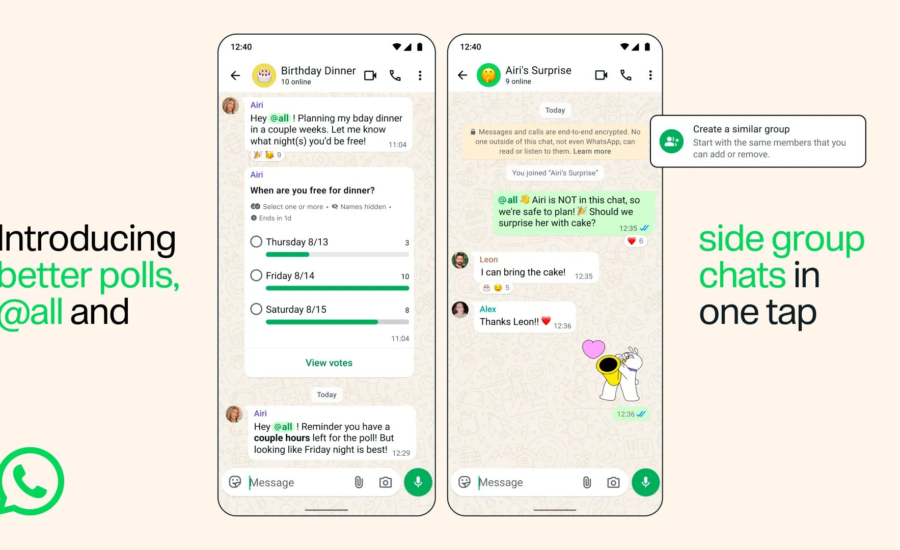
Meta is dropping a new set of WhatsApp features to help make group conversations more organized, interactive, and productive. The update introduces various new tools designed to optimize communication in large groups, including anonymous polls, timed voting, @all mentions, and the ability to create new groups directly from existing conversations.
While the changes may appear incremental on the surface, they are another step in WhatsApp’s evolution beyond consumer messaging, adding features that may better support workplace collaboration, community management, and event planning.
New features target growing conversations
The latest update, introduced on Aug. 4, mainly focuses on enhancing how users manage busy group chats. One of the top additions is anonymous polls, which allow members to vote without revealing their identities. Poll creators can also set time limits for voting, making the feature more useful for coordinating decisions with time-sensitive deadlines.
WhatsApp is also introducing @all mentions, which enable administrators or members to notify everyone in a group simply with a single tag instead of mentioning individuals one by one. Functionality like this has long existed on collaboration platforms such as Slack, Discord, and Microsoft Teams.
Another new addition allows users to create a new group directly from an existing chat. Rather than manually rebuilding participant lists, users can quickly split off discussions into separate groups for more focused conversations.
Together, these new features could help to reduce clutter in large chats while giving users more tools to organize conversations.
WhatsApp moves forward with its productivity push
So what do these feature updates say about Meta‘s long-term development strategy?
Well, over the past several years, WhatsApp has steadily added features that move beyond basic messaging, including Communities, Channels, screen sharing, voice chat for groups, and AI-powered capabilities.
The newest group management tools continue on that path by addressing common struggles experienced by organizations, schools, volunteer groups, clubs, and businesses that rely on WhatsApp for daily communication.
Rather than positioning itself as just a messaging platform, WhatsApp is increasingly competing with lightweight collaboration tools that merge communication with organizational capabilities.
Business users benefit
Although Meta markets WhatsApp primarily to consumers, many businesses already rely on the app for workflows such as internal communication, customer support, field operations, project coordination, and more.
It’s easy to consider how the new additions can optimize workforce operations far beyond your everyday messaging app. The new features can be especially helpful for small businesses lacking dedicated collaboration software, as they provide more functionality without requiring employees to adopt another platform.
The competition intensifies
WhatsApp’s newest enhancements also indicate an increasingly competitive messaging landscape.
Platforms such as Microsoft Teams and Slack continue to add AI-powered features, workflow automation, and project management capabilities, while Discord, Telegram, and Signal have expanded tools for organizing large communities and group conversations. Rather than competing solely on messaging, these platforms are increasingly vying to become users’ primary hub for collaboration, coordination, and communication.
As other messaging platforms continue expanding their own collaboration capabilities, more and more users now expect messaging apps to support both personal conversations and organized group work.
For now, WhatsApp, like many others, appears focused on becoming an all-in-one everyday communication platform that melds both personal and professional use cases.
What’s next for WhatsApp
WhatsApp’s newest features may not seem revolutionary on their own, but together they represent a significant expansion of the platform’s capabilities.
Organizations increasingly rely on consumer messaging apps for day-to-day collaboration. As business leaders look toward ways to optimize their workflows, messaging features that improve organization, reduce notification fatigue, and simplify decision-making can be enticing.
The line between messaging apps and workplace collaboration platforms is continuing to blur. As Meta steadily expands WhatsApp’s functionality, the platform is transforming into a tool for managing future conversations at scale.
Other News: CEO Mark Zuckerberg says AI is helping the company accelerate software development and launch new apps faster, though Meta has yet to disclose measurable productivity gains.