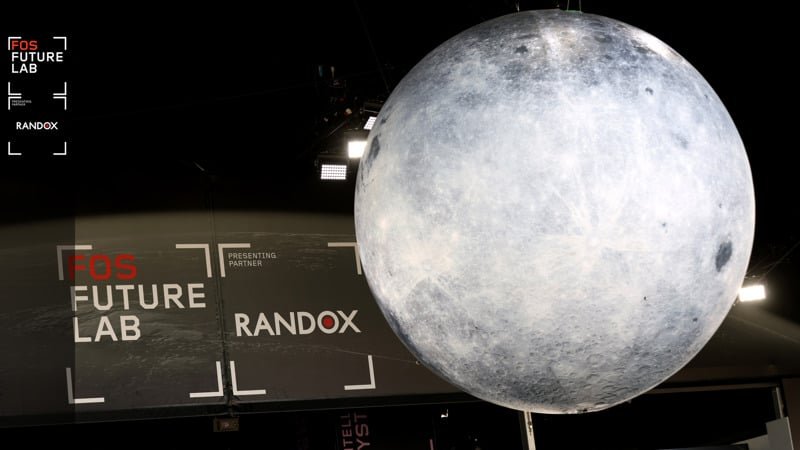
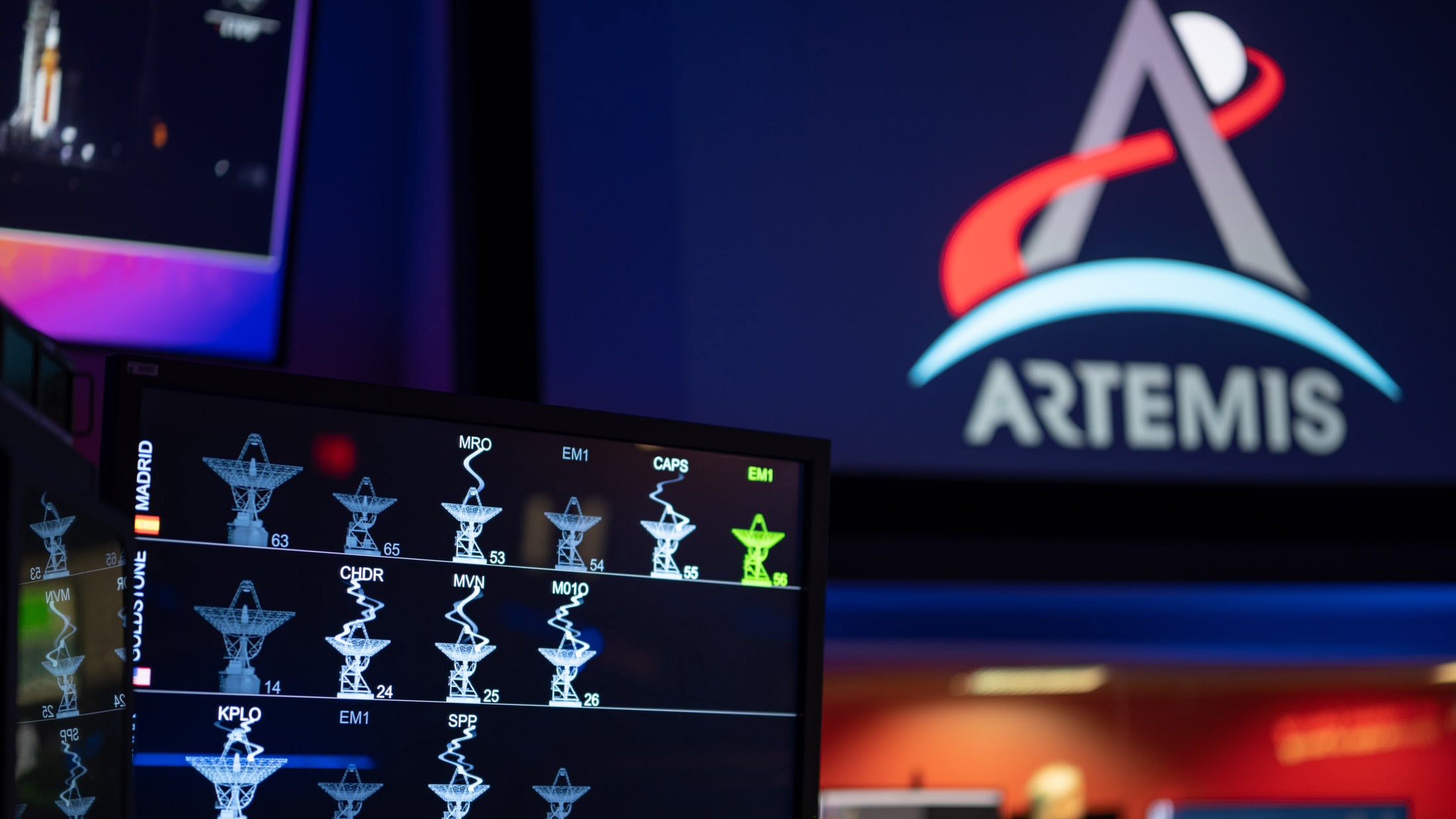
This year’s Artemis II mission sent four astronauts around the Moon and home again, the first crewed lunar flight since Apollo visited Earth’s only natural satellite. Artemis intends to move in. “The motto of the Artemis programme is ‘this time to stay,’” Simpson told crowds at FOS Future Lab.
The plan reads like science fiction, only with a delivery date: 3D-printing habitats from moon dust and harvesting water at the lunar South Pole, which is one reason the missions are aiming in that direction.
Made in Europe
“A lot of people don’t realise 50 per cent of that Orion spacecraft was built in Europe,” said Cleaver, and the UK, as a member of the European Space Agency, has a stake in it.
The European Service Module is the part Cleaver works on: the section providing the astronauts’ power, water, air and propulsion. It is, in effect, the life-support engine room bolted beneath the crew capsule, “which is what takes us there and back again.” Tolkien would approve.
There are currently six service modules in various stages of build, with two already at the Kennedy Space Center being integrated and tested.

Image credit: NASA
No petrol stations in space
Simpson’s speciality is the sums keeping astronauts alive. Around 20 per cent of the spacecraft’s mass is propellant — roughly 5,000 kilograms of it — and the margin for error is essentially zero. “One of the biggest challenges for us is that there are no gas stations in space. We have to take exactly what we need.”
Hence the industry’s most repeatable mantra. “We live and die by ‘test like you fly’,” said Simpson, a former NASA propulsion test engineer. “We need to bring the astronauts home, so everything needs to be predictable.” Every system has a backup; the team will not launch until they are sure. It’s why space launches get scrubbed so often, and why nobody minds.
Even AI gets the same treatment. The engineers use it daily to build tools and speed up calculations, but, Simpson noted, “it definitely still needs the human in the loop.”
Inside New Frontiers — deep sea, outer space, and missions to Mars
Read more
Flip it like a pancake
Space travel’s unglamorous truths got an airing, too. To stop one side freezing while the other cooks, “we have to flip the spacecraft multiple times a day like a pancake to make sure it heats evenly,” Simpson explained. “And they have to make sure to heat the toilet lines as well, or else you’ll just clog them.” Artemis II’s one widely reported niggle was, indeed, the toilet.
The mission also flew instrumented dummies in radiation vests to measure what future crews will face, because before anyone builds houses from moon dust, the harder problem is keeping humans healthy in a place that’s far from their natural habitat.
The only way is up
Neither Cleaver nor Simpson followed a textbook route towards space science. Cleaver studied physics and astronomy at Edinburgh, missed out on PhD funding, and joined Airbus’s graduate scheme instead — a two-year rotation that let her find her niche. Her top tip: learn a language. She now works in Germany.
Simpson grew up in Los Alamos, New Mexico — infamous as the birthplace of the atomic bomb — and his first job was on oil rigs in North Dakota at minus 40 degrees. Offered a choice between submarines and space, he chose up rather than down. His advice came from his dad: “You might not have all the qualifications they’re asking for. But if you’re interested enough and you can show that you’re willing to work hard, oftentimes people are willing to give you a shot.”

FOS Future Lab
Presented by Randox
Randox is a global leader in diagnostics, revolutionising patient outcomes through innovative technologies, including its patented biochip technology. This pioneering diagnostic platform allows for the simultaneous detection of multiple biomarkers from a single sample, delivering faster, more accurate, and comprehensive results. Operating in over 145 countries, Randox develops advanced laboratory instruments, high-quality reagents, and innovative testing solutions to improve global healthcare.
Randox Health brings this cutting-edge technology directly to individuals, offering bespoke, preventative health testing programs. With world-class laboratories and personalised health insights, Randox Health enables early detection of a wide range of conditions, helping individuals take control of their health.
Together, Randox and Randox Health are redefining diagnostics and preventative healthcare. For more information, visit www.randox.com and www.randoxhealth.com.
The 2027 Festival of Speed will take place on 15th-18th July 2027, sign up for ticket alerts to make sure you don’t miss out. Tickets are available for GRRC Members and Fellows, you can join the Fellowship today.
Main image photography by Sam Stephenson.
-
festival of speed
-
fo
-
fos 2026
-
event coverage
-
future lab
-
fos future lab