Lok Sabha on Thursday (August 6, 2026) passed a Bill to amend the Payment and Settlement Systems Act, 2007 that authorises the government to permit banks and other service providers to levy charges on payments through unified payments interface (UPI) and other notified electronic payment modes.
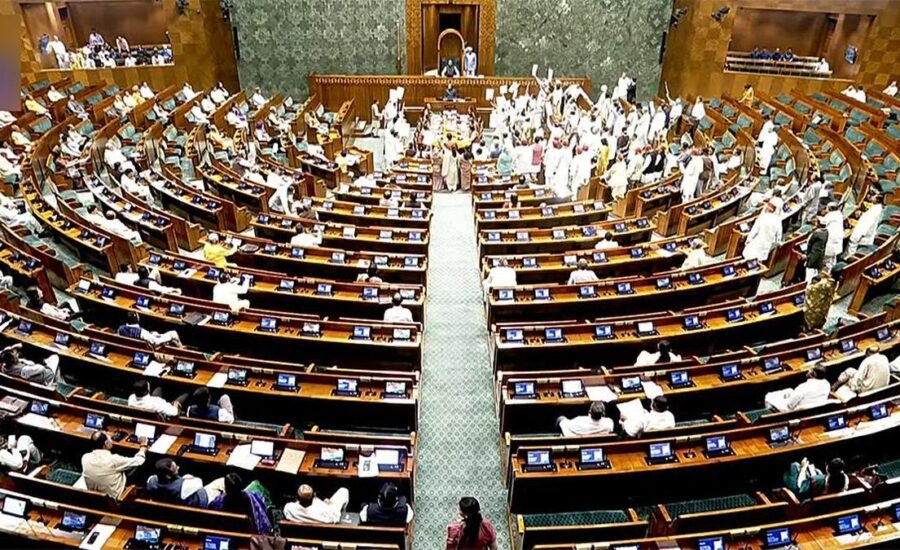
The Taxation and other Laws (Amendment) Bill w through which the government also amended the Payment and Settlement Systems Act, 2007, was passed without a debate due to persistent sloganeering by the Opposition over various issues, including alleged theft of donation at the Ram temple in Ayodhya.
The amendment seeks to remove the existing legal provision that prevents banks and payment service providers from charging Merchant Discount Rate (MDR) on notified electronic payment modes.

Real-time payments made through RTGS and NEFT are done by paying a service charge. However, UPI transactions have been exempted from such charges so far. The proposed changes in Payment and Settlement Systems Act is a part of comprehensive legislation on taxation, which was introduced in the House on Tuesday (August 4, 2026).
The Bill was passed through voice vote in the Lok Sabha after the House resumed at 2 p.m. after the earlier adjournment.
As soon as the House re-assembled, Finance Minister Nirmala Sitharaman moved the Taxation and Other Laws (Amendment) Bill, 2026 further to amend the Payment and Settlement Systems Act, 2007 and the Income Tax Act, 2025, and to amend the Finance Act, 2026, to be taken into consideration.
The government’s approach aims to levy small charge on digital payment services for consumers and small businesses while ensuring a sustainable revenue model for banks, payment service providers (PSPs), and payment infrastructure firms that drive the digital payments ecosystem.
Parliament Monsoon Session Day 14 key highlights
“In the Payment and Settlement Systems Act, 2007, in Section 10A, for the words, figures and letters ‘the electronic modes of payment prescribed under section 269SU of the Income-tax Act, 1961’, the words ‘one or more electronic modes of payment as the central government may, by notification, specify’ shall be substituted with effect from the date of publication of this Act in the Official Gazette,” the Bill said.
Section 10A of the Payment and Settlement Systems Act, 2007 prohibits banks and system providers from imposing any charges on electronic payments while Section 269SU of the Income Tax Act requires large businesses with a turnover exceeding Rs 50 crore to accept payments through specific electronic modes, including RuPay debit cards and BHIM-UPI QR codes.
As on date, no bank or payment system provider could impose any charge upon anyone, either directly or indirectly, for using the electronic modes of payment prescribed under Section 269SU of the Income Tax Act, 1961.
Speaking on the issue RBI Governor Sanjay Malhotra on Wednesday (August 5, 2026) said it is “premature” to talk about MDR on payment through digital means. Investment in public infrastructure like payments is necessary, he said, reiterating that someone will have to pay for it.
Levy of MDR has become a vexed issue in the country as bankers and other stakeholders in the payment industry have been pressing for it, and the government has so far not moved in the matter, and the usage of digital payments like the UPI platform has continued to grow at a handsome pace.

Taxation Bill proposes to promote domestic electronic manufacturing
The Taxation and other Laws (Amendment) Bill, 2026, replaces the June 5 ordinance that provided I-T exemption to income from interest income and capital gains made by FPIs from investments in G-Secs.
The Bill proposes to make it easier for fund managers to relocate to India but cutting down on the list of conditions that these funds will have to satisfy to ensure that their global income does not get taxed in India.
To encourage domestic manufacturing by giving policy certainty, the Bill extends till 2040-41 the income tax exemption currently available to foreign companies that engage a contract manufacturer in India for producing electronics goods here.
Specified electronic items mentioned in the bill include mobile phones, laptops, personal computers, tablets, servers and their key parts and accessories.
To support component supply for electronics factories, the Bill proposes I-T exemption for 15 years till 2040-41 to foreign companies that store components in customs warehouses to further supply them to a contract manufacturer in India.
The Bill also removes the approval and notification requirements for foreign cloud companies that use Indian data centres. It also proposes that Indian data centres be run on a leased basis rather than only under direct ownership.
The proposals in the Bill share a single purpose of making India a more attractive and predictable place for global capital, manufacturing and business to come and stay, Finance Ministry sources said.
When the Chair called RSP Member N.K. Premachandran to move a statutory resolution disapproving the ordinance, he did not speak. The Bill was then put to vote and passed by a voice vote without a debate.
This is the seventh bill to be passed by the Lok Sabha in the ongoing Monsoon Session and the fifth one to be passed without a debate.
Published – August 06, 2026 04:59 pm IST