
Notably, the amendment has removed the legal provision that prevented banks and payment service providers (PSPs) from charging Merchant Discount Rate (MDR) on UPI payments.
New Delhi: The Lok Sabha on Thursday (August 6) cleared a Bill that allows the Union government to open the door for banks and other service providers to start charging customers for unified payments interface (UPI) and other digital payment transactions.
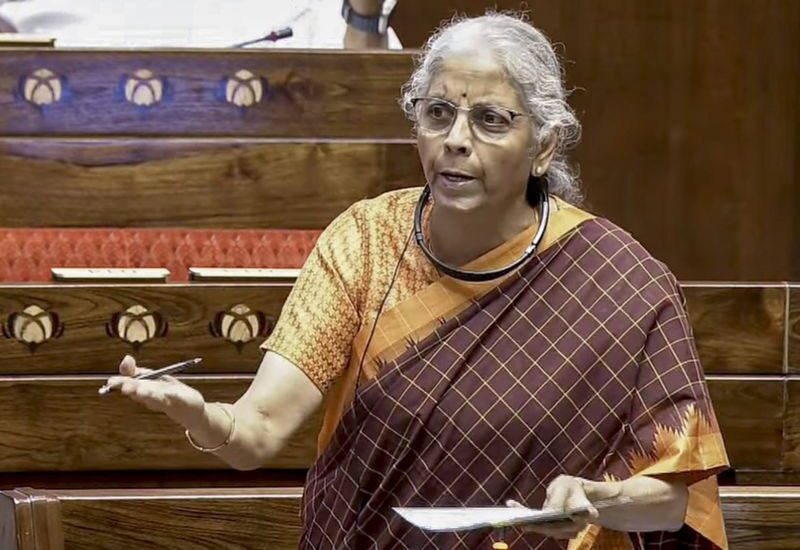
The Taxation and other Laws (Amendment) Bill, 2026 through which the government also amended the Payment and Settlement Systems Act, 2007, was passed without any debate, by a voice vote as finance minister Nirmala Sitharaman introduced it after the House reconvened at 2 pm following an earlier adjournment.
Meanwhile, opposition MPs continued sloganeering over the theft at Ram temple in Ayodhya and the absence of Union home minister Amit Shah in the House even over two weeks after the police action on youth protesters.
Until now, Section 10A of Payment and Settlement Systems Act barred banks and payment service providers from charging anyone for using electronic payment modes under Section 269SU of the Income Tax Act, 1961. Moreover, Section 269SU required large businesses with over Rs 50 crore turnover to accept payments through specific electronic modes, including RuPay debit cards and BHIM-UPI QR codes.
“In the Payment and Settlement Systems Act, 2007, in Section 10A, for the words, figures and letters ‘the electronic modes of payment prescribed under section 269SU of the Income-tax Act, 1961’, the words ‘one or more electronic modes of payment as the central government may, by notification, specify’ shall be substituted with effect from the date of publication of this Act in the Official Gazette,” the Bill said.
Notably, the amendment has removed the legal provision that prevented banks and payment service providers (PSPs) from charging Merchant Discount Rate (MDR) on UPI payments.
With the passage of the Bill, the government has handed itself the power to permit banks, PSPs, and payment infrastructure firms to levy a charge on digital payment services from consumers and small businesses.
Banks and industry players have been pushing for MDR for a while as UPI volumes have kept climbing over the years.
Speaking to PTI on Wednesday, Reserve Bank of India (RBI) governor Sanjay Malhotra, said it is “premature” to discuss MDR on digital payments right now while also noting that investment in public infrastructure like payments is necessary and someone has to pay it.
Boost for domestic electronics manufacturing
The Taxation and other Laws (Amendment) Bill, 2026 has also replaced the ordinance issued on June 5 providing tax relief on interest income and capital gains earned by foreign portfolio investors (FPIs) from government securities.
It also aims to ease the path for fund managers looking to relocate to India by trimming the list of conditions that these funds will have to satisfy to avoid their global income from getting taxed here.
To boost domestic manufacturing, the Bill has extended income tax exemption till 2040-41 for foreign companies that engage contract manufacturers in India for producing electronics goods such as mobile phones, laptops, personal computers, tablets, servers and their key parts and accessories here.
This article went live on August sixth, two thousand twenty six, at twenty-five minutes past eight in the evening.
The Wire is now on WhatsApp. Follow our channel for sharp analysis and opinions on the latest developments.