Researchers at the Johns Hopkins Kimmel Cancer Center and its Bloomberg~Kimmel Institute for Cancer Immunotherapy determined that liquid biopsy-a blood test that detects circulating tumor DNA (ctDNA)-can predict, within a few weeks, whether patients with advanced non-small cell lung cancer are benefiting from immunotherapy. This finding has the potential to facilitate early treatment decisions, allowing physicians to change therapies unlikely to benefit patients months sooner than is currently possible with standard imaging.
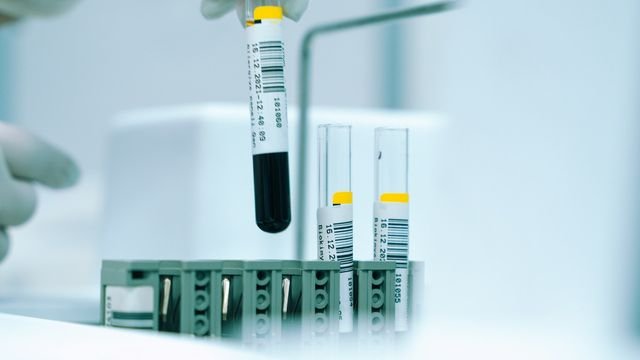
The study found that a single blood draw performed during a predefined three-to-nine-week window after starting anti-PD-(L)1 immunotherapy, accurately detected the presence of ctDNA, and was a robust predictor of progression-free and overall survival. Moreover, a single blood draw after three to nine weeks on immunotherapy was as accurate as repeated blood sampling in predicting therapy response, making the approach practical for routine cancer care.
The findings were reported July 23 in Clinical Cancer Research.
The study included 109 patients with advanced non-small cell lung cancer enrolled through the Johns Hopkins Immunobiology Blood and Tissue Collection protocol (NCT05995821). Researchers analyzed 328 plasma samples collected throughout treatment together with matched white blood cell samples collected before treatment began. Patients whose circulating tumor DNA became undetectable during the landmark three-to-nine-week interval remained free of disease progression for a median of 26.6 months, compared with 3.4 months for patients whose ctDNA remained detectable. They also lived substantially longer, with a median overall survival of 46.9 months versus 11.4 months.
“Our findings establish landmark ctDNA molecular response as an early predictor of immunotherapy benefit and demonstrate that a practical, tumor-naïve, single-timepoint liquid biopsy approach can provide clinically meaningful information weeks before conventional imaging, supporting further evaluation of the strategy in routine patient care and future clinical trials,” says senior author Valsamo “Elsa” Anagnostou, M.D., Ph.D., co-director of the Upper Aerodigestive Malignancies and Cancer Genetics and Epigenetics programs and the Lung Cancer Precision Medicine Center of Excellence.
“The tumor-naïve, single-timepoint format matters for real-world adoption,” explains Anagnostou. “It removes the need for tumor tissue and reduces costs and logistical burden, making the test more deployable in routine oncology settings rather than only in specialized centers.”
Unlike chemotherapy, immunotherapy can produce confusing early imaging results. Tumors sometimes appear larger before shrinking, known as pseudoprogression, while other patients experience mixed responses that make treatment decisions difficult. The researchers say an early molecular assessment from a blood sample could provide physicians with an additional tool to better understand sometimes ambiguous scans and determine whether therapy is working, potentially sparing patients from months of ineffective, toxic and costly therapy and allowing oncologists to quickly switch to different therapies. It can also reassure clinicians and patients early on that a current regimen is effective.
“One of the biggest challenges with immunotherapy is that it can take months before scans clearly show whether treatment is working,” says Anagnostou. “Our study shows that a single blood draw, collected very early on, can identify patients who are benefiting from immunotherapy and, just as important, those who may need a different treatment strategy.”
In the study, the researchers overcame a major challenge in liquid biopsy testing by using an approach that does not require tumor tissue. Instead, they simultaneously analyzed DNA from patients’ white blood cells to distinguish true tumor DNA from age-related genetic changes that accumulate in blood cells, known as clonal hematopoiesis. The approach provides the same prognostic information as methods that rely on tumor tissue analyses, which are often unfeasible in the metastatic disease setting, while making the test more practical for routine clinical use.
“When we did not remove these blood-cell mutations, the prognostic value of the test disappeared,” says Noushin Niknafs, Ph.D., research associate in Anagnostou’s lab and lead author of the study. “By incorporating matched white blood cell sequencing, we were able to accurately identify the tumor-derived DNA that truly reflects treatment response.”
The study was built upon the Johns Hopkins Immunobiology Blood and Tissue Collection Protocol, a prospective clinical biobanking program designed specifically to enroll patients with thoracic cancers and collect blood samples, tissue specimens, and clinical data at standardized points throughout treatment.
Unlike retrospective studies that analyze stored, previously collected samples, this study was designed from the outset to evaluate the liquid biopsy approach. Patients were enrolled prospectively, blood samples were collected according to a standardized schedule throughout treatment, and matched normal DNA and clinical data were collected using uniform procedures. Together, those measures helped ensure the findings were reproducible and can be independently validated for future clinical use.
“This biomarker could only be validated because we invested years in building the right clinical research infrastructure. The work of the clinical research coordinators and staff of the Johns Hopkins Thoracic Oncology Clinical Biobanking Program created the foundation that made this study possible. They enrolled patients, coordinated schedule-compliant blood collections, obtained matched biospecimens, collected clinical information, and ensured consistent sample processing. The planning and coordination required for this effort were extraordinary,” says Gavin Pereira, senior laboratory manager, who led the biospecimen procurement efforts, adding that, “Prospective clinical biobanking programs like this are essential for moving promising liquid biopsy technologies from research into everyday patient care.”
“Our clinical research program is dedicated to advancing patient care through bridging cutting-edge research with clinical practice,” says Iiasha Beadles, senior clinical coordinator, who oversaw the operational backbone through schedule-adherent, multiyear prospective patient enrollment and serial on-therapy follow-up. “Research like this doesn’t happen at the bench alone. It happens at the bedside, appointment after appointment, making sure the right sample is drawn at the right moment, and it is built on trust between the patient and us.”
The researchers say landmark ctDNA molecular response may also serve as an early surrogate endpoint for immunotherapy response, potentially accelerating development and evaluation of future immunotherapies. Clinical trials often require years of follow-up before investigators know whether an experimental treatment improves survival. A molecular readout measured within just a few weeks could enable faster go/no-go decisions, support more adaptive clinical trial designs and shorten the time required to evaluate new therapies.