
Gowri Shankar Ravindran, Adobe’s Director of Engineering, has moved to Bengaluru with his family after a decade in California. He joins a growing list of Indian tech executives choosing to return home. Data reveals that in 2026 alone, 7,300 tech professionals have returned to India amid H-1B visa uncertainties
“This is a big one,” wrote Gowri Shankar Ravindran, the director of engineering at Adobe, on LinkedIn as he announced that he and his family have moved to Bengaluru after spending a decade in California’s Bay area.
Ravindran noted that his move to India comes as he wishes to be “closer to family”.
Notably, Ravindran isn’t alone in his decision to move from the US. Other top tech executives are also moving from the ‘Land of Dreams’ back to India, for a myriad of reasons. While many have said that their homecoming has stemmed from a desire to be closer to ageing parents, others have noted that the job market, especially the uncertainty around the H-1B visa programme, has led to the exodus back home.
Homecoming for Adobe executive
Gowri Shankar Ravindran, director of engineering at Adobe, recently announced that he and his family have relocated to Bengaluru after spending a decade in California’s Bay Area.
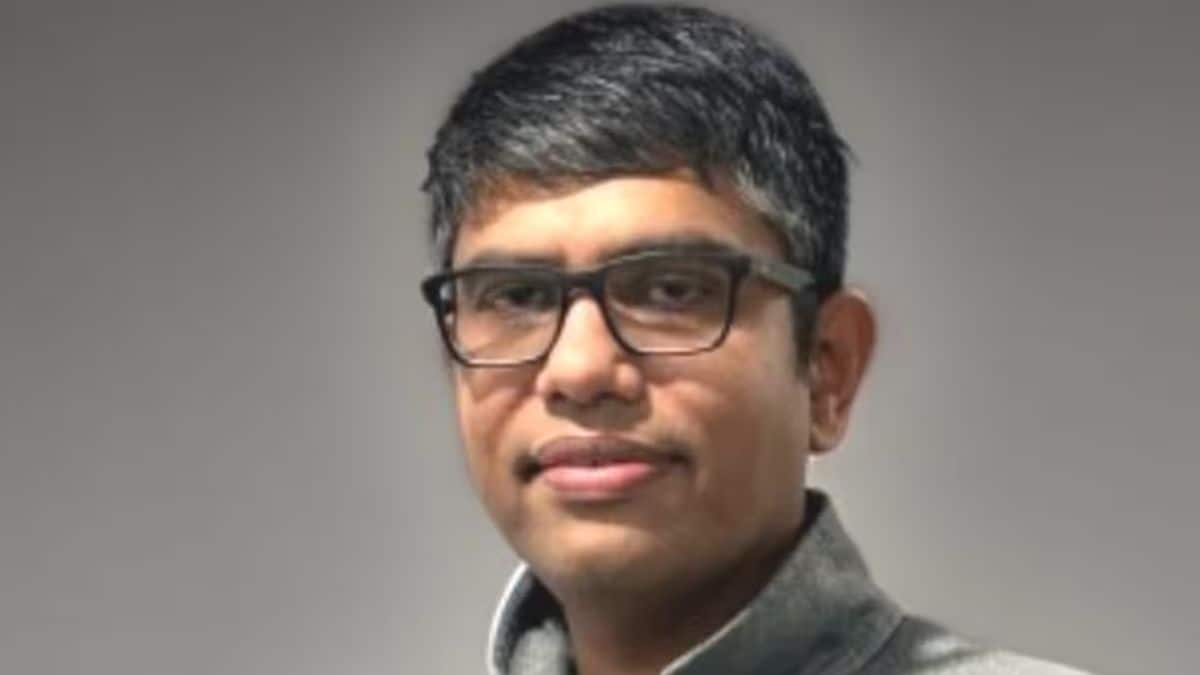
Gowri Shankar Ravindran, director of engineering at Adobe, recently announced that he and his family have relocated to Bengaluru after spending a decade in California’s Bay Area. Image Courtesy: LinkedIn
In a detailed LinkedIn post, Ravindran noted that the move was motivated by being closer to his family.
The Adobe executive said that he and his family were getting acclimated to living in Bengaluru two weeks into the move, writing, “we are filled with excitement for what’s ahead, even as we miss the Bay Area and the incredible community we left behind”.
 More from Explainers
He also thanked Adobe for facilitating the smooth relocation, adding, “I’m excited to continue working on hard, complex problems for Adobe CXO from right here in India.”
Other tech executives also return to India
Ravindran isn’t alone in returning to India from the US. Earlier, senior Meta engineering leader Balaji Gururajan also relocated to Bengaluru after spending 18 years in the US.
In a LinkedIn post, Gururajan shared that he and his family packed up their lives after 18 years in the US and relocated to Bengaluru. He said the decision was deeply personal, centred on spending more time with loved ones instead of watching important family moments unfold from thousands of miles away.
Earlier, in April, Srinivas Narayanan, the Chief Technology Officer for B2B applications at OpenAI, also announced that he was resigning to spend more time with his ageing parents back home, before deciding what comes next.
A larger trend of reverse migration
But the stories of Ravindran, Gururajan and Narayanan aren’t one-off cases. It echoes a growing trend among Indian-origin professionals who are choosing to return home after spending years abroad.
In June, Xpheno, a Bengaluru-headquartered tech talent solutions firm, released a report that suggested that the number of returnees in 2026 is set to exceed previous years. Data shows that the number of tech professionals returning to India has already touched 7,300. In 2025, the figure hit a high of 15,100, compared to 9,800 in 2024.

Data shows that the number of tech professionals returning to India has already touched 7,300 in this year. In 2025, the figure hit a high of 15,100, compared to 9,800 in 2024. Representational image/Reuters
Simultaneously, the number of professionals moving to the US has been declining. Until now, around 9,100 people have moved to the US. In 2025, about 21,200 professionals went to the US, up from 17,600 in 2024.
Commenting on this reversal in migration, Kamal Karanth, cofounder of Xpheno, told Business Standard, “While two-way movement of talent has been recorded every year, it is critical to observe the rise in the number of returnees over the years. Talent corridor movement is now on a trajectory where returnee volumes could exceed previous years’ counts and further narrow the net talent balance. It would not be surprising if the recent H-1B measures cause the number of returnees to surpass outbound tech talent to the US this year.”
But what’s behind this reversal trend? A survey of 1,276 professionals revealed that 53 per cent were returning owing to visa-related uncertainty.
In Donald Trump’s second term in the White House, there has been a lot of churn in the H-1B visa programme. At first, the US president introduced a $100,000 fee for the H-1B visas, which was later struck down by a US court. Lawmakers in the US have also been introducing and pushing for legislations that either scrap the H-1B visa programme or reduces it drastically.
As one Indian techie told The Print, “Tech jobs in the US have seen a degrowth because of AI, and that is fuelling uncertainty. To add to that, tech companies here are now hiring more Americans who at one point weren’t that interested in tech jobs.”
A survey of 1,276 professionals revealed that 53 per cent were returning owing to visa-related uncertainty. Representational image/Reuters
Many Indian techies are also returning home, seeing that there are bigger opportunities here. Experts note that opportunities are expanding in India, driving many individuals back home. “We have observed a meaningful increase in NRIs (non-resident Indians) considering India-based roles across pharma, healthcare, finance, supply chain and tech (IT services, GCCs),” Sonal Agrawal, managing partner, Accord India, was quoted as telling the Economic Times.
A growing anti-India rhetoric, fuelled by extreme far-right activists, has also pushed many Indians to return home. Many Indians working in the US narrate how they have had to face terms such as “ job stealers and visa scammers”.
Last December, FedEx CEO Raj Subramaniam was attacked by many, targeting his Indian heritage, after a round of firings, with many accusing him of favouring Indians. One post on social media read, “Stop the fu**** Indian takeover of our great American companies.” Another said, “They need the Bud Light treatment,” referencing a 2023 boycott.
In April, Zoho founder Sridhar Vembu even wrote on this issue, urging Indian-origin professionals there to return to India. Vembu, in a post on X, argued that unlike the time when he arrived and achieved commercial success in the US when the country was “good to” Indians, the situation has changed since then, with a large number of Americans, if not the majority, thinking that Indians were “taking away” their jobs.
For the Indians who have returned, they note feeling strange. As one wrote on Reddit, “The reverse culture shock is definitely real. The traffic is insane, the humidity is hitting me hard and figuring out the right business problem to solve is going to take a lot of work. But hitting submit on an application without the ghost of immigration hanging over my head? I know I made the right choice. It is good to be home.”
With inputs from agencies