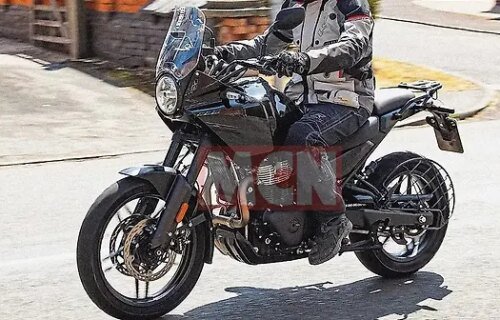
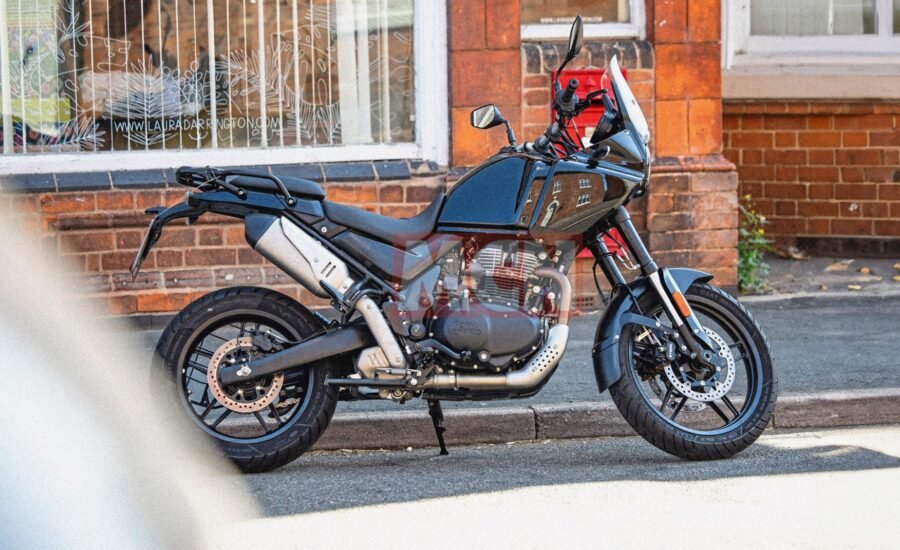
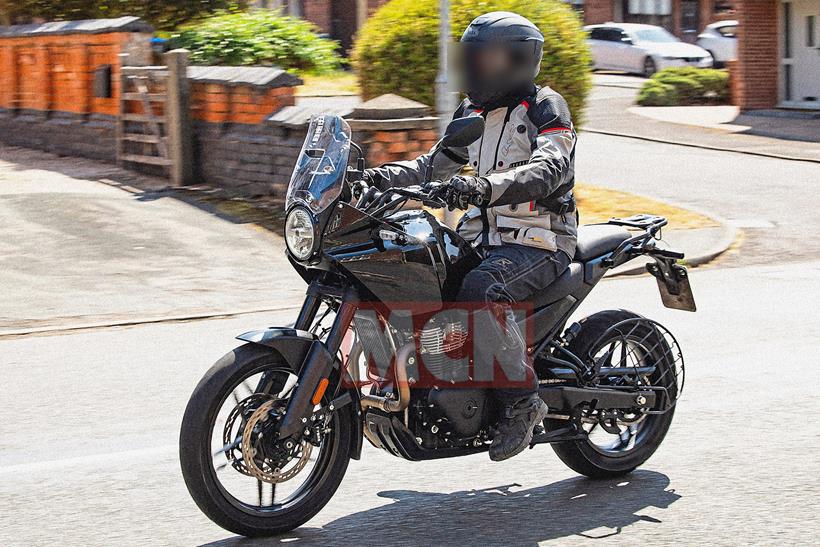
A keen-eyed photographer has spotted what appears to be a near-production ready Royal Enfield Himalayan 750 adventure twin being ridden near the brand’s UK Technology Centre in Leicestershire.
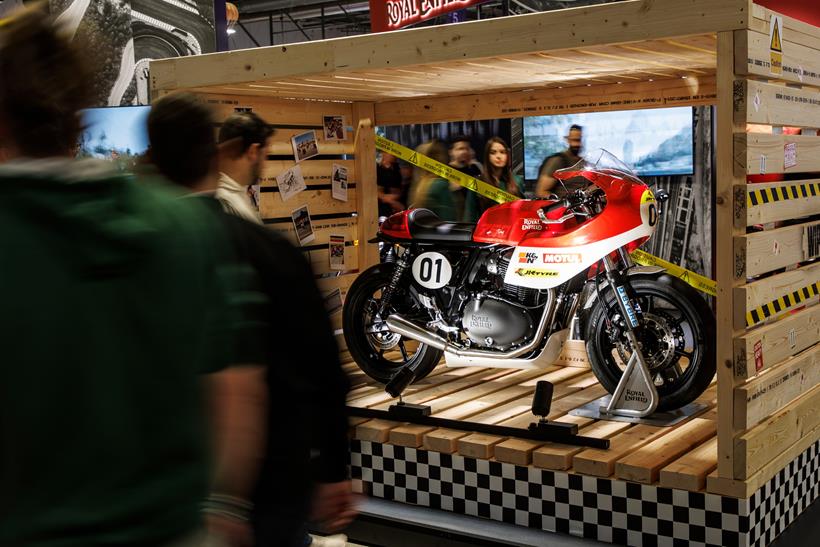
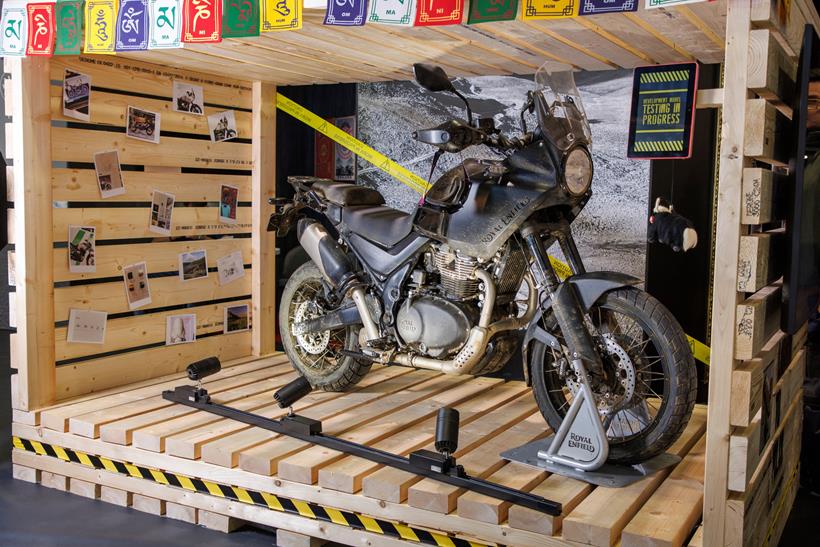
It’s a bike we’ve been expecting for some time now, with the first European spy images emerging back in January 2025, and a full prototype model proudly displayed in a crate at last November’s EICMA trade show in Milan.
It’s now been confirmed as a 750cc machine too, with CEO of Royal Enfield B. Govindarajan speaking to MCN’s Saffron Wilson during a recent trip to the firm’s Tiruvottiyur factory in Chennai, saying: “You all have seen the testing and photos. Now it’s not a secret.
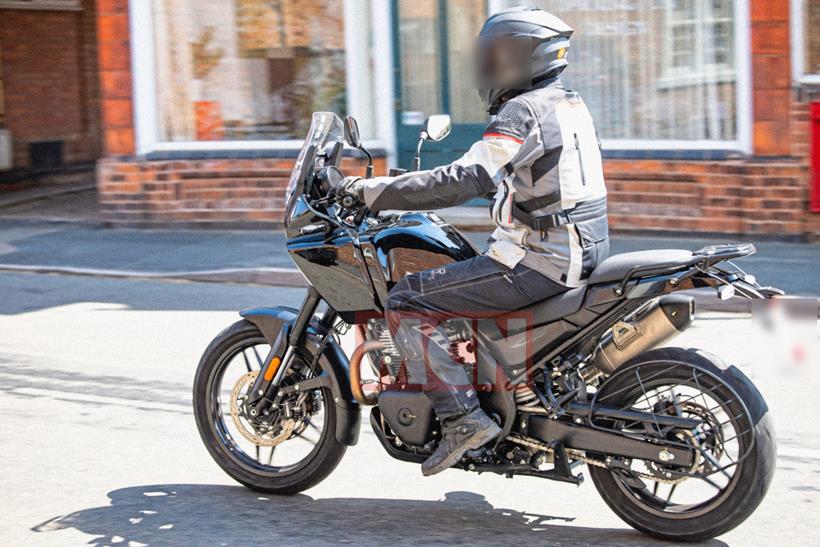
“Yes, we are coming out with the 750cc, mostly in EICMA,” he added. “It’s time to go to the market, so it is coming.”
The bike seen here appears to take things a step further than previously seen prototypes and is being ridden in what appears to be production-ready trim, sporting a road-biased tyre and rim set-up for mass market appeal.
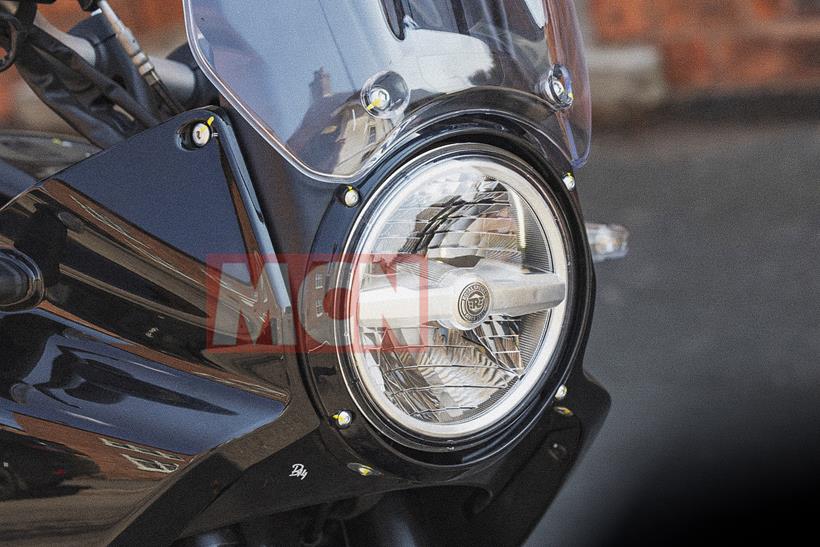
The Royal Enfield logo on the traditionally ovalled right engine case, and inside the circular LED headlight give away the model’s parent company instantly – as does the styling, which takes cues from the existing water-cooled Himalayan 450 family, plus a passing resemblance to the Husqvarna Norden 901.
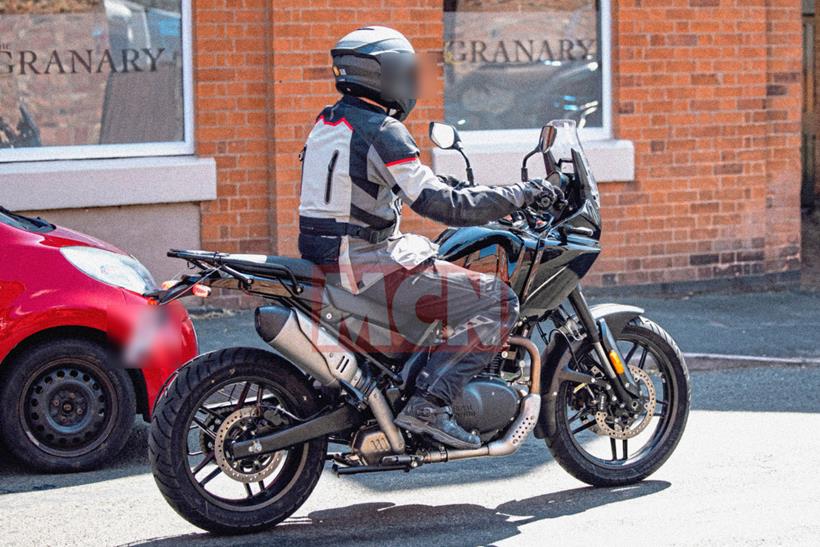
There are no protruding wires, or data-logging lunchboxes on the back seat – with the only real oddity for our market being the semi-circular grill over the left side of the rear wheel, which is a saree guard to prevent fabric entering the chain drive and split five-spoke rim.
Twin-cylinder engine updated
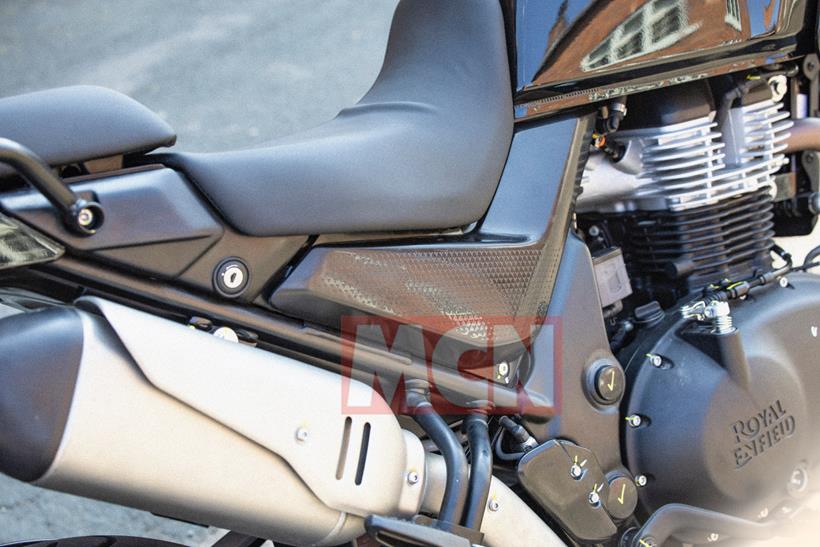
Seen both parked up and riding, your eye is drawn immediately to the air/oil-cooled engine – a unit we’re expecting to have been heavily re-worked for the incoming Himmy, whilst retaining a 270-degree firing order. It appears to be held in a new tubular chassis as a stressed member – with the subframe fixed rather than a bolt-on unit.
Any increase in performance will likely see the Himalayan venture above the 47bhp cap for A2-compliant motorcycles before requiring a restrictor kit and we’d anticipate an increase of around 20bhp.
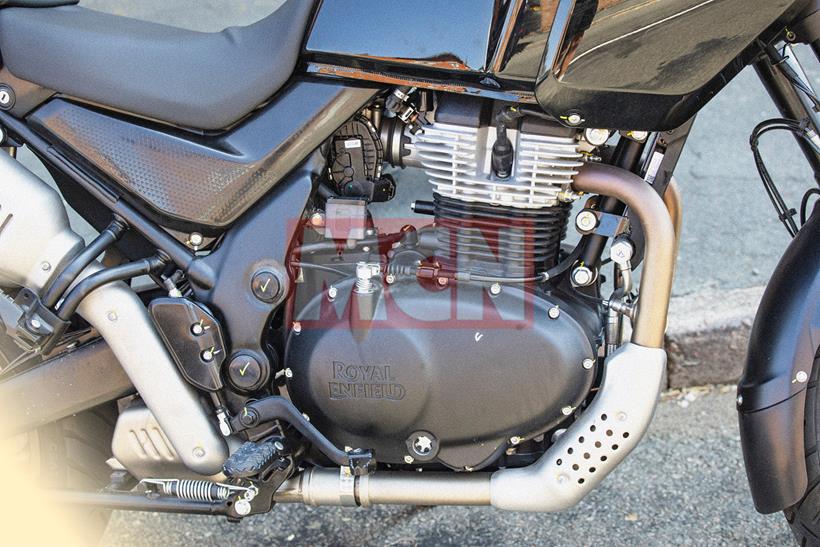
Like much of the Indian brand’s current fleet, it’s powered by a parallel-twin configuration that sits slightly cantered forward in the frame – distinguished from the current seven-strong 650 line-up by its new header pipe routing and upswept single exhaust can that’s tucked behind the pillion peg.
Although helping achieve greater ground clearance, it will also likely mean side panniers of differing sizes – with some of the catalysers required to help meet Euro5+ emissions standards likely tucked beneath the bike, as well as in a hefty collector box sat beneath the lengthy blacked-out double sided swingarm.
Expected climb in capacity
Although originally thought to be a Himalayan 650, a number of earlier clues had pointed towards a 750 configuration for 2027 – including a one-off Continental GT model displayed on the other side of the brand’s 2026 EICMA show stand with a ‘750’ logo painted on the fuel tank.
A closer inspection of the Himalayan’s top end seen here also reveals a slightly revised overall shape, however the same number of cooling fins remain as before.
It also appears to make use of a ride by wire throttle – something we’ve been expecting since its appearance in Italy last autumn – with that prototype display revealing a switchgear set-up for both riding modes and cruise control.
These can still be seen on the right-hand side on this development model and although a nice touch, cruise control on the same hand as the throttle can sometimes make for an awkward activation.
Fans of simplicity will also appreciate a traditional keyed ignition, with the circular TFT screen appearing to be carried over from existing models including the Himalayan 450 – likely to include mobile connectivity for turn-by-turn navigation.
Plenty of firsts for Royal Enfield
Helping to keep the oil cooler safe from road shrapnel is a neat hugger around the base of the mudguard. Finished in black, it wraps closely around the 19in cast front wheel that’s shod with a road-centric CEAT tyres – a brand often featuring on Enfield models.
Again highlighting the bike’s more road-friendly intentions, the front end also makes use of twin brake discs – a first for Royal Enfield’s twin-cylinder family and something we saw hinted at back in May 2025 via a one-off Super Meteor 650 cruiser, built in collaboration with London-based jewellery brand, The Great Frog.
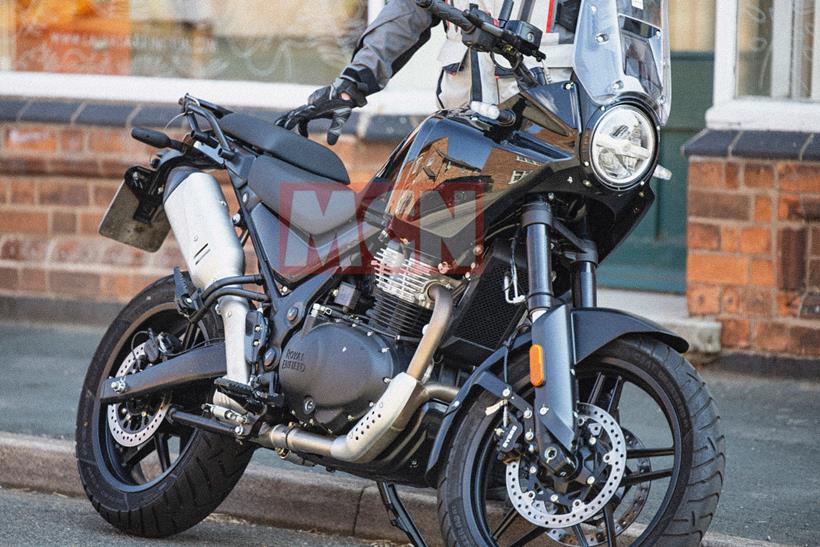
Calipers come from Brembo spin-off Bybre, and whilst some electronic upgrades are clear, we’d anticipate it not to feature cornering ABS – to help keep the price to an affordable level on a broad spectrum of global markets.
Also found up front are Showa upside down forks – appearing to offer a decent range of travel and featuring a degree of adjustability thanks to the clickers at the top of the stanchions, sat beneath the raised flat bars.
Whether these are in place to help development riders dial in base settings is unclear, however they were also seen on the Italian prototype last November. A rear remote preload adjuster is also visible at the back.
Mass market appeal
A passing shot of the prototype being ridden reveals a fairly low, approachable seat height, gently set pegs and an easy reach to the flat bars – further highlighting the bike’s road-biased intentions.
Unlike some other middleweight adventure bikes already on the market, it’s clear that this isn’t a rugged rally raider with a one-track mind – with the engine likely to deliver gentle doses of usable power, more akin to long road tours and the occasional dirt road. Whether a more focussed version appears down the line remains to be seen.
What appears to be a fixed screen, and a wide fuel tank also suggest it’s more about travel than off-road adventure, with a centre stand nestled beneath the exhaust system for maintenance-related duties. There are no handguards or mounting points for panniers – but these are both things we’d expect in an options catalogue.
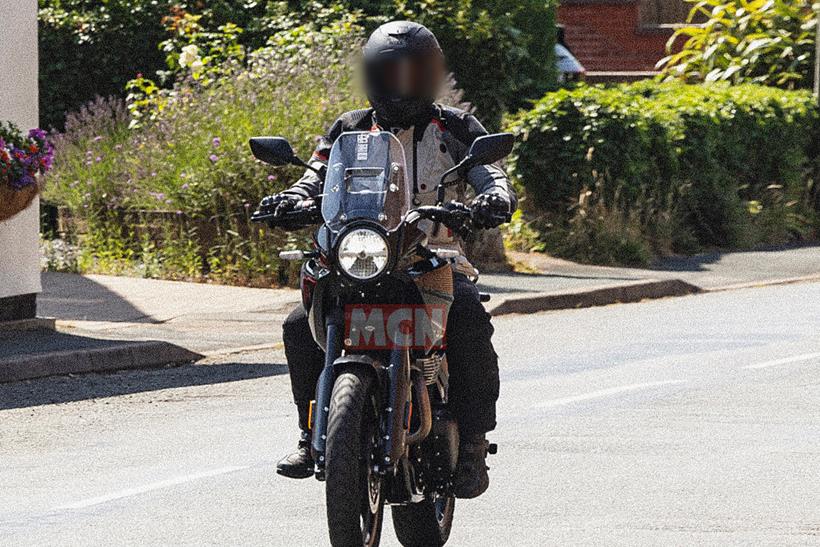
This road-friendly disposition is a decision likely made in order to appeal to the broadest section of riders – especially in their domestic market of India.
In the financial year ending March 31, 2025, some 902,757 of a total 1,009,900 sales came on home turf, with that market also currently enjoying an increased appetite for leisure motorcycling.
Himalayan likely to be the first of many model updates
You only need to look at the rest of Royal Enfield’s range to know that the Indian brand don’t produce a fresh engine to produce only one model.
The air-cooled 350cc single-cylinder J Series engine powers the Classic, Bullet, Meteor, HNTR, and Goan Classic 350 models, and the larger liquid-cooled ‘Sherpa’ 450 single can be found in the Himalayan 450 and Guerrilla 450 naked flavours.
Over in the twin-cylinder camp, Enfield currently produce a seven-strong line-up – powered by a 648cc motor that’s arguably due an update.
The first two models – the Continental GT and Interceptor – first appeared back in 2018 and have gone onto become hugely successful, with Continental concept shown at the EICMA trade show in 2026 suggesting this is the first of the existing models likely to make the switch to a fresh engine platform.
Like the Himalayan prototype seen here, the café racer placed on display last year also featured twin discs with Bybre calipers as well as a small bikini fairing – both signifying a departure from the current model design.
As for the rest of the range, we’d expect models to migrate to the new platform over time, with all variants already complying with current Euro5+ emissions regulations.
There’s also a potential that existing lines could remain in order to service the A2 licence category – with all of the current model line producing in the region of 47bhp, which is the performance cap for the entitlement category without need for a restrictor kit.
The MCN take
This is a big step forward for Royal Enfield, and one we’re looking forward to seeing as a finished machine – hopefully later this year. An increase in tech, and a rise in capacity are likely to bring in a new crowd of potential customers – with the extra performance allowing existing customers to progress to a new, peppier machine.