
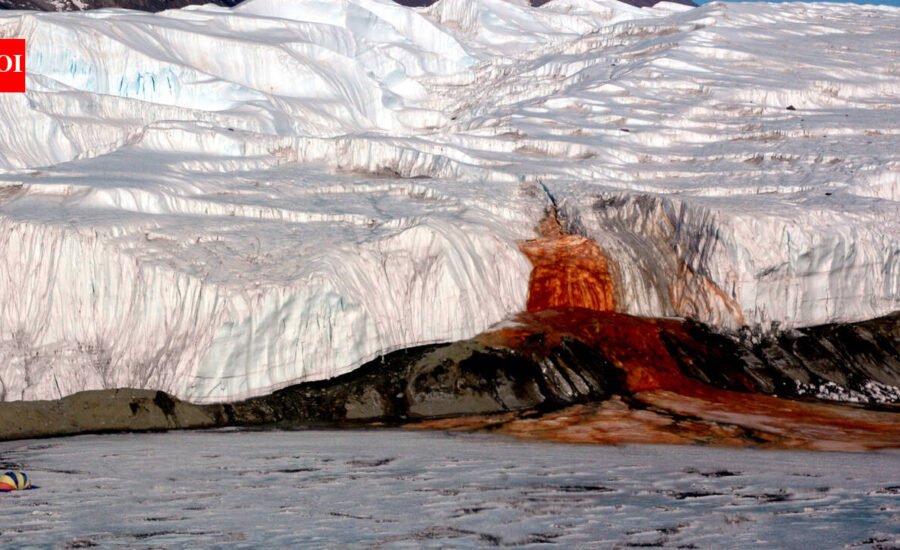
Antarctica may seem like an icy desert; however, researchers have been discovering surprising habitats beneath its ice sheets. Recently, it has been discovered in the McMurdo Dry Valleys region of Antarctica that a pool of red brine contained DNA traces of marine bacteria living under the ice. It appears that some section of the ancient ocean got trapped under glaciers tens of thousands of years ago.A study published in Nature Geoscience reports that the underground brine contains environmental DNA linked to marine microorganisms rather than only traces of organisms that existed in the distant past. According to the paper, the evidence supports the idea that the brine originated from seawater that became sealed beneath expanding ice, providing an unusual glimpse into an ancient Antarctic marine environment that has remained hidden beneath the surface.The Nature Geoscience paper explains that the brine’s distinctive red colour comes from iron-rich water reacting with oxygen at the surface, rather than from algae or pigmented microbes. While iron-rich brines have been documented elsewhere in Antarctica, the newly analysed pool is notable because it combines distinctive chemistry with marine microbial DNA preserved within what researchers interpret as the remnants of an ancient sea.The McMurdo Dry Valleys are among the most unusual landscapes on Earth. They receive very little snowfall and have extremely low humidity, making them the largest ice-free region in Antarctica. Although glaciers and other ice features occur within and around the valleys, much of the landscape is not covered by the continent’s permanent ice sheet.How an ancient sea was covered by Antarctic iceAs stated in the Nature Geoscience paper, ancient seawater was introduced into parts of the Dry Valleys due to the fact that the coastline was more extensive than now. With climate change and the development of glaciers, pockets of seawater were trapped under layers of ice and permafrost. Over time, freezing removed much of the fresh water while leaving dissolved salts behind. As the salt concentration increased, the remaining brine developed a much lower freezing point, allowing it to stay liquid even at temperatures well below those at which fresh water would freeze.The researchers analysed environmental DNA recovered from the brine and identified genetic material linked to marine microorganisms. Many of the detected DNA sequences closely resemble those of microbes found in modern seawater, supporting the interpretation that the underground pool originated from an ancient marine environment rather than a freshwater source. According to the study, the findings suggest that highly saline subglacial brines can preserve biological evidence over long periods, offering valuable insights into ancient Antarctic environments.Also, the study offers an account of the environmental history of the continent since the changes in coastlines and the isolation of certain parts of the ocean below the ice due to glaciers that moved for many years left traces. In this respect, the frozen brine contains evidence related to both the chemistry of the marine environment at that time and living organisms that help to trace the evolution of the land.
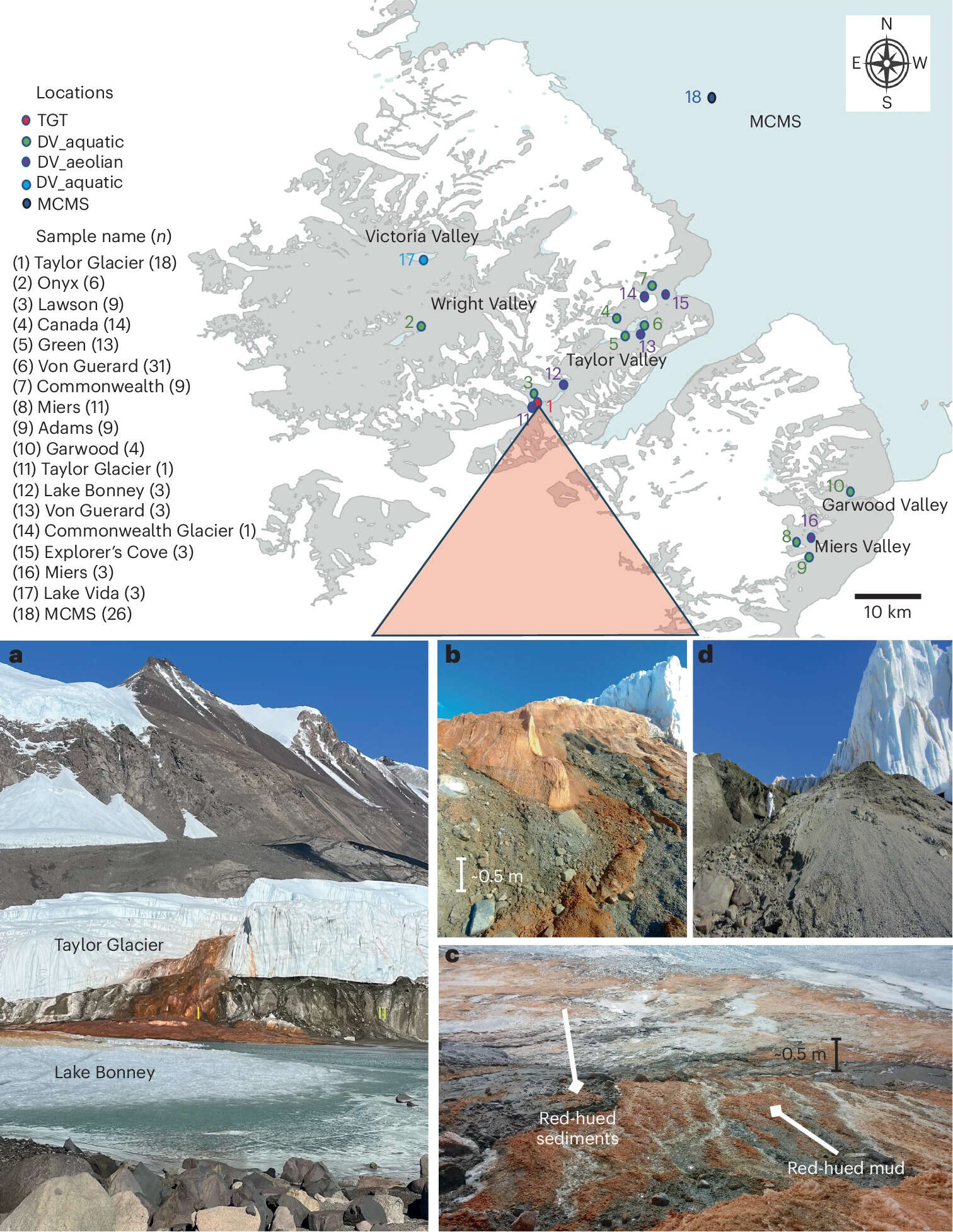
The discovery offers insights into ancient Antarctic marine environments. It also helps us understand life’s boundaries on Earth and icy planets. Further exploration of these hidden ecosystems is now encouraged. Image Credits: Molecular evidence for a relict marine community in an Antarctic Dry Valleys subglacial brine-fed system
Why is it important?This discovery helps to understand the boundaries of the existence of life on Earth and such environments where microbial communities can exist. Instead of proving that such environments have life, the study suggests that such isolated salty ecosystems under Antarctic ice can preserve biological evidence for many years.Rather than demonstrating that all similar environments support active microbial life, the study suggests that isolated, salt-rich brines beneath Antarctic ice can preserve biological evidence over long periods, making them valuable records of the continent’s environmental history.The paper also underscores the importance of exploring hidden Antarctic ecosystems as glaciers and ice sheets continue to change. As previously inaccessible areas become easier to study, researchers may identify additional ancient brine systems that preserve evidence of past environments and the organisms associated with them.The authors mention some unresolved issues, such as how long ago the microorganisms have been isolated, how actively they work today, and what changes have occurred in the brine’s chemical composition during the time period. The results of future studies can provide answers concerning whether or not these microbial communities have developed separately under the layer of ice or have stayed unchanged since the seawater was confined there. Further research on the concealed brine can clarify the moment when the seawater became isolated and how the microbial communities responded to the changes in Antarctica’s climate and ice cover took place.