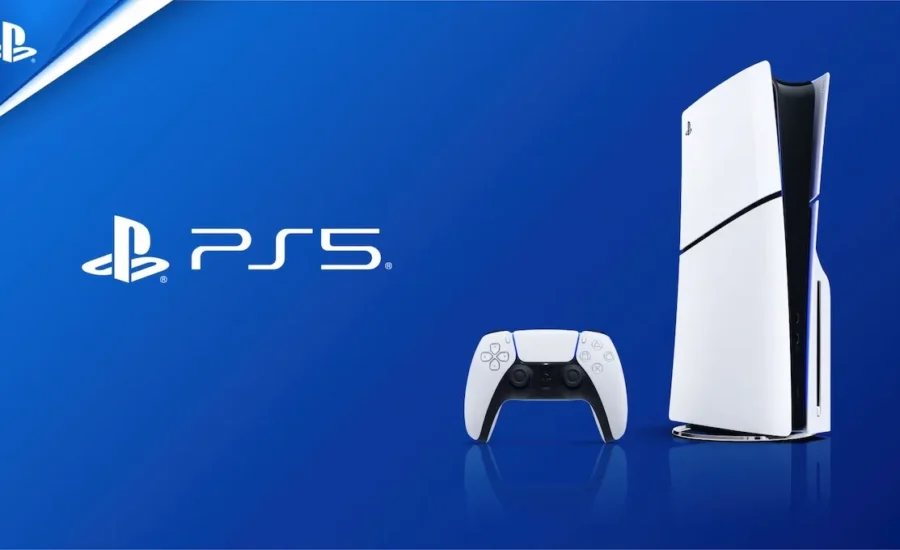
Even if you’re not a gamer yourself, you’ve probably heard that PlayStation has announced it will stop supporting new games on discs from January 2028.
The shock of this sudden statement and the uproar from fans were both so extreme, the story has made global news.
But what is the reaction here in Japan? IGN Japan recently published a podcast video discussing this topic, and the comments section was lively indeed.
First let’s cover a little background. When I was a kid, games came on audio cassettes.
I still remember connecting a tape deck to my Sinclair ZX Spectrum console and patiently waiting for the tape to play from beginning to end, loading each byte of data in analogue fashion. If you were lucky, after 30 minutes the game might even have properly loaded.
We went from cassettes and floppy disks to cartridges, then CDs, then Blu-rays, then (on Nintendo Switch) game cards so small they had to be coated in foul-tasting chemicals so kids wouldn’t swallow them. But not only that—they started to be made available digitally.
The PC side has always done its own thing, as has mobile, and digital distribution came to these platforms long ago.
The Rise of Digital Gaming
But in 2004, the Xbox 360 launched Xbox Live Arcade, and suddenly games were available on mainstream home consoles instantly, without the need to go out and buy a disc.
For the publishers, removing the need for costly disc production and distribution meant smaller games and weirder games could be released with less risk attached.
It was the start of a democratization that led to the indie game boom, and a type of convenience that led to online stores for PlayStation, Xbox and Nintendo, as well as subscription services like Xbox Game Pass. Truly, games were everywhere.

The benefits have been enormous, and at this point, the floodgates are well and truly open.
Most gamers buy their games digitally. You don’t have to change a disc every time you want to play, and you don’t need to store discs on a shelf. An overwhelming amount of modern games are not even available in physical form at all.
Who Really Owns a Digital Game?
So if no one’s buying discs, it makes sense for PlayStation to kill them. Right?
Well, it’s never that simple. For one thing, there’s the question of ownership. When you buy a game on a disc, you own it. You can play it, display it, sell it, lend it to a friend, get a refund if you hate it, or bury it at the bottom of the garden for a thousand years. It’s yours forever.
The obsession over retro games and collecting obsolete hardware proves that these objects can have a second life decades down the line.
With digital, though, as it currently stands, all you are buying is a license to play the game. And that license can be revoked at any time.
Just as PlayStation announced it would go all-digital in 2028, the very same week, two things happened.
First, Sony removed over 500 classic movies from sale on its digital store, meaning that people who had “bought” them were no longer able to access them—with no notice nor refunds given.
Then, PlayStation announced it was closing the digital stores for the PlayStation 3 and PlayStation Vita, two of its beloved past platforms, meaning that many of those games would be no longer available to buy anywhere.
The timing of all of this news—and all from Sony—was almost comical. The consumer reaction was vitriolic.
Then, just a few weeks later, an outage on Xbox’s online network prevented players from being able to launch digital games they owned as well, serving as a further stark warning of what we are about to lose.
As one of IGN Japan’s viewers commented on our podcast video, “I’m always worried that if my account gets suspended, everything I’ve bought over decades will disappear in an instant.”

The Appeal of Physical Games
Clearly the ownership issue is a thorny one, which requires proper legislation to ensure people know what they are getting when they click “Buy now.”
I think that if PlayStation had at least coupled its disc-killing announcement with a reassuring message around digital ownership, a trade-in program, a way to lend digital games to your friends and so on, it might have cushioned the blow.
But weeks after the initial announcement, none of this is any clearer.
On a practical level, the people who do still buy physical games are the most dedicated fans—the collectors—and they love having a box to put on their shelf.
Then there are those regions where the online infrastructure is not there yet—emerging markets like India and Africa, but also parts of the United States, Europe and the UK, where the network is less developed. Discs may be way more convenient to people with unreliable internet.
There’s the emotional aspect, too. People become attached to their physical belongings, and being told you can’t have them anymore is a major bummer. Especially when the alternative is a digital version that can be taken away at any time.

The World of Used Games
For younger gamers or people with less disposable income, the secondhand market is super important—but without discs to sell, trade in, rent or buy used, that market could go away completely.
When I was a kid, secondhand games were a major part of my gaming diet, because I could play more games at a lower price.
Although, as one of our viewers pointed out, you could argue that all-you-can-play subscription services like Game Pass alleviate this problem a little.
“Back in my early twenties, when I was poor and couldn’t afford to buy multiple games at full price, I used to buy games on the used market. So it’s sad to see this kind of habit/culture disappear. Instead, I hope they improve the PS Plus and Game Pass services.”
The Challenge of Preserving Games
If games are stored only on servers that can one day be switched off, how will curious future generations be able to rediscover the games of the past?
After all, games have become an important part of our culture, and a type of art in their own right.
This is a bit of a tricky subject, however, since games are often updated via downloaded patches.
Indeed, most games these days require a “day one patch”—an update that allows the developers to improve the game between the date it ships and the date it is officially released—meaning the version on the disc is not even the 1.0 final game.
Which version do we want to preserve? Will it really make a difference whether we have the discs or not? Can a Blu-ray disc even survive 100 years?
Surely this is a job better entrusted to the game industry, historians, or to the platform holders themselves?
A comment from an IGN Japan viewer: “If all manufacturers and platform holders could create a unified game archive, I think the dissatisfaction with this announcement would be greatly reduced. As things stand, illegal download sites will likely take on that role, and I don’t think that’s healthy.”

Different Ways of ‘Owning’ Games
Of course, even if discs disappear, there will always be physical representations of the games we love.
Collector’s editions of games already don’t usually include the disc, instead offering a cool statue to put on the shelf or an art book for the coffee table.
PlayStation has said it will sell boxed games with a download code instead of a disc, and already Rockstar Games has announced that Grand Theft Auto 6—the most anticipated game of all time—will not get a disc release at launch this November.
As one of our viewers put it, “I’m a disc person myself, but I think going digital is unavoidable. So, I’ve started buying merchandise, artwork and special editions instead.”
No Easy Answers
Of course, this being Japan, our audience was also quick to point out the ways that Nintendo has approached some of these issues with the Nintendo Switch 2.
On the one hand, games have become too big to fit on the tiny game cards used by the Switch 2, so some games are released on a key card—which contains no game data, only the license to download and play the game.
While this solution has angered some players, at the very least, Nintendo has a decent system for lending games digitally to friends and sharing them with family members.
“I feel like the Switch 2 already provides the answer,” wrote one of our viewers. “Older games can be ported and played on the [Nintendo Switch Online] subscription service. Lending and borrowing games can also be done digitally.”
“Some say that the disappearance of used games will reduce opportunities for young people to experience games, but given the price of next-generation consoles, that demographic is probably no longer the target audience,” commented another. “The opportunity to experience games is being handled by the Switch.”
It’s a messy problem, and one fraught with much emotion. I suspect PlayStation will eventually unveil some sort of policy around this, especially if it plans to one day release a PS6.
In the meantime, the passion of gamers is plain to see—and I believe this passion will help gaming culture endure more than any disc.
RELATED:
Author: Daniel Robson
Daniel Robson is the Executive Producer of IGN Japan.