
Record-breaking heatwaves and persistent drought across Europe have dropped water levels in the Danube River to historic lows. Recently, it was their lowest since 1996. The drying of the river has impacted biotic factors and also affected the waterways across Europe. As one of the continent’s major rivers shrinks, long-hidden chapters of history have been surfacing from the muddy riverbed.
As per CBS News, a rusty hull, along with a broken mast where the Nazi flag once flew, was visible near the Serbian port of Prahovo.
In 1944, as Soviet forces advanced, retreating German commanders intentionally sank hundreds of their own vessels to block the river route.
Many of the exposed hulks still contain tonnes of live ammunition and unexploded artillery shells, posing a severe safety hazard to local fishermen and vessel operators.
The report further mentioned that at least 20 World War II wrecks are visible because of the drying Danube River.
Also read | From Rs 15,000 Internship To Rs 25 Lakh Package: Techie’s 2.5-Year Career Journey Goes Viral
Water levels on the Danube River, the second longest in Europe, have dropped so low because of drought that the hulks of dozens of World War II German battleships are emerging into view. pic.twitter.com/z2Rqfi4Fpg
— The Associated Press (@AP) August 5, 2026
Mammoth remains revealed in Bulgaria
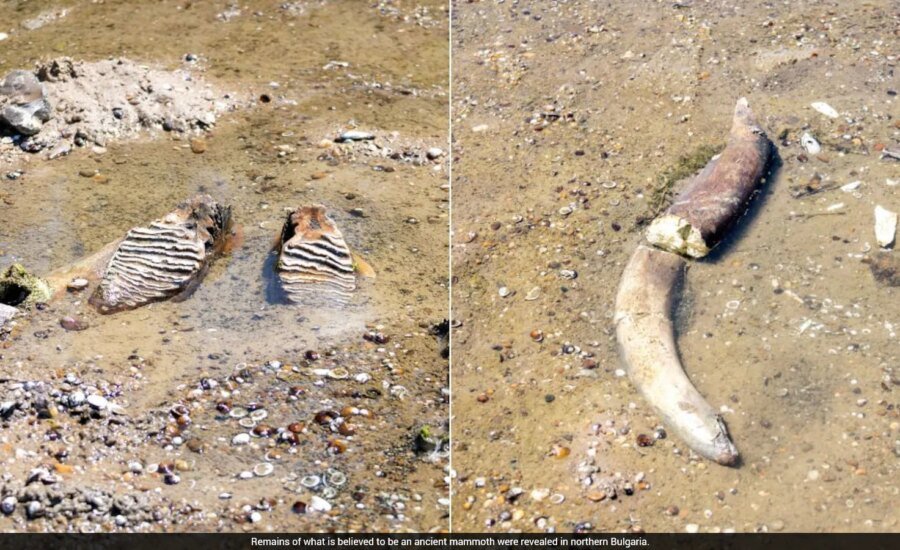
The remains of what is believed to be an ancient mammoth have been revealed in northern Bulgaria, Reuters reported, citing the BTA news agency.
The remains were found by a resident of the Ryahovo village. As quoted by the media outlet, Ivica Gavrilovic, who lives beside the Danube, said, “People still don’t know how to access the ships themselves.” He said people are interested in the wrecks, but it’s difficult to reach them.
Museum Director Nikolay Nenov told BTA that experts who were sent to the site recognised a lower jaw, two tusks and possibly a mammoth rib, and that the bones will be removed for further examination on Thursday to establish with accuracy the origin and age of the find.
Also read | Facing Budget Cuts, Researchers Launch OnlyFans Page To Fund Marmot Study
“I would not call it a sensation, but any discovery of such ancient remains is very important for science,” Nenov said as quoted by Reuters.
As per Nenov, it has long been believed that the site was a swamp where the animal probably died thousands of years ago.