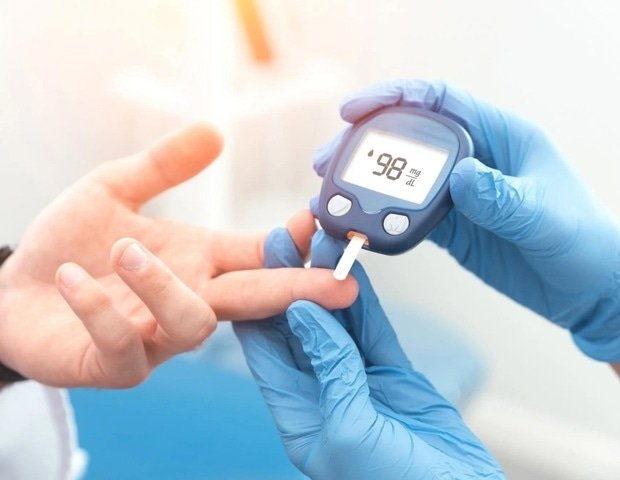
Continuous glucose monitors are becoming increasingly popular, including among people without diabetes. But there is no scientific evidence that the technology improves health or prevents disease in healthy people.
Continuous glucose monitors (CGMs) were originally developed for people with type 1 diabetes and are now also widely used by many people with type 2 diabetes. In recent years, the technology has become an increasingly popular consumer product, marketed as a way to optimize diet, exercise, and overall health.
Benefits for some
According to a new review, there is no scientific evidence that continuous glucose monitoring prevents disease in people with type 2 diabetes. But the technology can make it easier to adjust treatment and reduce the need for repeated finger-stick tests, especially for people with a high risk of low blood sugar (hypoglycemia). On average, CGM use is also associated with a modest reduction in HbA1c.
But for people without diabetes, the technology is less likely to be beneficial. The researchers found no scientific evidence that continuous glucose monitoring improves health or prevents disease in this group.
Minna Johansson, an Associate Professor at the Sahlgrenska Academy, University of Gothenburg, and a general practitioner at Herrestads Primary Care Center, is one of the researchers behind the new review:
This technology is tremendously valuable for certain groups of patients. But it is increasingly being used by groups where we simply do not know whether it provides any benefit at all – or if it could even be harmful. I believe that companies marketing this technology should be much more transparent about the fact that there is no evidence that it improves health in people without diabetes.”
Minna Johansson, Associate Professor, Sahlgrenska Academy, University of Gothenburg
A matter of healthcare resources
The researchers also warn that normal fluctuations in blood glucose can easily be overinterpreted, potentially leading to unnecessary and unhealthy dietary restrictions or anxiety. They emphasize that new medical technologies should be used where they have proven value – not simply because they are available or generate more data.
“Continuous glucose monitors generate enormous amounts of data that are difficult to interpret. We are already seeing healthy people seeking medical care to help make sense of their readings, even though we do not know whether these data lead to better health. If the use continues to increase, it risks drawing time and resources away from patients with greater healthcare needs,” says Minna Johansson.
The article is a narrative review, prepared at the request of JAMA Internal Medicine, that synthesizes the available evidence on continuous glucose monitoring and places it in a clinical context. It is accompanied by a Patient Page – a peer-reviewed summary of the evidence for patients and healthcare professionals.
Source:
Journal reference:
Dower, J. A., et al. (2026). Continuous Glucose Monitoring in Type 2 Diabetes and Beyond. JAMA Internal Medicine. DOI: 10.1001/jamainternmed.2026.2772. https://jamanetwork.com/journals/jamainternalmedicine/article-abstract/2851941