A series of presentations at the 26th International AIDS Conference (AIDS 2026) in Rio de Janeiro, Brazil had the title ‘Chemsex everywhere: Interventions across contexts,’ which encapsulated two realities.
Firstly, chemsex (sexualised drug use, or sex enhanced by drugs) has become a global phenomenon among gay and bisexual men, transgender women and other gender and sexually diverse people. Despite differing cultural contexts, there are remarkable commonalities in terms of the drugs used (all presenters, from three continents, named methamphetamine as the primary chemsex drug) and the health needs of users.
Secondly, however, it often ‘falls between the cracks’ of programmes designed to address the use of criminalised drugs (whether punitive or based on harm reduction) and those designed for the HIV and sexual health needs of key affected populations (whose sex may also be criminalised). Neither was built with sexualised drug use in mind; as a result, chemsex users often have a very high vulnerability to HIV and STIs, but also to mental ill-health and socio-economic difficulty.
Probably the most striking presentation was made by David Nel, Executive Director of the South African community organisation OUT LGBT Well-being, about a chemsex culture they stumbled upon during the COVID lockdown in 2020-21.
“We came across a network of chemsex houses in Soweto,” he told the conference, “largely because of a very high HIV diagnosis rate among men who mentioned them.”
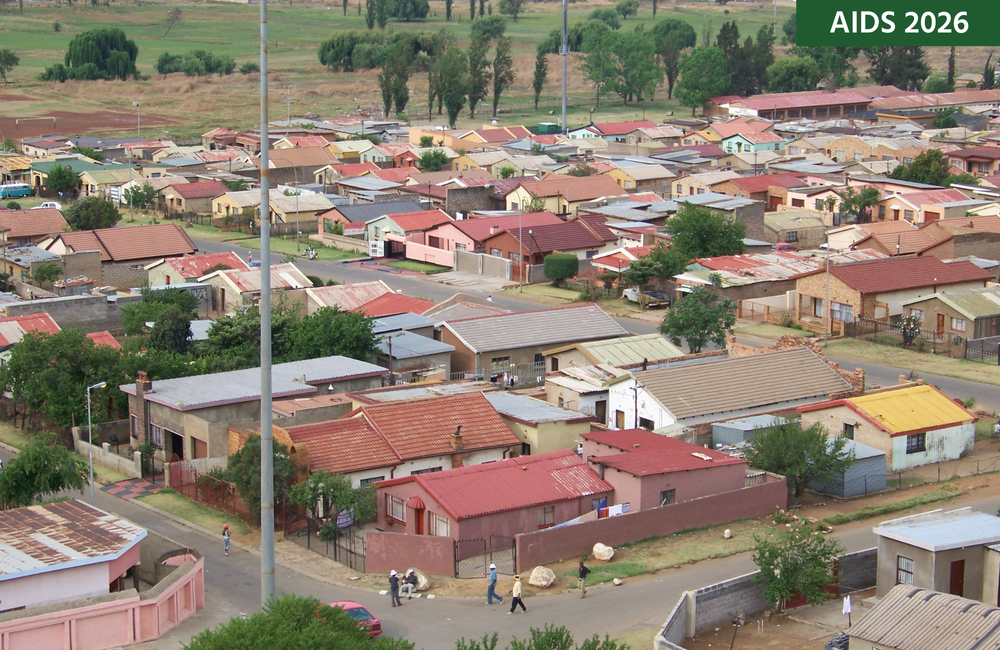
They made contact with users of eight of these houses. “They were typical matchbox houses,” Nel said, referring to the standardised square, four-room workers houses put up under apartheid. “One gay guy would be living there, but from 10am every morning, men from the local township would gather there. There was no payment as such; you had to know someone, and bringing your own drugs was welcome but not compulsory. Men would have sex there or would hook up and go elsewhere. Given that there might be 20 men at a time having sex in four rooms, there would be little privacy or self-care.”
Seventy-seven per cent of the men were using methamphetamine, 40% combining it with other drugs, and 15% sometimes or always injected drugs. Fifty-eight per cent said they came to the chemsex house more than once a week.
OUT initially made contact with the house ‘gatekeepers’ and through them a network of clients, numbering 127 altogether.
Their average age was 36, 62% had not completed secondary education, very few (9%) had employment, and 70% lived with their family though, Nel commented, this was often a single parent or grandparent who themselves were often drug users. Nel described their upbringing as featuring “no healthy loving relationships and frequent conflict.”
Psychological tests found that half of the men had symptoms of anxiety and/or depression, 54% showed signs of psychosis, and 28% had suicidal ideation. A third were classed as having internalised homophobia – self-stigma for being gay. Sixty-eight per cent had alcohol use classed as harmful and 78% harmful drug use. (Nel commented that, at about US$10 a gram, methamphetamine in South Africa is cheaper than alcohol.)
Over 50% of the men had HIV, but only 31% were aware of it, and only 42% of them took antiretroviral therapy regularly.
Between January 2024 and March 2025, OUT undertook a project working with the chemsex users, funded by a grant from the Elton John AIDS Foundation.
Aware of the psychological needs of the service users, OUT offered them individual treatment plans including group cognitive behavioural therapy and individual counselling and support plans. They were also offered skills classes with the aim of employment. “These guys would not be suitable for skilled jobs,” Nel said, “but we offered them cooking and clothes-making classes so they could at least have something of a trade.”
By March 2025, the intensity of psychological symptoms had declined by 31-35% in the cases of anxiety, depression and suicidal thoughts, and by 63% in the case of psychosis. Harmful drug use also fell by 35%, though alcohol use only decreased by 14%.
During this period, the proportion of those with HIV taking ART regularly increased to 83%. In March 2025, however, the withdrawal of funding meant service users, who had previously received biomedical services including antiretroviral therapy from OUT’s peer workers, had to start going to government clinics. ART retention declined rapidly to 68%, though since then it seems to have stabilised at that figure.
Since then, OUT has been exploring partnerships with other non-government organisations including a family health programme and a programme for sex workers, both to support their clients who may be chemsex users, and to explore opportunities for combined support.
At the same chemsex session, delegates also heard about a project from Thailand supporting transgender women who had chemsex. Presenter Akarin Hiransuthikul commented that chemsex was not as visible among the transgender community as it was among gay men, but in fact half of a group of 65 trans women said they sometimes had chemsex and a quarter said sex aways included chems.
Meanwhile, Mihitha Basnayake of the Sri Lankan Family Planning Association spoke about their difficulties in arguing for chemsex support services in Sri Lanka and Malaysia, countries that criminalise both drugs and gay sex. He commented that in Malaysia there were at least harm reduction services for opiate users, but Sri Lankan politicians, physicians and psychiatrists had no experience of the harm reduction approach. Progress to persuade them of its necessity had been slow, despite a visible male sex work ‘beach boy’ scene.
David Nel commented that their experience showed that it was possible to run “a peer led service for gay men that brings those services as near as possible to clients”, and where the target is “not just self-esteem or capacity building, but real epidemic control”.
References
Nel D et al. Improving HIV retention among men who have sex with men who engage in chemsex in South African townships: evidence from the EJAF Chemsex Program community model. 26th International AIDS Conference, Rio de Janeiro, abstract OAD1804, 2026.
Hiransuthikul A et al. Meeting transgender-specific needs: service acceptance and identified needs among Thai trans women engaging in substance use or chemsex (iT-REX study) 26th International AIDS Conference, Rio de Janeiro, abstract OAD1803, 2026.
Basnayake M et al. Breaking the silence: introducing chemsex harm reduction in criminalised Asian settings. 26th International AIDS Conference, Rio de Janeiro, abstract OAD1805, 2026.
Image credit: Soweto. Image by K.G Schneider. Available on Flickr under Creative Commons licence CC BY-NC 2.0.