Separately, the Cabinet Committee on Economic Affairs cleared the 135.871 km Guwahati-Tezpur Corridor along NH-15 in Assam, worth Rs 8,970.20 crore, taking the combined outlay of the day’s decisions to Rs 32,701 crore.
GOBARdhan Scheme
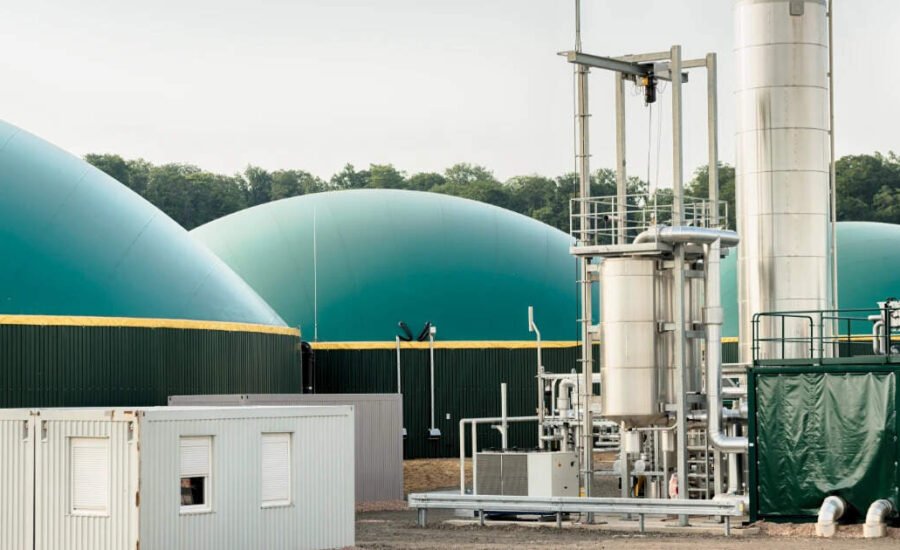
GOBARdhan will run from FY 2026-27 to FY 2035-36 and aims to convert agricultural residue, cattle dung, press mud, municipal organic waste and other biomass into clean fuel, organic manure and rural income, establishing Compressed Biogas (CBG) as a major pillar of India’s energy mix.

The scheme will be administered by the Ministry of Petroleum and Natural Gas. Briefing reporters, Union Minister Ashwini Vaishnaw flagged India’s dependence on imported natural gas as the backdrop for the scheme.
India imports 50% of its natural gas consumption, and recent geopolitical developments have disrupted the Strait of Hormuz route, affecting 55-60% of the country’s LNG imports. “Aatmanirbharta is no longer an option, it is a necessity,” the government said, positioning CBG as a domestic alternative to imported fuel.The government said the scheme is expected to drive nearly ten-fold growth in domestic CBG production and mobilise large-scale private investment.
It builds on earlier initiatives, including the SATAT scheme, the Market Development Assistance scheme for organic manure, the Biomass Aggregation Machinery scheme, the Development of Pipeline Infrastructure scheme, and Central Financial Assistance for CBG plants, which have together enabled the commissioning of over 200 CBG plants so far.
Six components of the scheme
The scheme rests on six components. Under assured CBG offtake, a dedicated framework requires City Gas Distribution entities to meet a notified CBG blending obligation of 3% in FY27, 4% in FY28, and 5% from FY29 onwards in CNG and PNG segments.
On pricing, the government has fixed a stable administered CBG price of Rs 2,110 per MMBTU, with a minimum ten-year revenue horizon for producers, combining government support with a market-based cost-sharing mechanism. Capital assistance of up to Rs 2 crore per tonne per day of installed CBG capacity will be available for eligible greenfield projects, extending to feedstock aggregation and organic manure processing assets, with brownfield expansions also eligible.
The scheme further supports cluster-based and standalone pipeline infrastructure connecting CBG plants to trunk pipelines and City Gas Distribution networks, along with a dedicated credit guarantee mechanism to improve lender confidence and expand institutional credit access for MSME-based CBG projects, particularly for MSMEs, women entrepreneurs and first-time developers.
A CBG Ecosystem Challenge Fund will also support district-level implementation, including feedstock mapping, aggregation infrastructure, technology adoption and capacity building.
The government said the scheme is expected to strengthen energy security, boost rural livelihoods for farmers and feedstock aggregators, expand the organic manure economy, and cut greenhouse gas emissions through better waste utilisation.
Guwahati-Tezpur highway
On the highway, the CCEA approved the development of a 135.871 km, four-lane access-controlled Guwahati-Tezpur Corridor of NH-15 in Assam, excluding the Mangaldoi bypass (15.11 km). The project will be developed on a Build-Operate-Transfer (BOT) toll mode at a total capital cost of Rs 8,970.20 crore under NH(O).
The corridor includes construction of an Emergency Landing Facility spanning 4.9 km in the Tezpur bypass, finalised in coordination with the Indian Air Force, which will help decongest the existing NH-27 (East-West Corridor) on the south side of the Brahmaputra.
The project also involves five major bypasses totalling 58.7 km, easing congestion through densely populated stretches including Baihata Chariali, Sipajhar, Kharupetia, Dekiajuli and Tezpur. Additional components include 15 major bridges, 30 minor bridges, 19 flyovers, one elephant underpass in the Tezpur bypass, 46 underpasses, and 210 km of service roads to maintain cross-movement of traffic given the corridor’s access-controlled design.
The government said the project will double average travel speeds and halve travel time, while improving road safety, fuel efficiency and vehicle operating costs.
It is also expected to enhance connectivity to eight PM Gati-Shakti economic nodes (industrial parks), two social nodes (the aspirational districts of Darrang and Udalguri), three tourist nodes (Kamakhya Temple, Kaziranga National Park and Orang National Park), and seven logistics nodes, including three major railway stations, two airports and two waterway terminals across Assam and Arunachal Pradesh.