Australia has confirmed the country’s first mass mortality of native seabirds from the deadly strain of avian influenza, H5N1.
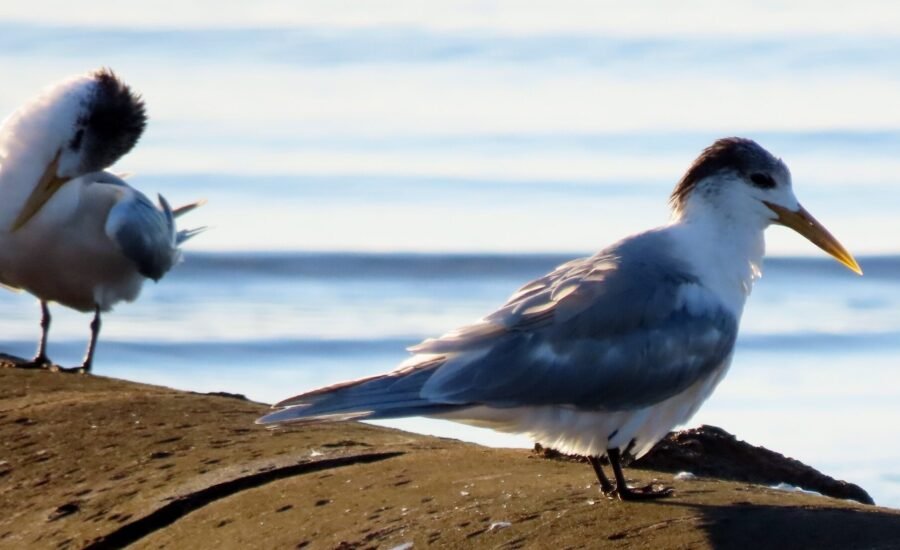
On Aug. 1, authorities confirmed the positive cases among 49 dead and 35 sick greater crested terns (Thalasseus bergii) at Baudin Rocks, an island roughly 5 kilometers (3 miles) off South Australia’s southeast coast near Cape Jaffa.
The H5 strain of avian influenza virus, which has killed millions of wild and domestic birds and mammals across the globe, was first detected on Australia’s shores in late June in two migratory seabirds, a brown skua (Stercorarius antarcticus) and a northern giant petrel (Macronectes halli).
As of Aug. 3, 2026, the country has recorded 78 confirmed cases of the H5 strain in seabirds across five states, with 58 of those cases in South Australia alone and 10 in Western Australia.
Apart from the greater crested terns, bird flu has also been confirmed in silver gulls (Chroicocephalus novaehollandiae), a common native Australian seabird.
Federal Agriculture Minister Julie Collins confirmed the results, noting that the mass mortality was expected as the virus takes hold in the environment.
“Sadly, we do know that once the H5 bird flu is spreading in wildlife and the natural environment, it is not possible to avoid significant losses, which is what we’re starting to see now,” Collins said in a press conference.
According to ABC News, South Australian Chief Veterinary Officer Skye Fruean described the Baudin Rocks mass mortality as “unusual and significant.”
“We’ve known that this is going to happen at some point in time, unfortunately, it appears to be escalating quite rapidly,” Fruean said.
While national management plans have been activated with millions in funding, the spread remains difficult to control, Federal Environment Minister Murray Watt added. “The reality is you can’t stop native and wild birds flying around … and that will mean more mass mortality events like the one we have now seen,” Watt told ABC News.
“The silver gull infections are particularly concerning because they move between beaches, towns, rubbish tips, wetlands and inland waterways,” Jane Younger, senior lecturer in southern ocean vertebrate ecology at the Institute for Marine and Antarctic Studies at the University of Tasmania, writes in The Conversation.
Younger adds that five infected terns were confirmed at Seal Bay, a critical breeding site for the endangered Australian sea lion (Neophoca cinerea). “Australian sea lions and fur seals breed in dense colonies where disease could spread quickly,” she writes.
According to the Australian government, there have been no detections of the bird flu virus strain in poultry or the wider agriculture industry and there’s no evidence of any large-scale deaths.
Authorities are urging the public to avoid touching sick or dead wildlife and to report sightings to the Emergency Animal Disease Hotline.
Banner image of a greater crested Tern (Thalasseus bergii). Image by patrix1 via iNaturalist (CC BY-NC 4.0).