ⓘ NASA – Unsplash
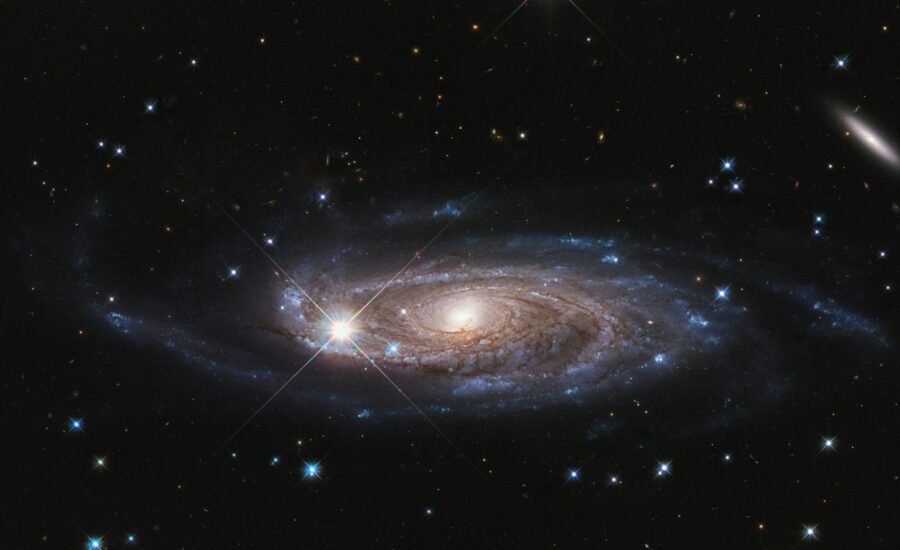
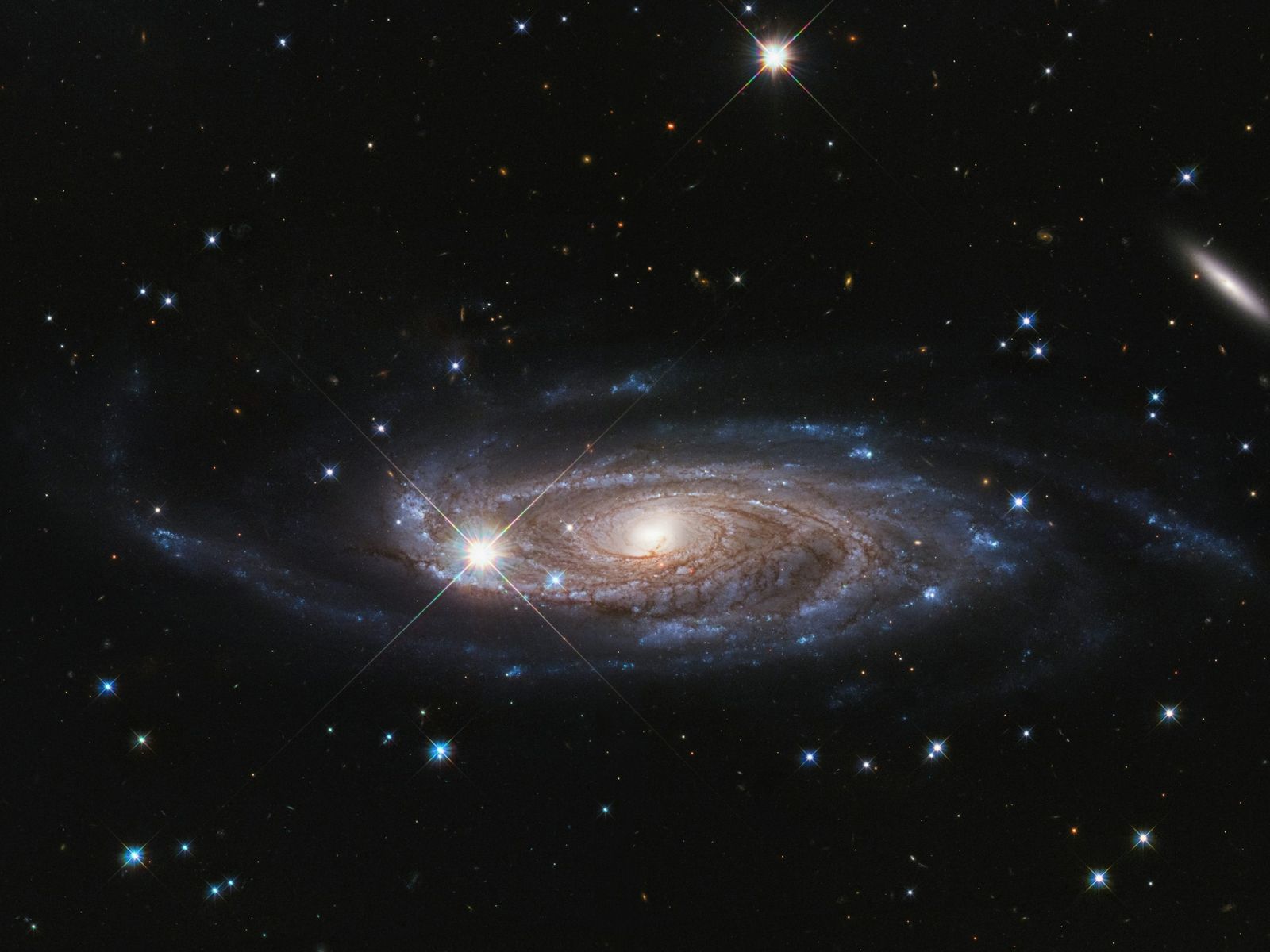
While galaxies are among the largest structures in the universe, some are more impressive than others. This is the case for IC 1101, a galaxy considered to be the largest of all known galaxies to date. And recently, astronomers have managed to accurately measure its size.
It is important to note that the largest galaxies, also known as brightest cluster galaxies (BCGs), form by absorbing other smaller galaxies as they travel through the cosmos. Located in the Abell 2029 galaxy cluster about 1 billion light-years from Earth, IC 1101 was studied by the team led by Carlos Marrero-de la Rosa of the Instituto de Astrofísica de Canarias using the Isaac Newton Telescope’s Wide Field Camera.
However, this work was not easy because it was difficult to detect the edges of this type of celestial object. Indeed, there are many sources of light contamination, including stars in the foreground. Nevertheless, by eliminating these light sources, they were able to detect the edges of IC 1101.
According to the results, this galaxy measures 520 kiloparsecs, which is about 1.7 million light-years. The researchers also estimate its mass at about 3.4 trillion solar masses. In other words, this galaxy is 17 times larger than the Milky Way and is also more massive. In addition, astronomers believe that this celestial object continues to grow, as it is still accreting matter.

I’ve been working in the field of web writing for several years, and I’m passionate about keeping readers up to date with the latest news on astronomy, technology, the world of video games and other exciting subjects. In particular, I’ve had the opportunity to work on a number of websites, which has enabled me to cover a wide range of subjects. In my personal life, I’m passionate about a wide range of subjects, including astronomy, video games, history and science. I’m also drawn to psychology, which is a subject that deserves greater documentation and recognition.