A familiar picture of volcanoes — sitting above a huge reservoir of molten rock — may be too simple.
Evidence from an ancient volcanic system in Ireland suggests magma below the surface can cycle between a more liquid condition and a crystal-rich “mush,” a pattern that may help explain how eruptions get started.
What happened?
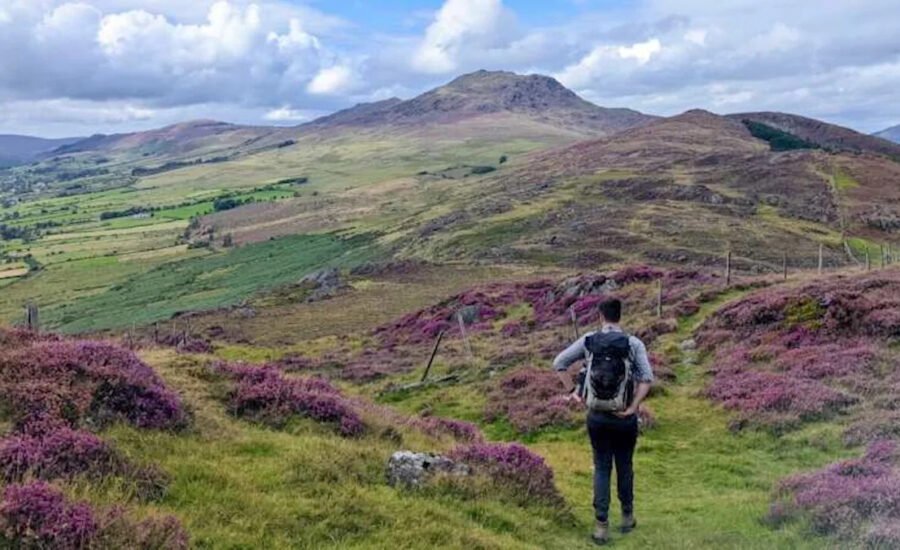
On Ireland’s Cooley Peninsula, Carlingford Mountain preserves the fossilized remains of the magma network that once supplied volcanoes roughly 60 million years ago. An international group of volcanologists examined those rocks, and according to Trinity College Dublin, the volcanoes originally formed above a hotspot tied to the volcanism seen in Iceland today.
Glaciers eventually wore away the rock that had covered the volcanoes, exposing deep parts of their ancient plumbing that scientists normally cannot observe. That window opened only after plate motion had already carried Ireland away from the hotspot and the volcanoes had shut down.
The researchers pieced together the system’s history by analyzing crystal composition and rock textures collected across the mountain. Their reconstruction points not to a magma body that stayed molten, but to a pulsing underground system that shifted between melt-rich episodes and longer intervals dominated by a slushy, crystal-heavy state.
Jack Beckwith, a doctoral student in Trinity College Dublin’s School of Natural Sciences and lead author of the paper, explained: “At Carlingford, we see that magmas can actually switch between these two states over short periods in geological terms, creating opportunities for more fluid magmas to ascend and fuel eruptions.”
Why does it matter?
Volcanoes pose major hazards for nearby communities, infrastructure, air travel, and ecosystems. A better understanding of what is happening underground can help scientists interpret warning signs more accurately before an eruption.
The research also pushes back against the old classroom picture of volcanoes being fed by simple liquid “magma chambers.” If many systems spend long stretches in a partly solid, mush-like state, scientists may need to refine how they think about when pressure builds and when magma becomes mobile enough to rise.
Dr. Mike Stock, from Trinity College Dublin’s School of Natural Sciences and principal investigator on the study, emphasized how difficult it is to study active volcanoes directly.
“Volcanoes are a major natural hazard but geologists struggle to understand them because we can’t take rock samples from several kilometers beneath Earth’s surface in active settings,” Stock said.
The work feeds into eruption forecasting by helping experts make better sense of seismic rumbling, gas releases, and ground deformation at active volcanoes today.
What’s being done?
Published in the Journal of Petrology, the study shows how exposed ancient volcanic terrain can be used to investigate present-day hazards. Fossil systems such as Carlingford give scientists a rare chance to trace when magma moved, stalled, and later became active again.
That could help scientists improve the models they use to interpret unrest at volcanoes that are active today in places such as Iceland and elsewhere around the world. The more accurate those models become, the better officials can assess risk and communicate it to the public.
As Beckwith put it, the finding “addresses an ongoing debate as to whether magmas exist beneath volcanoes as liquid-rich vats or as crystal-rich slurries.” Stock added that Ireland’s exposed systems are “perfect analogs for their younger brothers and sisters on modern-day Iceland.”
Get TCD’s free newsletters for easy tips, smart advice, and a chance to earn $5,000 toward home upgrades. To see more stories like this one, change your Google preferences here.