
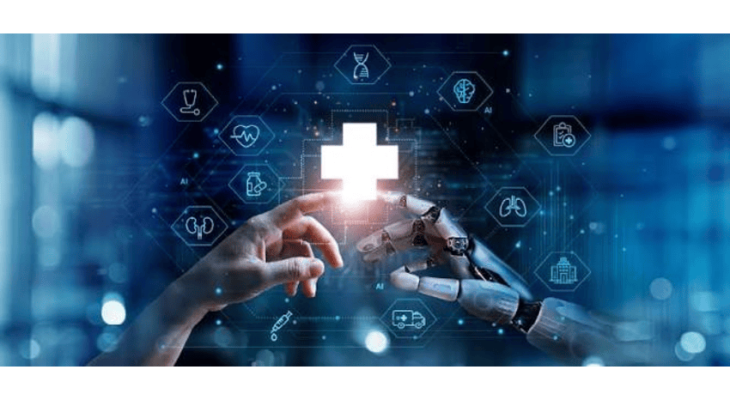
India has already established itself as a global supplier of affordable medicines, vaccines and skilled healthcare professionals. As artificial intelligence (AI) gains momentum across the healthcare ecosystem, experts believe the country now has an opportunity to build its next growth story around AI-powered healthcare solutions, ranging from clinical decision support and telemedicine to digital diagnostics and virtual patient management.
India already accounts for nearly 20 per cent of the world’s generic medicine exports, supplies vaccines to over 170 countries, and attracts an estimated 700,000–800,000 medical tourists annually, according to industry estimates. With the global AI healthcare market projected to exceed USD 180 billion by 2030, analysts believe India could leverage its clinical expertise, digital infrastructure and growing health-tech ecosystem to become a significant exporter of AI-powered healthcare platforms and services.
Between 2022 and 2025, India accelerated AI adoption across its public healthcare system under the Rs 10,371.92 crore IndiaAI Mission. AI-powered interventions reduced adverse TB outcomes by 27 per cent, generated 4,500+ disease outbreak alerts, and supported 282 million eSanjeevani teleconsultations, including 12 million AI-assisted diagnoses.
DeepCXR, deployed across 8 States and UTs, is improving TB screening by addressing radiologist shortages, while MadhuNetrAI has screened 7,100 patients across 38 facilities for diabetic retinopathy. The government is also developing a 20,000-plus cancer imaging biobank, using AI to detect fraud under Ayushman Bharat PM-JAY, and advancing ethical AI through the SAHI framework and Ayurgenomics, recognised by the WHO in 2025.
AI Powers Global Expansion
Experts believe India’s next healthcare export could extend beyond medicines and medical professionals to AI-powered clinical solutions that support healthcare providers worldwide. “Artificial Intelligence is not going to take over doctors, it will rather augment clinical experience, accessibility, and high-end healthcare to millions. Implemented wisely, artificial intelligence can become India’s major healthcare advantage,” said Dr Praveen Gupta, Chairman, Marengo Asia International Institute of Neuro & Spine, Marengo Asia Hospitals, Gurugram.
According to Dr Gupta, India’s established leadership in pharmaceuticals and healthcare services provides a strong base for exporting AI-driven technologies.”The new type of export could be AI-powered clinical solutions, digital health services, telemedicine, decision-making software and virtual patient experience,” he said, adding that India’s blend of clinical expertise and technology could make it “the world’s centre of AI-based healthcare innovations.”
AI is also expected to strengthen India’s position as a preferred destination for medical tourism. Experts say international patients increasingly seek personalised treatment plans, precise diagnostics and seamless follow-up care—areas where AI can improve transparency, continuity and patient confidence.
“Modern international patients not only want experienced doctors but also precise and transparent procedures and continuity of care. AI can provide better diagnostics, personalized treatment planning, remote consultations prior to the trip and after it. It builds up trust in Indian healthcare services,” Dr Gupta said.
Supporting this view, Dr Srinivas Padmanabhuni, Chief Technology Officer, AiEnsured, said India has the opportunity to export “clinical intelligence” by building indigenous AI platforms that enhance doctors’ capabilities rather than replace them. He added that the country’s responsible AI framework, backed by the Digital Personal Data Protection (DPDP) Act and principles of privacy, transparency and human oversight, could strengthen global trust in Indian healthcare technologies.
Transforming Healthcare Delivery
Beyond exports, experts believe AI has the potential to reshape healthcare delivery within India by improving access to specialist care in underserved regions. Intelligent clinical decision support, predictive analytics, tele-neurology and remote patient monitoring can help hospitals extend specialist services beyond metropolitan centres while improving operational efficiency.
“With AI, we can take our healthcare system from being centered around the hospital and shift to an ecosystem that is centered around patients,” Dr Gupta said. He added that “clinical decision support systems, tele-neurology, remote monitoring, prediction analytics and intelligent triage can allow specialized care to be provided even outside metropolitan cities,” ensuring better access, fewer referrals and more efficient utilisation of healthcare resources.
Industry experts say such technologies could also help hospitals adopt hub-and-spoke models, where specialists in metro cities remotely supervise patients across multiple facilities. Dr Padmanabhuni cited Apollo Hospitals’ tele-ICU network as one example, where AI-assisted monitoring enables urban intensivists to manage critically ill patients in smaller hospitals, reducing unnecessary transfers and improving clinical outcomes.
The impact is expected to extend beyond patient care. AI-enabled imaging systems, robotics, wearable technologies and rehabilitation devices are creating opportunities for indigenous MedTech manufacturing, reducing import dependence while supporting the government’s Make in India and Ayushman Bharat initiatives.
“Indigenous AI in MedTech further cuts import dependence, supports Make in India and Ayushman Bharat, creates high-value jobs, and drives GDP growth through healthtech exports,” Dr Padmanabhuni said.
Experts agree that AI will deliver the greatest value when combined with clinical expertise rather than replacing it. Ethical regulation, responsible innovation and continued investment in indigenous technologies, they say, will determine whether India can emerge as a global leader in the next generation of healthcare.