A new study suggests a specially engineered chewing gum may help lower harmful oral microbes linked to head and neck cancer, but experts say more research is needed.

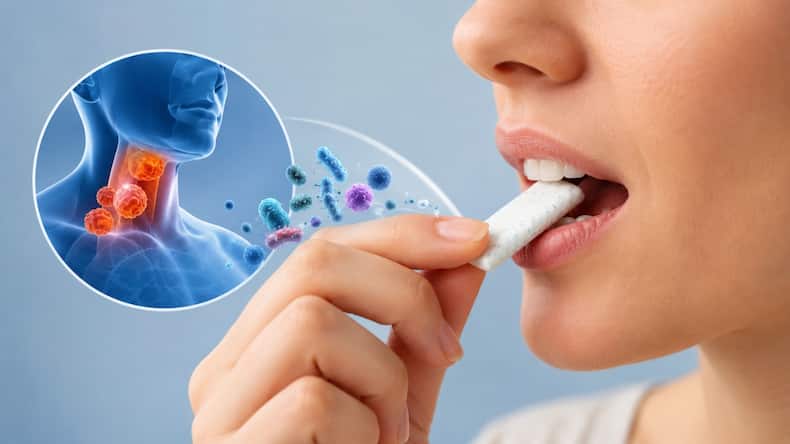
Chewing gum help reduce head and neck cancer risk (Image AI Generated)
A simple chewing gum may one day become more than just a breath freshener. A pair of researchers has created a unique bioengineered chewing gum to eliminate the presence of harmful viruses and bacteria around in mouths that are associated with head and neck cancer. The results are encouraging but experts caution that it is in early development and it is not a cancer prevention, screening or treatment method.
What did the new study find?
In February 2026, the research article Reduction in carcinogenic microbes in ex vivo HNSCC clinical studies using antiviral or antibacterial chewing gums was published in the journal Scientific Reports.
University of Penn School of Dental Medicine scientists put a lablab bean chewing gum to the test. The gum has a natural antiviral protein, FRIL, and an antimicrobial peptide called protegrin-1.
The researchers found that:
- Human papillomavirus (HPV) levels were lowered by up to 93% in spit after chewing the gum.
- It was able to eliminate more than 99% of two harmful bacteria: Porphyromonas gingivalis and Fusobacterium nucleatum.
- Increased risk and worse prognosis for head and neck squamous cell carcinoma (HNSCC), these microbes have been associated with these attributes.
Why is HPV important?
Some HPV types are responsible for a number of cancers, such as cancer of the oropharynx (which is cancer of the throat), cervix, anus, penis, vulva and vagina. Oropharynx cancer is a growing concern in Indonesia.
The new chewing gum helps to bind with HPV particles in the saliva to decrease the presence of the particles in the mouth, thereby decreasing transmittability. But bigger research studies in humans are still required to validate the results and determine if this would otherwise help to prevent cancer, researchers say.
Does this mean chewing gum prevents cancer?
No. The researchers explicitly mention that the gum doesn’t yet have a scientific proof of its ability to ward off head and neck cancer. Though the study was conducted in vitro (on samples taken from patients), rather than in long-term cancer-prevention in individuals, it is still believed to be useful for more immediate applications.
If it continues to be shown as effective in future clinical trials, the gum could be used as a means of reducing microbes that could cause cancer, in addition to the other prevention strategies recommended.
What do health organizations recommend?
Health organizations still advise effective strategies in lowering the risks of head and neck cancers. The WHO recommends HPV vaccination as an effective way to prevent HPV-related cancers.
Routine HPV vaccination is also recommended for eligible children and youth to prevent HPV-associated cancers across the United States by the Centers for Disease Control and Prevention (CDC).
The National Cancer Institute (NIH) and Mayo Clinicplace the following recommendations for prevention for oral cancer: Avoid tobacco of any kind, limit your alcohol intake, care for your teeth and gums daily, and get checked out by your physician if you have a persistent sore throat, hoarseness, or lump in your neck. In other studies, a decrease in the risk for head and neck cancer has been linked to good oral health.
Disclaimer: The content on TheHealthSite.com is only for informational purposes. It is not at all professional medical advice. Always consult your doctor or a healthcare specialist for any questions regarding your health or a medical condition.