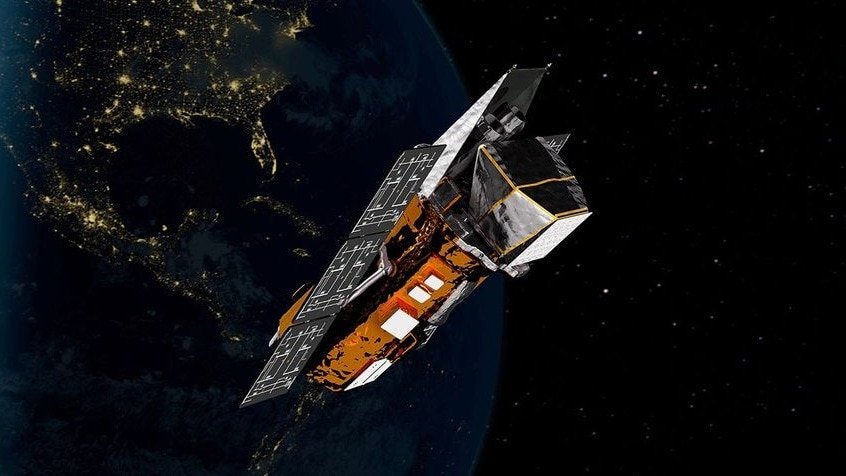
Nasa’s effort to rescue its ageing Neil Gehrels Swift Observatory has made progress.
After the launch, the rescue spacecraft, named Link, experienced problems with its attitude-control system and began spinning at about 9 degrees per second across multiple axes.
In other words, it had begun swaying in multiple directions.
Now, engineers have succeeded in reducing the uncontrolled spin of the robotic spacecraft sent to save the telescope,
The spacecraft, developed by Katalyst Space Technologies, had been rotating, and the rapid spin caused communication problems and prevented Link from making progress towards Swift.
But after a series of burns using one of Link’s electric propulsion engines, the Katalyst team brought the spin down to about 1.47 degrees per second.
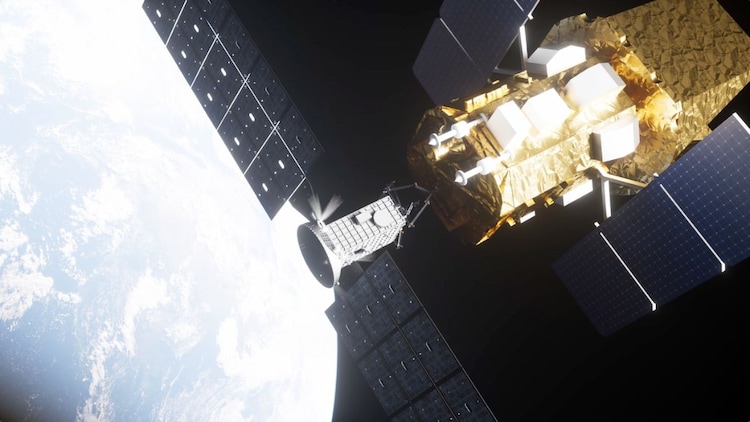
The team now plans to keep Link at this spin rate while it prepares for the next stage of the recovery effort.
ENGINEERS PREPARE LINK FOR ITS NEXT MOVE
The next major step will be a flight software update, which Nasa said is expected to be uploaded in the coming days.
The update will include new attitude controllers designed to keep Link stable in its current configuration. If successful, this will allow the spacecraft to begin manoeuvring and aligning itself with Swift’s orbit.
This is an important step because Link cannot move towards Swift until engineers can reliably control its orientation and manoeuvre it in orbit.
For now, the focus remains on stabilising the spacecraft and preparing it to resume its journey towards the observatory.
A ROBOTIC RESCUE FOR A FALLING TELESCOPE
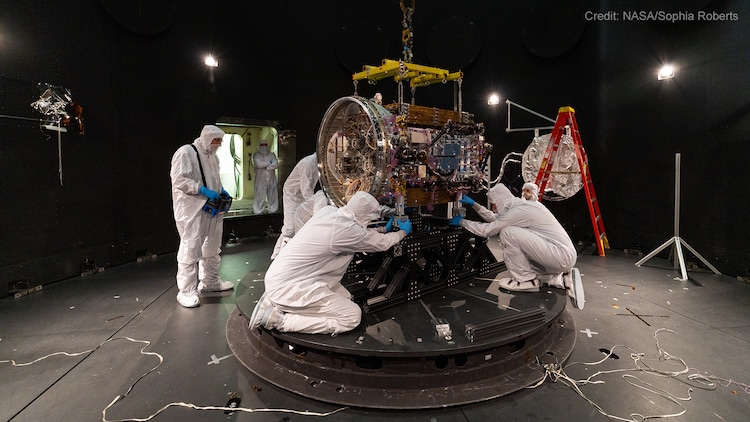
Link’s mission is to rendezvous with the Neil Gehrels Swift Observatory, capture it and raise the telescope to a higher orbit.
Swift has been operating since 2004, studying gamma-ray bursts, some of the most powerful explosions in the universe, along with other cosmic objects and events.
The telescope is gradually losing altitude, making the planned boost mission important for extending its scientific operations.
Link was designed to provide the propulsion needed to raise Swift’s orbit, something the observatory cannot do on its own.
The spacecraft’s initial problems therefore created a major hurdle for the rescue effort. The latest reduction in Link’s spin, however, gives engineers a clearer path forward and revived hopes for moving ahead with the ambitious rescue mission.
For now, the mission remains in recovery mode, with the goal to keep Link stable, install the new flight software and get the spacecraft ready to manoeuvre towards Swift.
– Ends