A new study reveals that rising temperatures are changing where children face the highest malaria risk in Africa, helping health authorities improve prevention and disease planning.

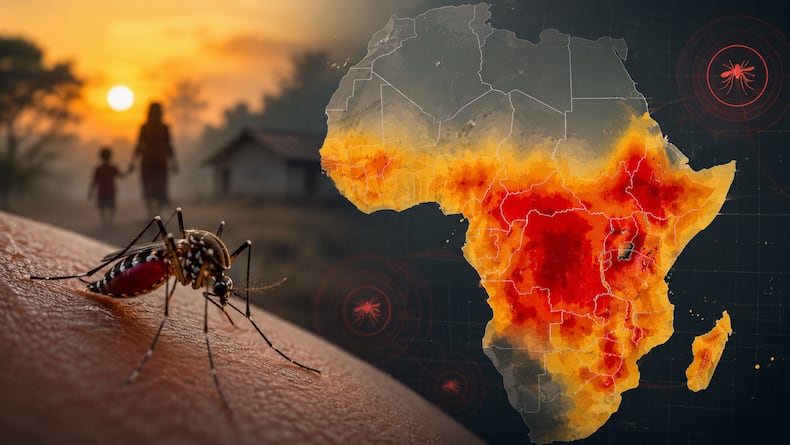
Malaria hotspots across Africa
Rising climate change risk in Africa does not affect all regions equally, but rather it affects children where malaria is most likely to affect them. Earlier this month, a new study was published in the scientific journal Naturethat indicated that the hot spots of childhood malaria were moving from traditionally high-risk areas of the worldwide tropics to cooler and higher-elevation areas of east and southern Africa. The results could give governments advance warning of disease trends and help to better plan for preventing malaria.
What did the study find?
The study, called ‘The past and future impact of climate change on childhood malaria in Africa’, involved almost 100 years of climate data and more than 50,000 malaria surveys from sub-Saharan Africa.
Researchers found that:
- The risk of malaria has likely been heightened in parts of east Africa and southern Africa because of temperatures becoming more conducive to mosquito life, due to climate change caused by human activities.
- Meanwhile, other parts of Africa, notably West Africa, could see a drop in the malaria burden as temperatures rise to point that mosquitoes cannot survive.
- The effect of this so far has been quite low continentally, with an estimated one extra malaria case per 1,000 children, but there are large regional differences.
- With high greenhouse gas emissions, malaria experts predict that the disease will spread to higher terrain and cooler climates as the century progresses.
Why does climate affect malaria?
The causes of malaria are Parasoplasma Plasmodium which are spread by the bites of infected female mosquitoes Anopheles, according to WHO. The organism that causes malaria develops, survives and is attracted to moisture, precipitation and temperature in weather that is favorable for mosquito breeding.
Mosquitoes can thrive in moderate temperature increases in cooler climates and could not survive more severe heat in hot climates. This gives an explanation for the different patterns by which, in some places, climate change results in an increased risk of malaria while in other places it results in a decreased risk of malaria.
Children remain the most vulnerable
According to the WHO, young children aged under 5 years face the highest risk of death from malaria and more than 90% of all deaths occur in Africa. Young children are at particular risk of getting severely ill and developing complications due to having a less developed immune system.
Researchers stress that if healthcare systems are not ready, a minute shift in the malaria transmission cycle can expose millions of children who are newly affected to a higher risk.
Prevention efforts remain the strongest defence
The study also draws attention to the importance of the fact that the trend of malaria is not the predominant one when talking about climate change. All public health tools such as insecticide-treated bed nets, indoor residual spraying, rapid testing, effective medicines and vaccines have made a huge difference in lowering malaria fatalities, more than climate change has raised them.
As climate patterns evolve, it becomes critical for health security actors to enhance surveillance in areas of emerging risks, health experts say.
Disclaimer: The content on TheHealthSite.com is only for informational purposes. It is not at all professional medical advice. Always consult your doctor or a healthcare specialist for any questions regarding your health or a medical condition.