

Worried about perimenopausal brain fog or dementia? Our writer tried a new cognitive health check – and learned how to better look after her brain
Image: Shutterstock
Jump To
As someone who’s always prided myself on having a sharp brain, I’m alarmed that I’m now exhibiting the same behaviours that’d make me giggle when my grandma did them: forgetting tasks or people’s names, or walking into a room and not knowing what I’ve gone there for. Is it perimenopausal brain fog? (My HRT does help but it still creeps in.) Or – whisper it – is there something seriously wrong with my grey matter?
Natalie Mackenzie, aka The Cognitive Strategist, hears this a lot from midlife women. A brain injury therapist who also offers preventative cognitive health assessments, she says her clients for the latter tend to fall into three camps: people with a family history of dementia, people who have demanding jobs and are worried about burnout, and women in perimenopause in a panic about brain fog. Oh dear – I tick all three of these boxes.
And then there’s the rise in ADHD awareness: “A lot of women now come to me saying they think they’ve got ADHD but often it’s cognitive overload impacting their attention span. It’s about understanding that distinction,” says Mackenzie.
Growing interest in brain health
We’ve got far better at addressing our mental health in recent years, now we’re also considering the health of our brain as an organ. There’s an array of new high-tech brain-stimulating gadgets and treatments, while wellbeing retailer Healf reports a 74% jump in searches for its brain health supplements in the last year, with ingredients such as omega-3 fatty acids (scroll down for more on those), lion’s mane mushrooms and amino acid L-theanine, which purports to improve focus. And midlife women are increasingly taking creatine not just for its muscle-building potential but also to protect the brain.
How to get your brain health checked
I tried Mackenzie’s cognitive health assessment to get a better handle on what was going on in my brain. Costing £249, it involves a 45-minute online assessment, in which you complete a detailed questionnaire about depression, anxiety, stress and sleep, followed by 12 word and visual games that get increasingly harder the longer you play them. They test different aspects of your cognition, such as working memory, verbal reasoning and attention. A few days later, you receive a report, which shows where you sit on the percentile range for each task, compared with women of the same age. There’s also a video call with Mackenzie to talk through your report and suggest strategies for improvement – and that’s the good news: whatever your age, neuroplasticity means your brain has the capacity form new neural connections and strengthen existing ones. It’s not all downhill from here, basically.
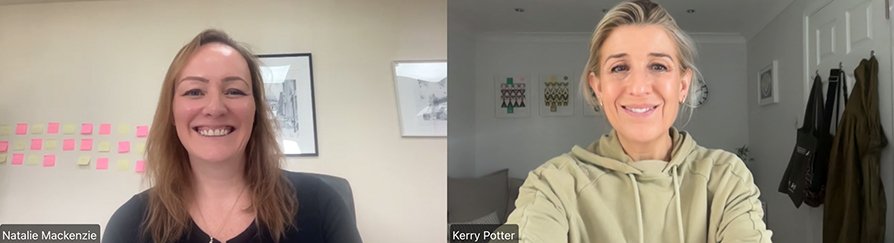
Kerry has a consultation with brain health expert Natalie Mackenzie
The assessment: my verdict
The brain health assessment was more taxing than I expected – my teenage son plays games on his computer for hours on end, surely I can manage 45 minutes?! But the tests were cognitively challenging (that’s the point) – and it didn’t help that I started it at 6pm after a day at work. Next time, I’ll do it first thing.
My report showed my cognitive health as above average for most tasks (phew), and average for a handful. Mackenzie is brilliant at relating the results to your job and lifestyle. The ‘mental rotation’ task, for example, involved moving shapes around and I was rubbish at it. This can manifest IRL as problems with map reading or planning a layout for a room. This is vindicating because these tasks always cause bickering with my husband, who is annoyingly good at both. Now I can tell him to back off as it’s just the way my brain works.

Testing, testing: Kerry playing brain games
Elsewhere, I score very highly for verbal reasoning – which is about grasping meaning from words and giving clear instructions, both key skills for a journalist (and mother of teens!). This one is where cognitive decline often first shows up, says Mackenzie, and it’s susceptible to the perimenopausal hormone fluctuations that cause brain fog. She points out that worrying about brain fog can often make it worse: it usually isn’t dementia, it’s just a normal hormone imbalance “so try to accept what’s happening and remember than you know why it’s happening”. She has seen marked improvements in this metric with women taking the assessment before and after starting HRT. Given my recent issues, I make a note to check if my HRT prescription needs tweaking.
Doing this assessment every few years would be money well spent, if you have the budget. I have preventative physical health scans to track trends within the rest of my body, so why neglect my brain? Especially when my generation of women is going to be in the workplace – and will thus need to keep learning and embracing new tech – until far later in life than our mothers and grandmothers. I learned a lot from Mackenzie, who is a very clear communicator and reassuring presence.
How to make your brain work better now
As we get older (and ever busier), should we panic about feeling less sharp and like our memory isn’t as good as it was? “No, because the brain doesn’t have a finite capacity for information,” says Mackenzie. “And our brains aren’t used to having this amount of info thrown at us. We hold all these open loops in the background of our minds – ‘I must reply to that WhatsApp, I must do this work, I must do that errand’. We just can’t remember everything.” She encourages clients to establish which loops they can close.
Also, we should work with our circadian rhythms. “When is your brain sharpest? Do complex tasks then,” says Mackenzie. For me, that’s as early as possible so I will do my deep work – strategy and writing features like this that require unbroken concentration – first thing, often from 6am. It’s also a good idea to make important decisions in the morning, says Mackenzie: “Research shows people make more impulsive decisions later in the day as they tire”.
4 ways to future-proof your brain health
We should expect some degree of cognitive decline over time, says Natalie Mackenzie, but we can mitigate against it with certain strategies. Like these…
Aim for at least 50 minutes of deep sleep each night
This is “the biggie”, says Mackenzie. Health trackers such as Oura, Gabit and Whoop measure your nightly amount of deep sleep so you can keep an eye on it. For most adults who sleep 6-7 hours per night, deep sleep should account for 13-23% of the total, so roughly 50-90 minutes. “It’s deep sleep that really impacts on cognition,” says Mackenzie. “Deep sleep does decline naturally with age, and hormonal changes through perimenopause can reduce quality further, which is why consistent sleep times and a cool, dark room matter so much.” Remember though, trackers are never 100% accurate so don’t get too obsessed with the data.
Do mentally challenging things to build up your cognitive reserve
Make your brain do hard things now and Future You will benefit. “The more you build your cognitive reserve now through genuine learning and mental challenge, the more buffer you have against age-related decline and the big life changes that come later – retirement, bereavement, health challenges,” says Mackenzie. The oft-quoted idea of crosswords or sudoku doesn’t cut it though. “Those keep things ticking over but doing things that feel difficult and uncomfortable is what builds reserve.” This might be learning a new language, sport or instrument.
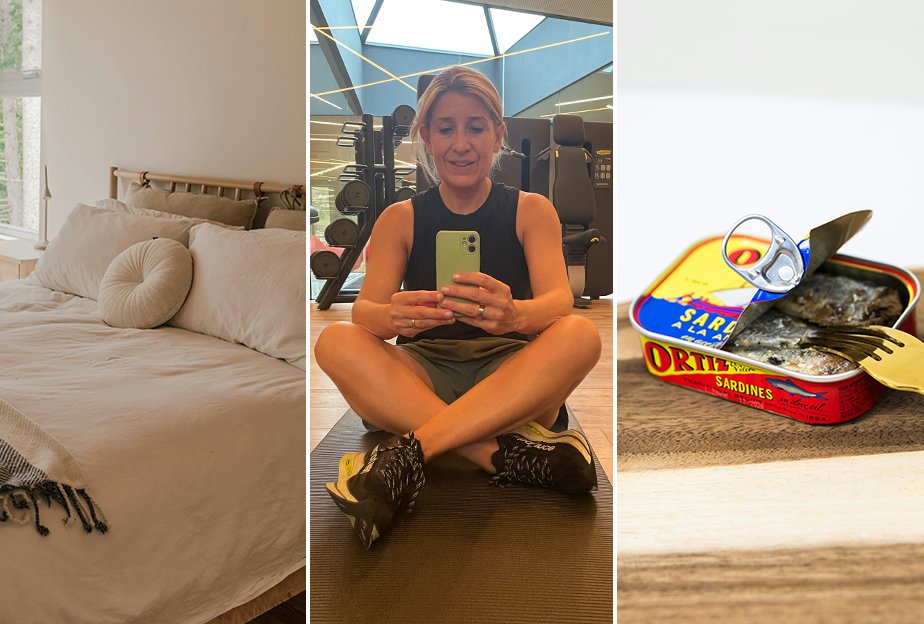
Kerry’s brain health boosters to-do list: (from left) protecting deep sleep, lifting weights, eating oily fish
Deadlift for a better memory
We know it’s good for our bone health but did you know pumping iron also benefits brain health? “Regular resistance exercise has been linked in research to improvements in memory, processing speed and executive function, and appears to support the production of BDNF, the growth factor that promotes brain cell health and connectivity,” says Mackenzie. Yet another reason to get to the gym.
Have sardines for lunch
The evidence is clear that omega-3 fatty acids, found in sardines, mackerel and salmon, are good for your brain. “They’re a key structural component of brain cell membranes and consistently linked to a lower risk of cognitive decline,” says Mackenzie. Not into oily fish? A good quality supplement is fine (I take Wiley’s Finest fish oil capsules, from £10.79, daily). And more broadly, a Mediterranean diet – alongside that fish, lots of vegetables, wholegrains and olive oil is “the most well evidenced overall diet for long-term brain health”.