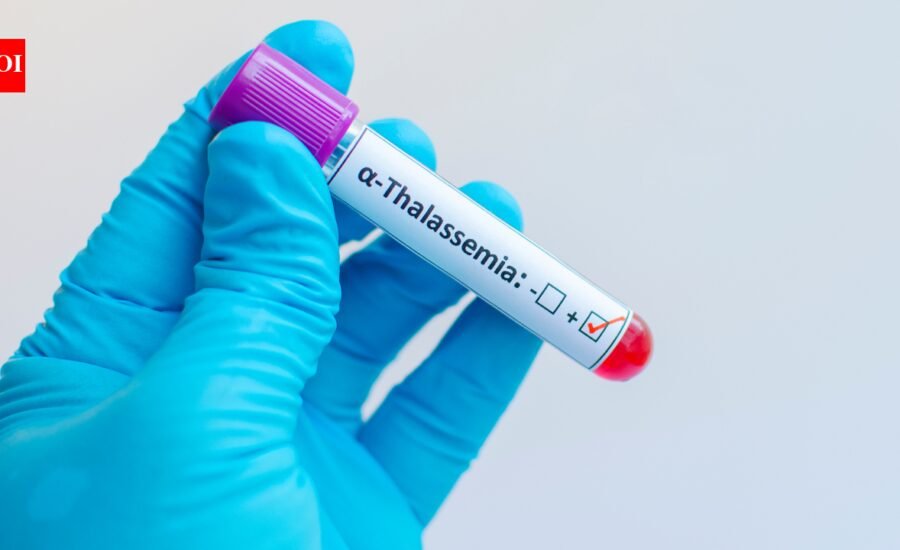
A child should remember school, birthdays and playgrounds, not hospital beds and blood transfusions. Yet for thousands of children living with thalassemia major, hospital visits become a regular part of growing up.Thalassemia is inherited, meaning it is passed from parents to children through genes. People with severe forms of the condition cannot make enough healthy haemoglobin, the protein inside red blood cells that carries oxygen throughout the body. Without treatment, they develop severe anaemia, fatigue, poor growth, bone changes and damage to vital organs.For many families, regular blood transfusions every few weeks become a way of life. Iron-chelating medicines help remove excess iron that builds up because of repeated transfusions. These treatments save lives, but they do not eliminate the disease.That is where bone marrow transplant enters the conversation. It offers something that no medicine or transfusion can currently promise, a chance to be free from thalassemia.
Thalassemia is lifelong, but bone marrow transplant can offer a cure
Many people mistakenly believe that blood transfusions cure thalassemia. They don’t. They simply replace the healthy red blood cells that the body cannot produce on its own.A bone marrow transplant, also called a hematopoietic stem cell transplant, replaces the patient’s faulty blood-forming stem cells with healthy ones from a suitable donor. If successful, the new stem cells begin producing normal blood cells, removing the need for lifelong transfusions.Dr Nivedita Dhingra, Director & Head, Hematology, Hemato-Oncology and Bone Marrow Transplant (Adult & Pediatrics), Yashoda Medicity, explained, “One of the biggest misconceptions I come across is that a bone marrow transplant (BMT) is a ‘last resort’ or an experimental gamble. In reality, for patients with thalassemia major, BMT is the only established curative treatment available today. Regular transfusions and chelation are just management, not a cure. When performed early, ideally before a child develops more complications or organ damage, and with a well-matched donor, cure rates can exceed 80 to 90 percent.”This is why specialists often encourage families to discuss transplant options early rather than waiting until complications develop.
Myth versus reality: Bone marrow transplant is not a miracle overnight
One of the biggest misunderstandings is that the transplant itself is the finish line. In reality, it is only the beginning of a carefully planned medical journey.Dr Dhingra said, “Families often consider that a transplant guarantees an easy fix. It doesn’t. The pre-transplant workup alone, HLA typing, organ function tests, iron status evaluation, can take weeks. The conditioning regimen suppresses the immune system entirely, which means a prolonged hospital stay in isolation, a real risk of infection, and the possibility of graft failure or graft-versus-host disease even with a matched sibling donor. Recovery isn’t a light switch; it’s months of monitoring, immunosuppressive medication, and gradual return to normal life.”Before a transplant, doctors assess whether the patient’s heart, liver and other organs can safely tolerate treatment. They also perform donor matching and evaluate iron overload caused by years of blood transfusions.Even after the transplant, the immune system needs time to rebuild. Patients remain vulnerable to infections and require frequent follow-up visits, medicines and laboratory tests. Recovery often stretches over several months.This is one reason doctors repeatedly emphasise realistic expectations. Hope is important, but preparation matters just as much.
Not every donor has to be a sibling anymore
For years, many families believed that if there wasn’t a perfectly matched brother or sister, transplant simply wasn’t possible. That is no longer true.Dr Dhingra explained, “There’s also a persistent belief that only a perfectly matched sibling can be a donor. That’s changing. Matched unrelated donor transplants and haploidentical transplants using a parent as a half-matched donor have improved outcomes significantly over the last decade, which means far more patients now have a realistic path to transplant than families assume.”Medical advances have significantly expanded donor options.Dr Pawan Kumar Singh, Vice Chairman of Hemato-Oncology at ShardaCare – Healthcity, added, “Some people think a bone marrow transplant is too risky or that it is for children who are in very serious condition. In fact, BMT and gene therapy are currently the only option to cure the disease and thus gives a chance to live a life free of blood transfusions. BMT has the best outcomes if performed at earlier age. Like any specialty treatment, it has its own risks, but proper evaluation, risk assessment optimization of iron overload are the key to better outcome and any experienced center is capable of doing this.“Earlier diagnosis often means fewer complications caused by repeated transfusions and iron overload, improving the chances of successful treatment.
The hardest part is often what people cannot see
Hospital procedures are only one part of the journey. Parents may spend months searching for donors, arranging finances, travelling long distances to specialised hospitals and worrying about every fever, blood report or follow-up visit.Dr Singh explained, “The bone marrow transplant is not a single event but a lengthy process that demands patience from the patients and their families. It requires regular check-ups and a lot of support system; patients need to take medicines, be wary of infections, and ensure good nutrition and emotional support to complete the process. Children might need to stay away from school for a while before resuming a normal lifestyle. It’s a physical, emotional and a lifestyle change.”He further described the transplant journey in simple words, “The BMT process isn’t just about the day of infusion of stem cells; it’s about how a family copes with the ups and downs throughout the treatment period. The initial phase after infusion of stem cells and waiting for engraftment to happen, is very critical just like sowing the seeds and taking care of new saplings till it becomes completely grown tree (full engraftment). Post discharge follow up, investigations and medications are also very important to prevent further complications like infections and GVHD. Parents might experience anxiety and fear, while the children can find frequent visits to the hospital challenging.”The emotional burden is often invisible to outsiders. Siblings adjust to new routines. Parents balance jobs with hospital appointments. Children miss festivals, school events and ordinary moments that many others take for granted.Dr Dhingra highlighted this often-overlooked reality, “What I wish more people understood is the emotional and financial weight this places on families long before and after the transplant itself. Parents are making a high-stakes decision for a child, often navigating donor searches, travel to specialised centres, and the anxiety of watching for early complications. Success here is more than survival, it’s rebuilding a normal childhood afterward.“
Prevention begins long before birth
Unlike many diseases, thalassemia cannot be prevented through diet or exercise because it is inherited. But many cases can be avoided through awareness and timely screening.Doctors recommend carrier screening, especially for couples with a family history of thalassemia or those belonging to communities where the condition is more common. If both partners are carriers, genetic counselling helps them understand the chances of passing the condition to their children and the reproductive options available.
For people already living with thalassemia, the focus should remain on:
- Keeping up with scheduled blood transfusions.
- Taking iron-chelation medicines exactly as prescribed.
- Attending regular heart, liver and endocrine health check-ups.
- Discussing transplant eligibility with a qualified hematologist as early as possible.
- Maintaining vaccinations, good nutrition and infection prevention.
Dr Singh concluded, “It requires patience and effective communication between the family and the medical team to make this transition smooth. However, with all the advances in the technology, infection control and supportive care, outcomes of BMT have drastically improved over the years. Coupled with early diagnosis and increasing awareness, these advances in transplant are giving many families hope for a bright and healthier tomorrow.“He added, “Providing the best information to patients, setting realistic expectations and a supportive family are just as important as the treatment itself.”For families facing thalassemia, knowledge can be just as powerful as medicine. Understanding the facts, asking questions early and seeking care at experienced centres can make difficult decisions a little clearer, and sometimes, change the course of a child’s life.Medical experts consultedThis article includes expert inputs shared with TOI Health by:Dr Nivedita Dhingra, Director & Head, Hematology, Hemato-Oncology And Bone Marrow Transplant (Adult & Pediatrics): Yashoda Medicity.Dr Pawan Kumar Singh, Vice Chairman of Hemato-Oncology at ShardaCare – Healthcity.Inputs were used to explain what thalassemia is, how bone marrow transplant works, debunk common myths, and help families understand the realities of treatment and recovery.